You Must Know Everyone - Volunteer work in Costa Rica
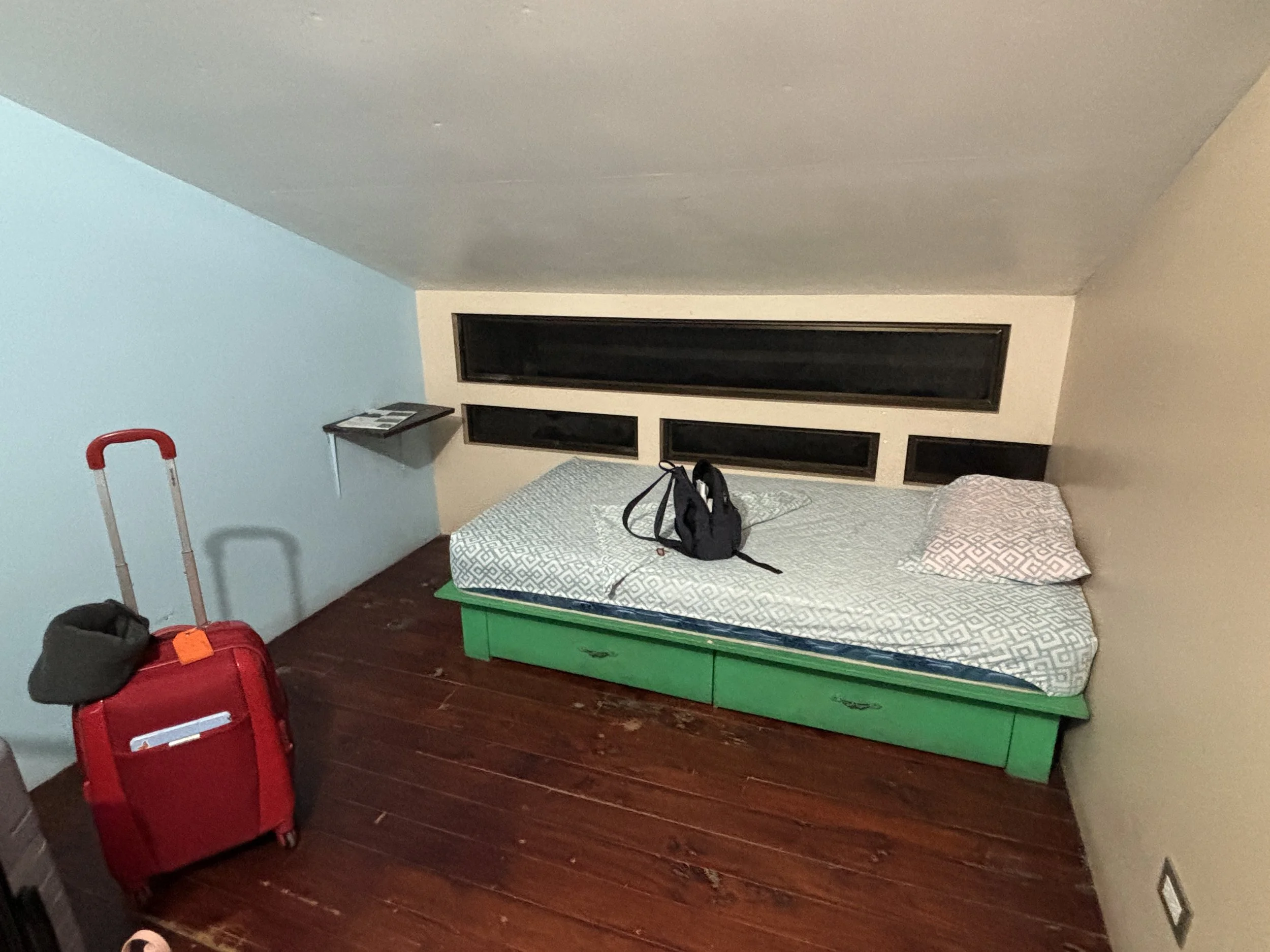
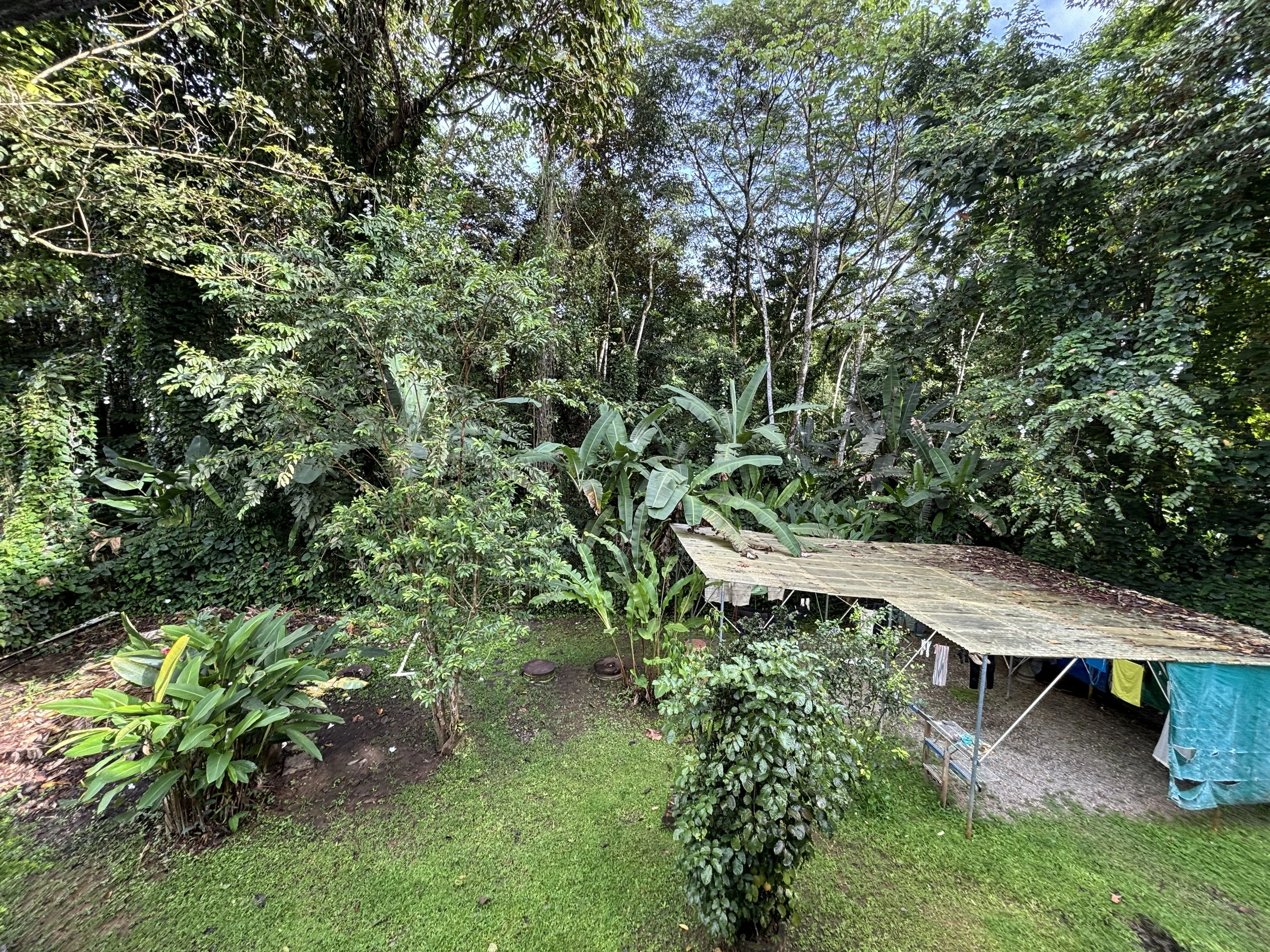
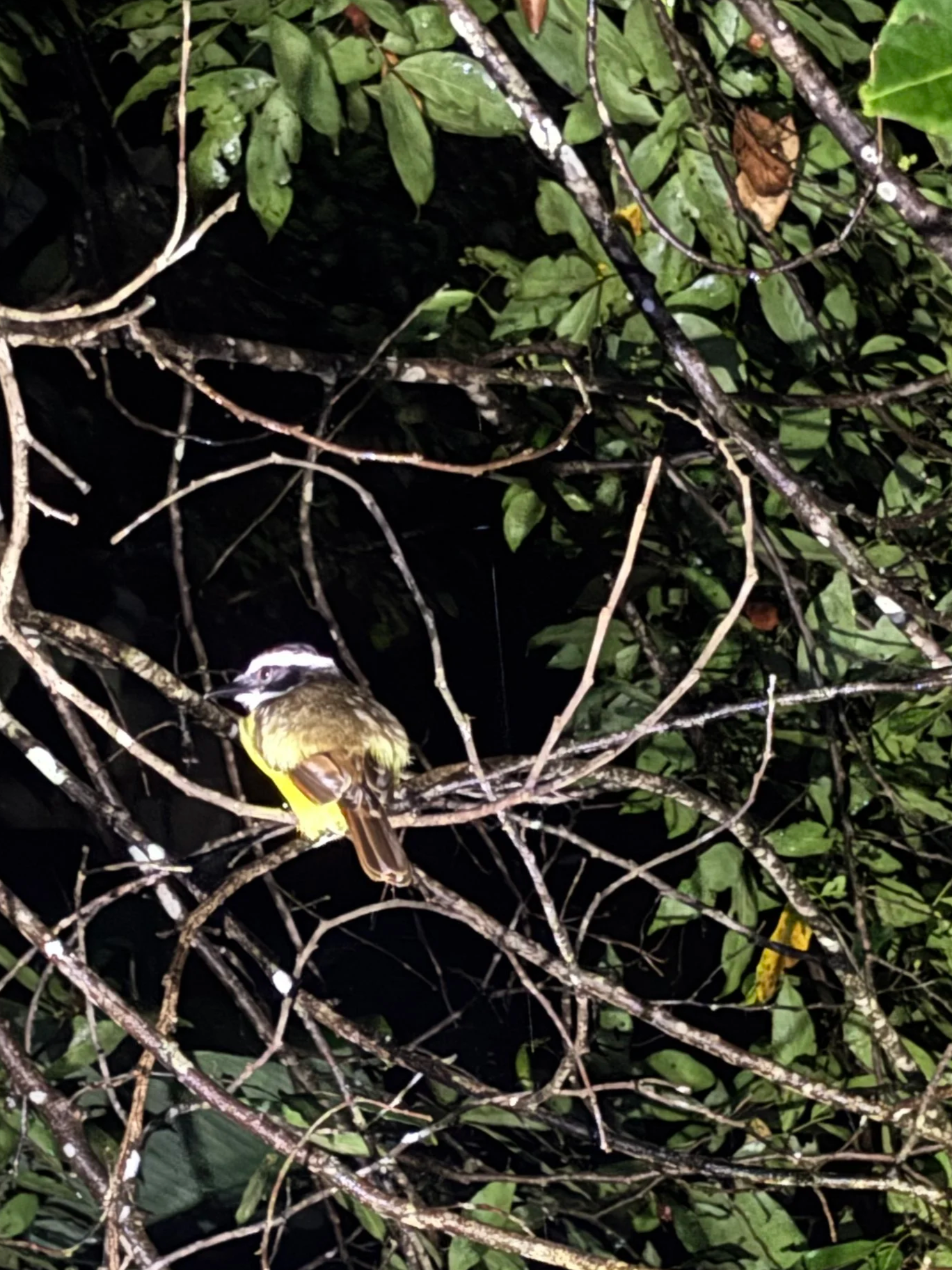
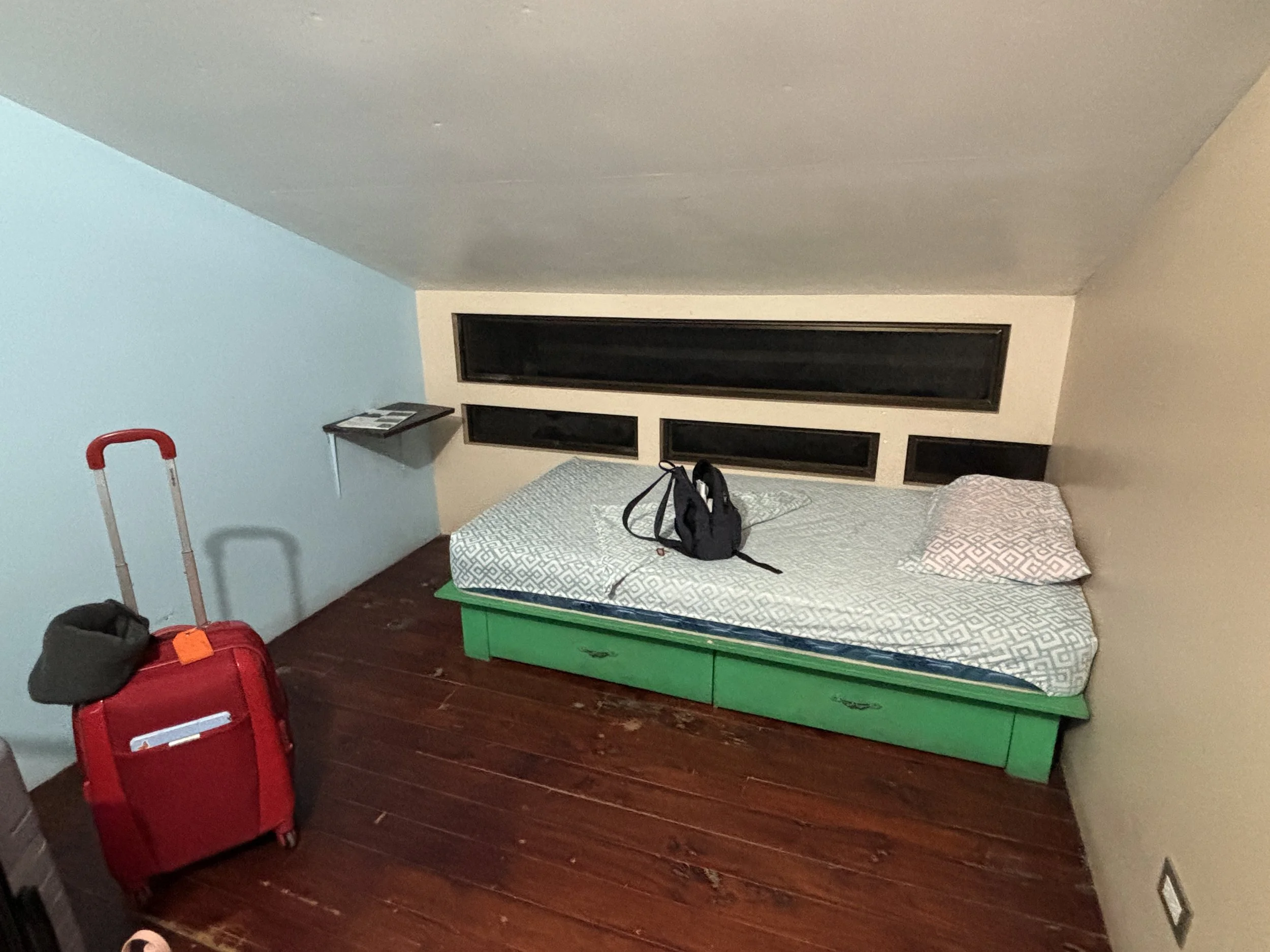
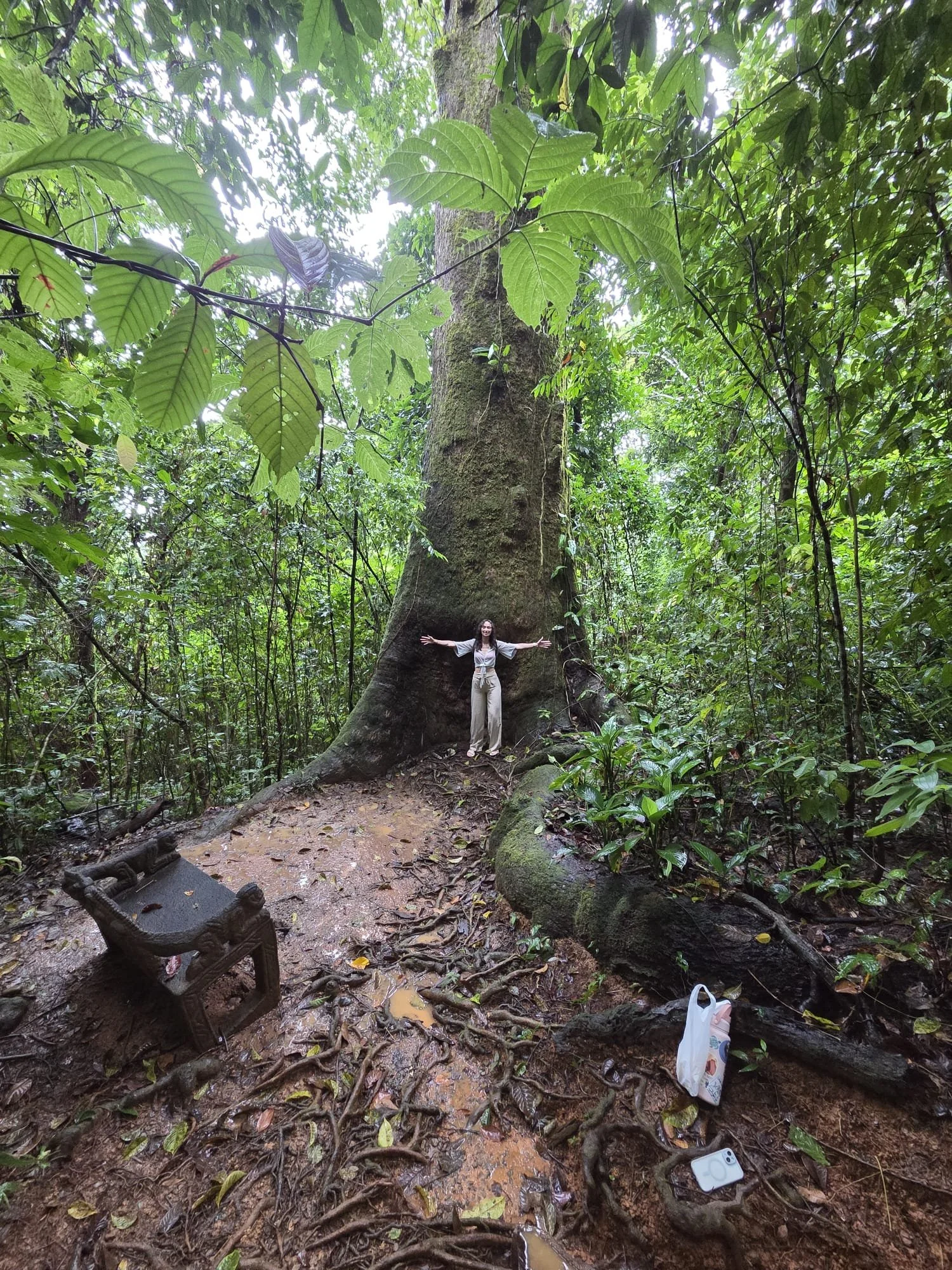
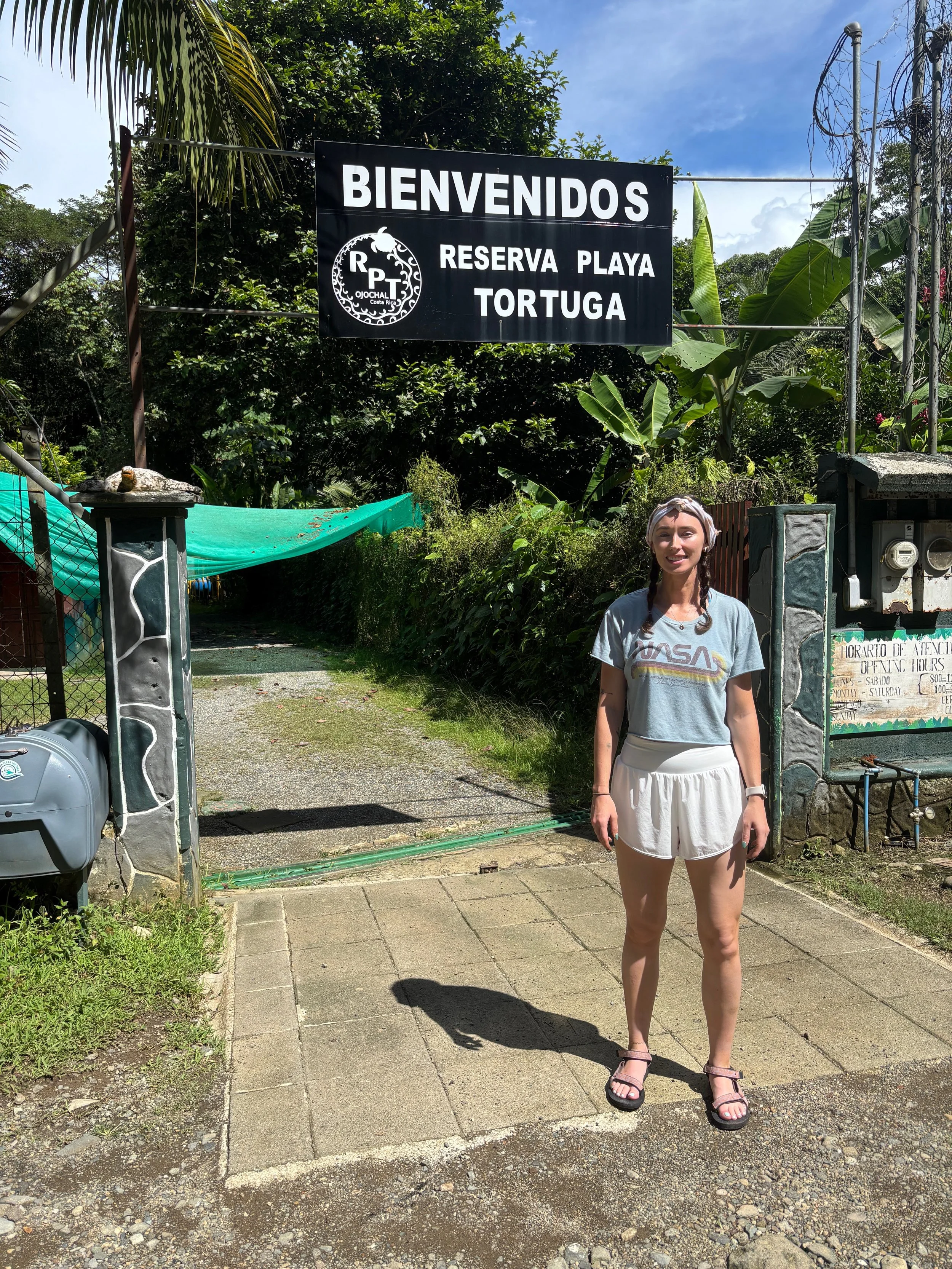
I’m woken up at 5 a.m. by the high-pitched kiskadee bird perched close to my rectangular mesh window. I rub my eyes and reach for my glasses as the pale blue walls and asymmetrical ceiling slowly come into focus. It’s my first day volunteering at Reserva Playa Tortuga, and because of my late arrival last night, I have nothing on my schedule until 13:30. I swing my body off my small cot, breathing deeply, letting the warm air settle into my skin before pulling on my shorts and tank top. With my toiletries in hand, I leave my temporary abode and step into the narrow hall until I reach the outdoor stairs, where the jungle rises like a living cathedral, leaves and flowers stretching outward as if welcoming me into their world.
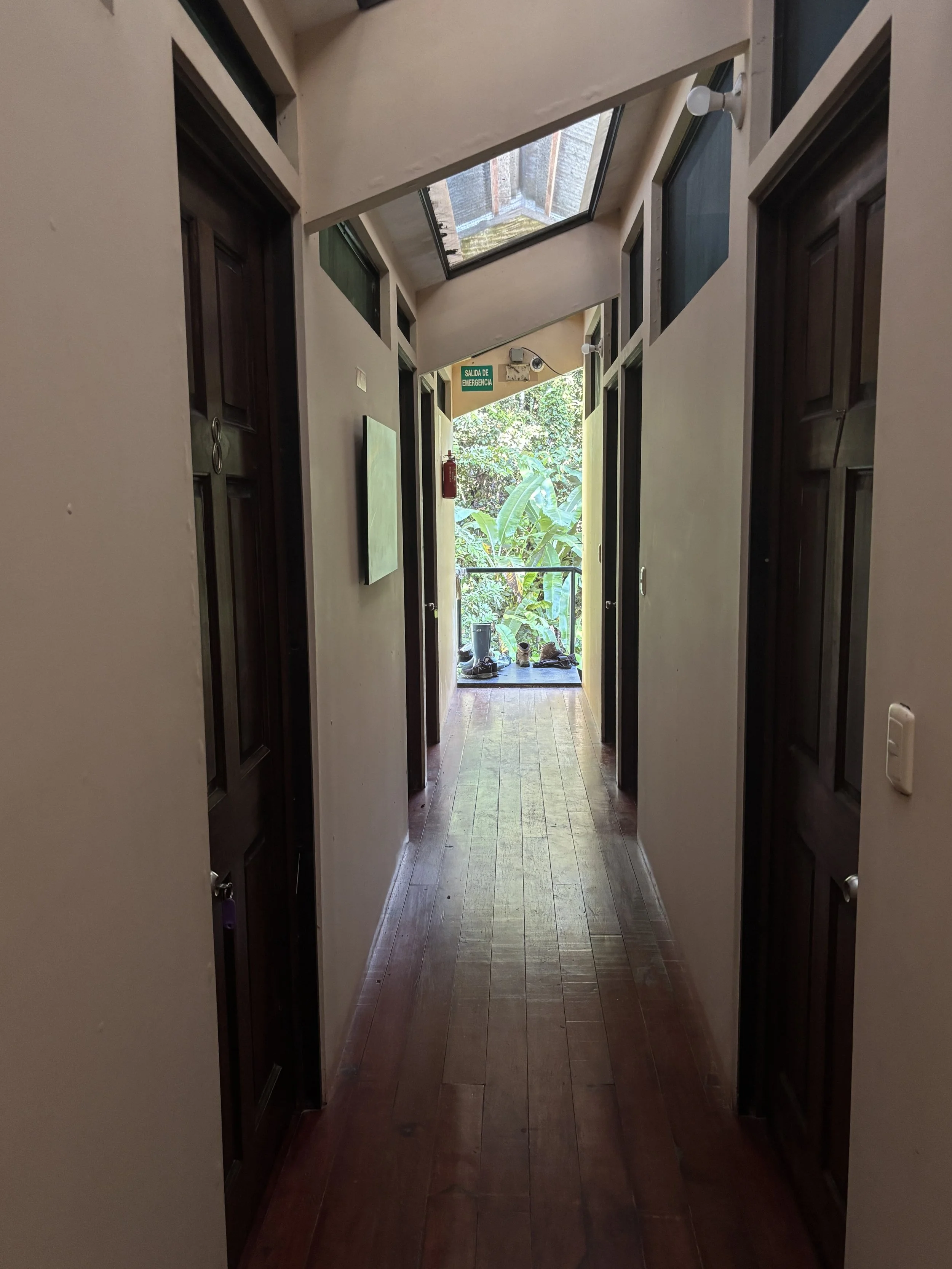
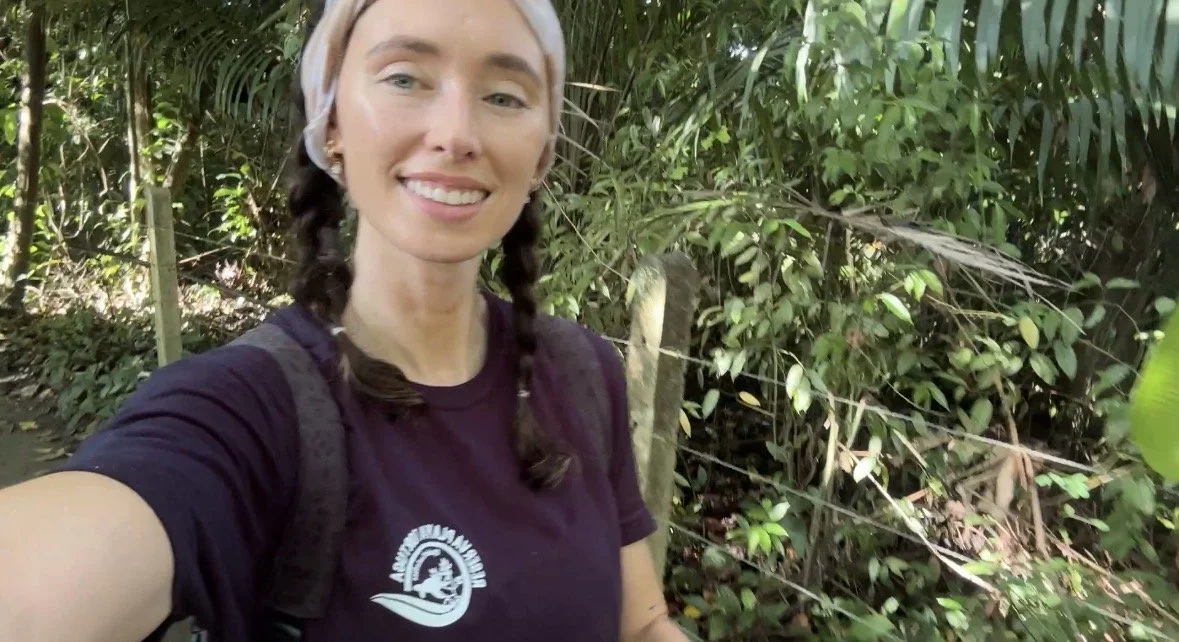
The restrooms sit only a few feet away, and I take my time getting ready, dabbing sunscreen on my face, braiding my hair. The humidity wraps around me thick and sweet, so I tie a bandana around my forehead to soften the sweat as my day begins.
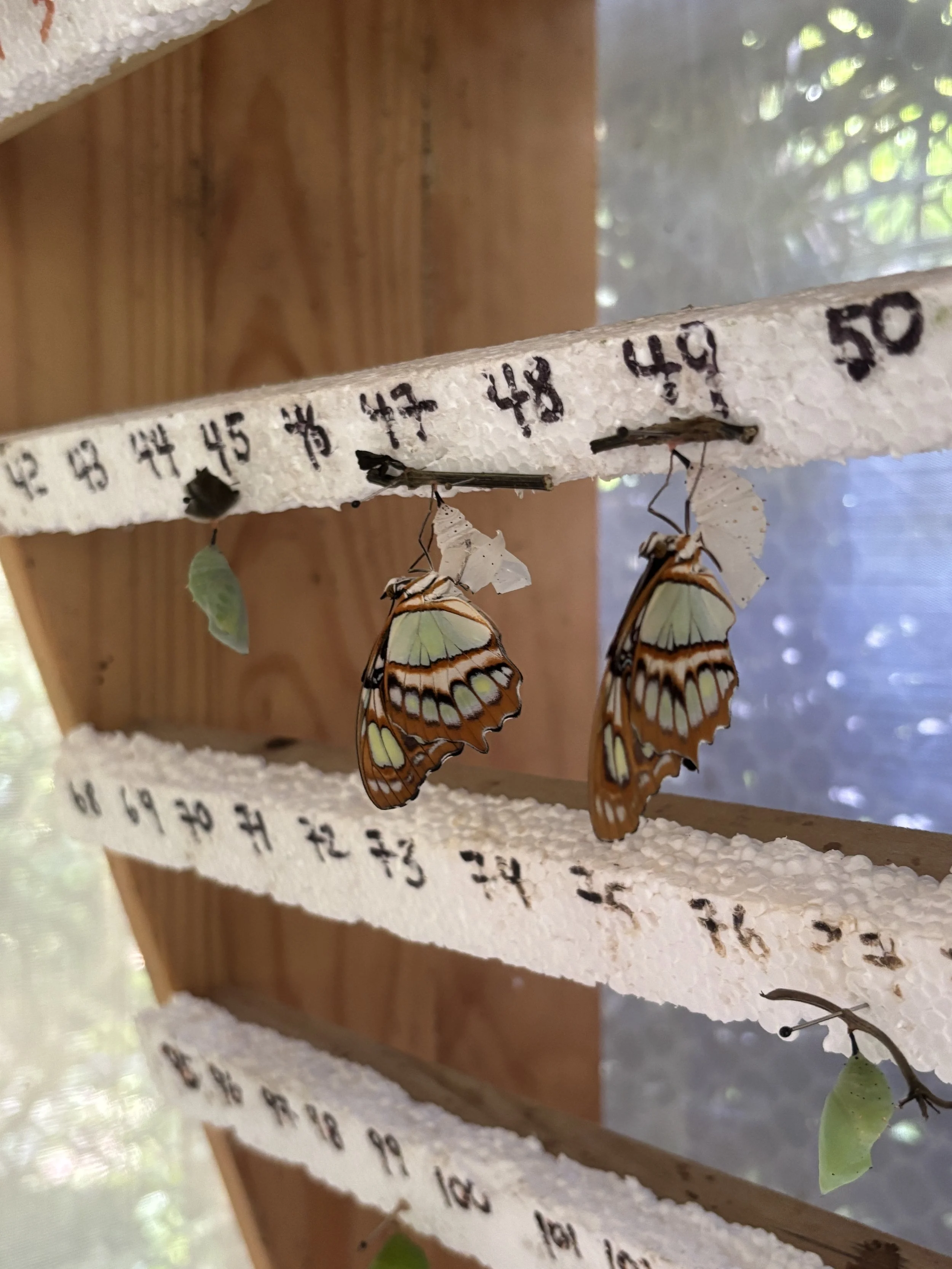
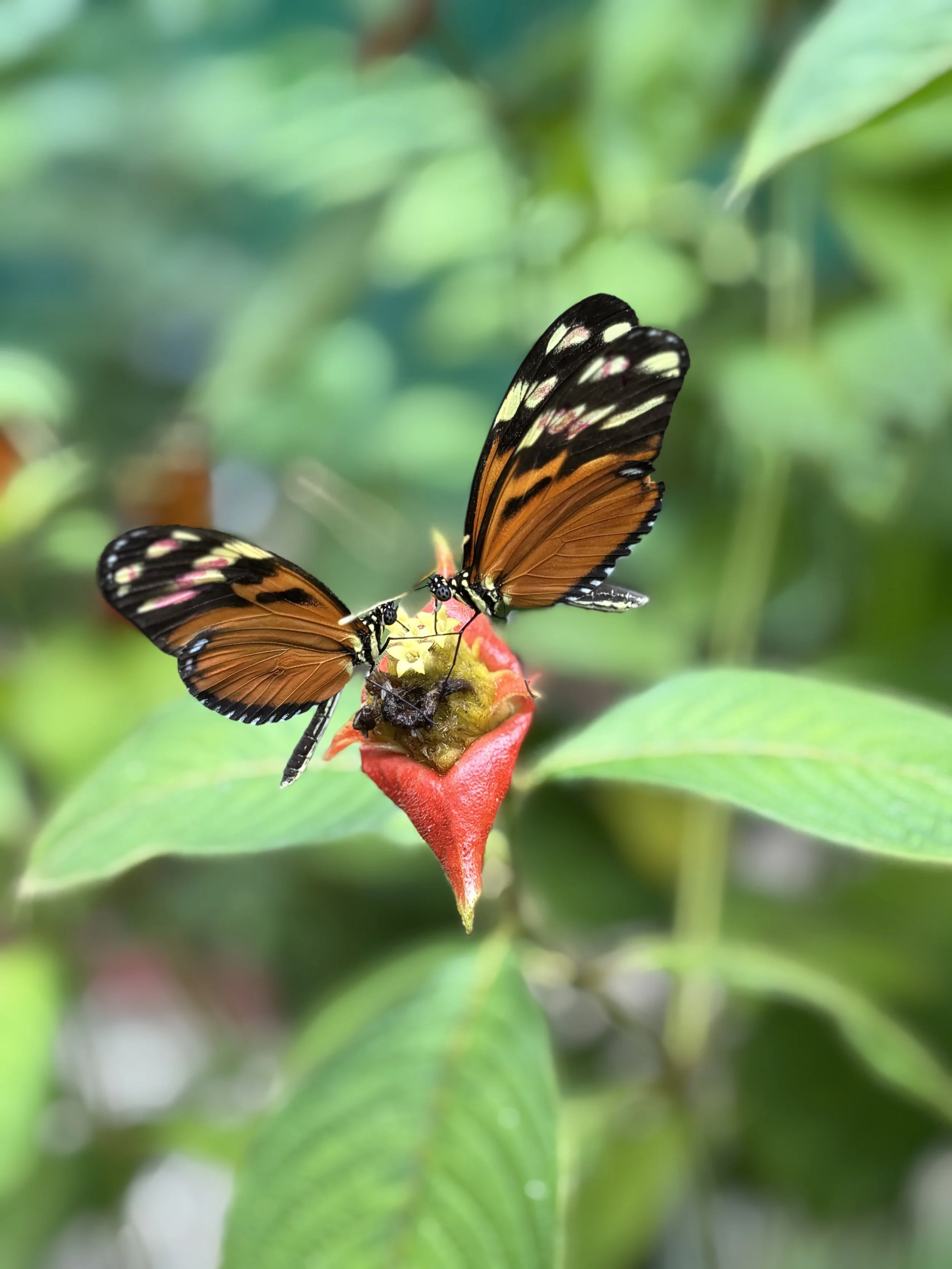
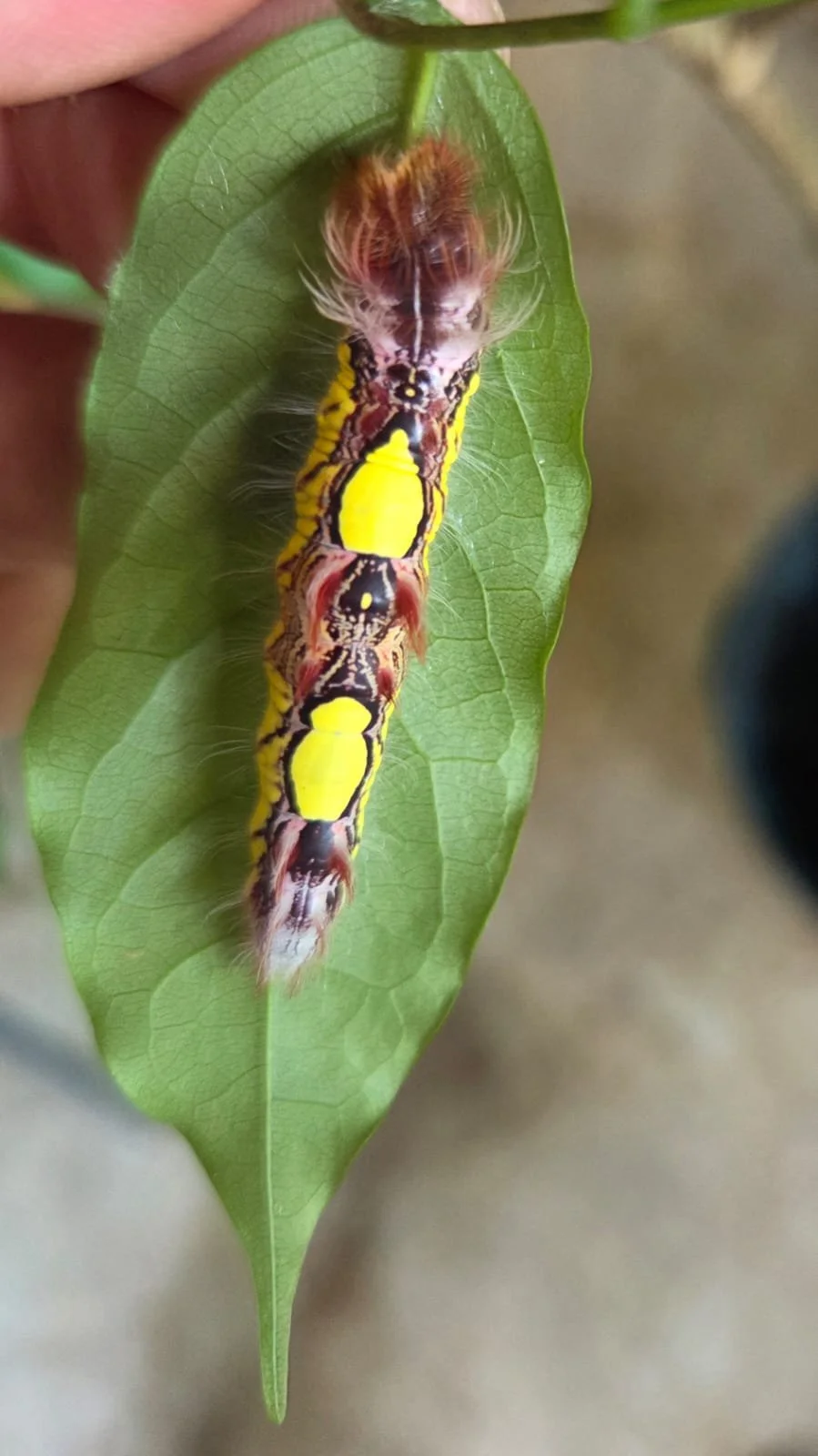
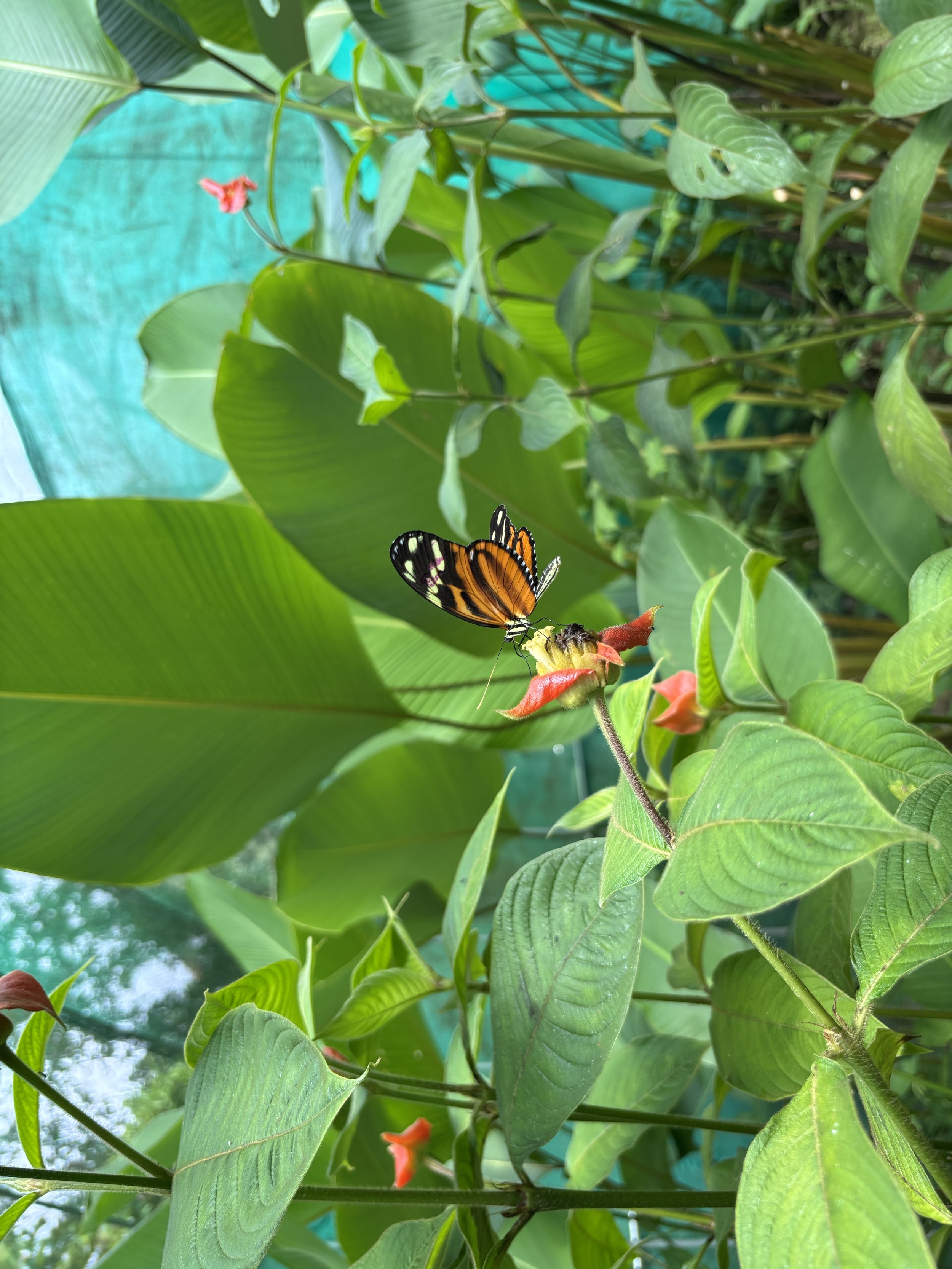
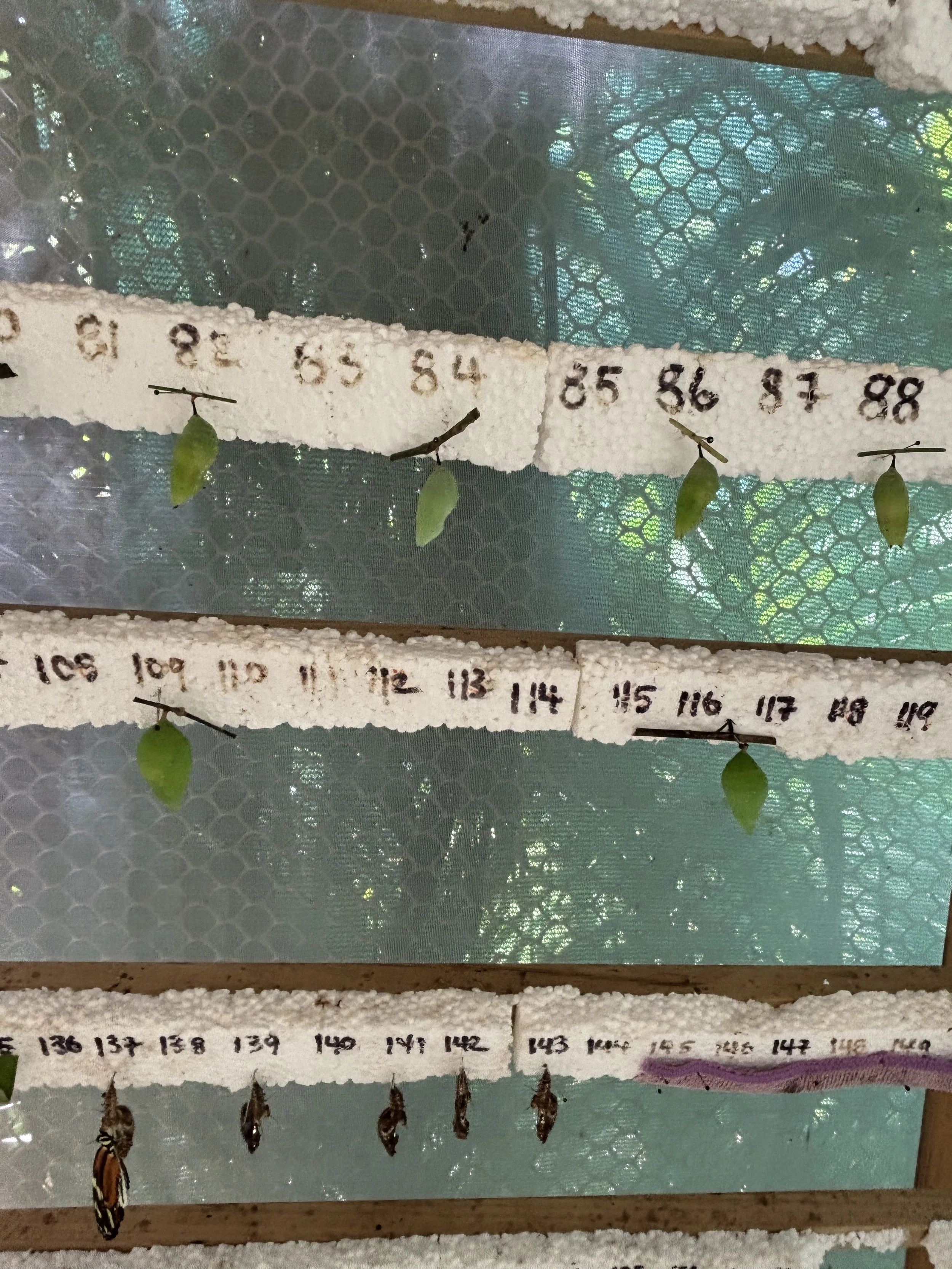
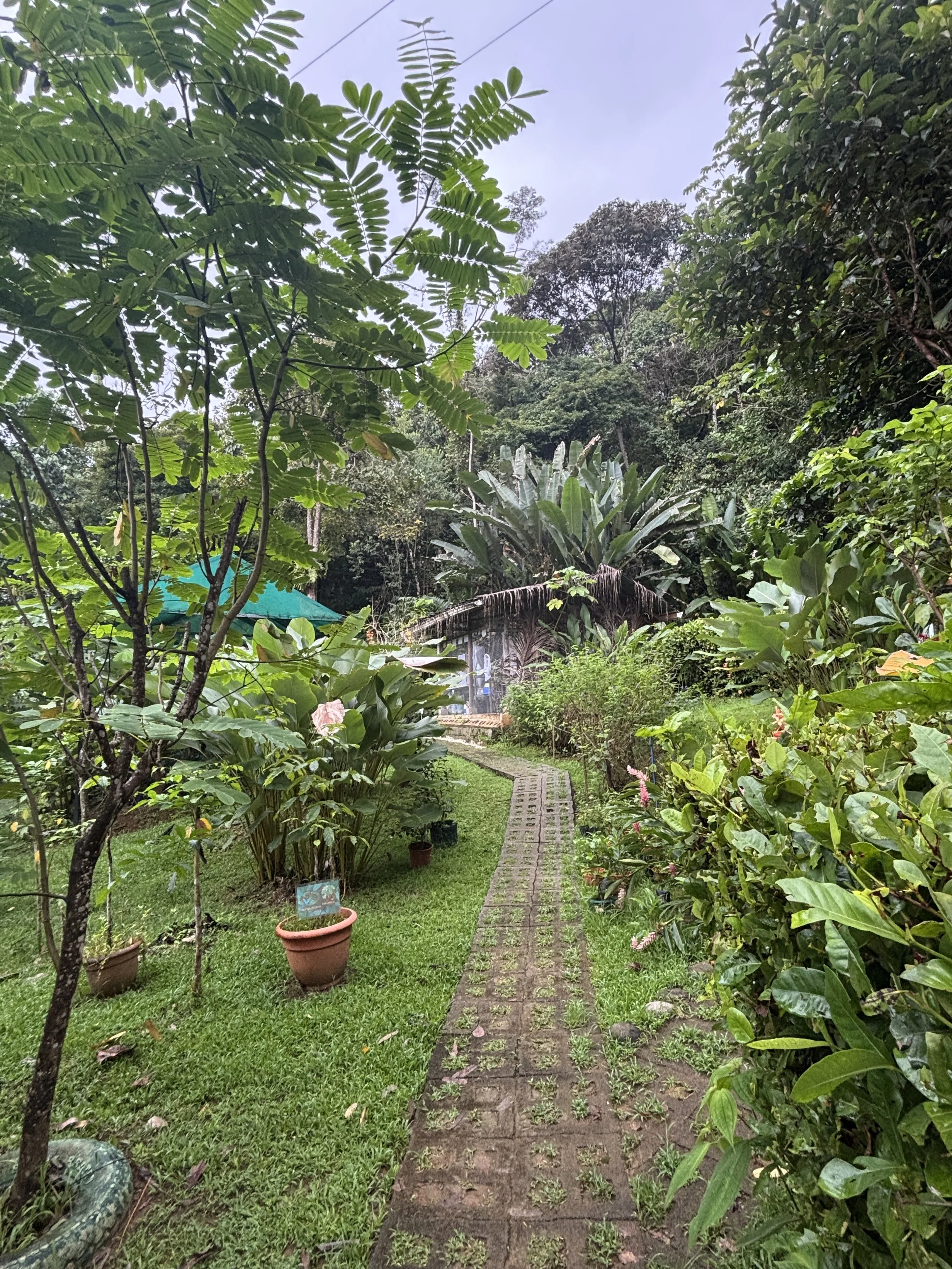
In the common area, I meet Amelie from the U.K. and Ana from Spain, who invite me to join them in the butterfly garden. Within minutes, I’m surrounded by tropical foliage in every shade of green and flowers bursting with color before stepping into a small chrysalis house. Amelie explains the rhythm of the butterfly garden—cleaning out feces, counting larvae, protecting the pupae, and eventually releasing the butterflies into the enclosed haven. Egg collection comes in the afternoon, but my new friends bring me anyway.
Entering felt like slipping into another world. Small and large butterflies twirled, swooped, and drifted around me like living brushstrokes. I thought back to college, when I first fell in love with my biological sciences courses and promised myself that one day I’d volunteer in a meaningful way to help protect wildlife. Standing there surrounded by those butterflies, I realized I was finally living that promise.
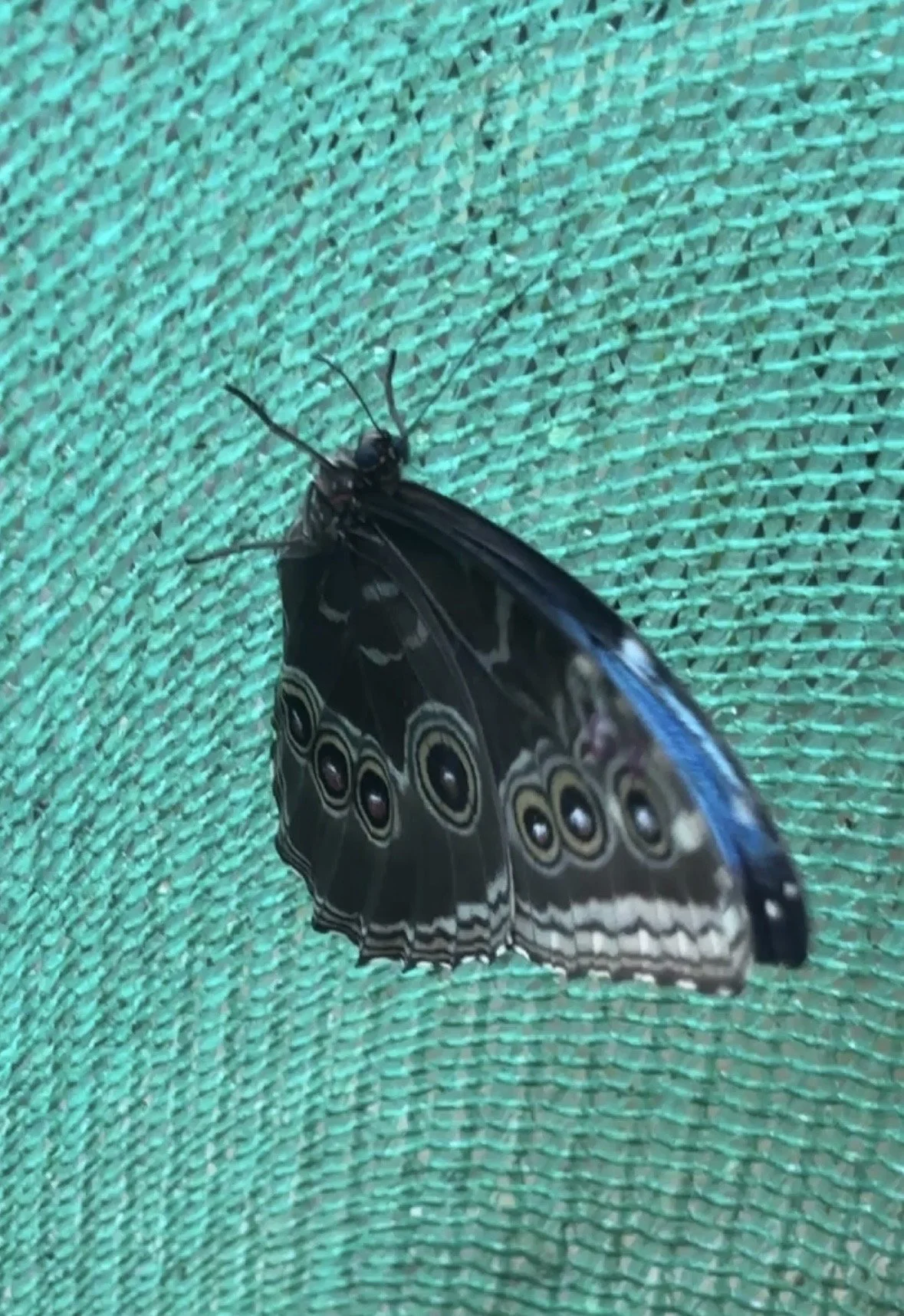
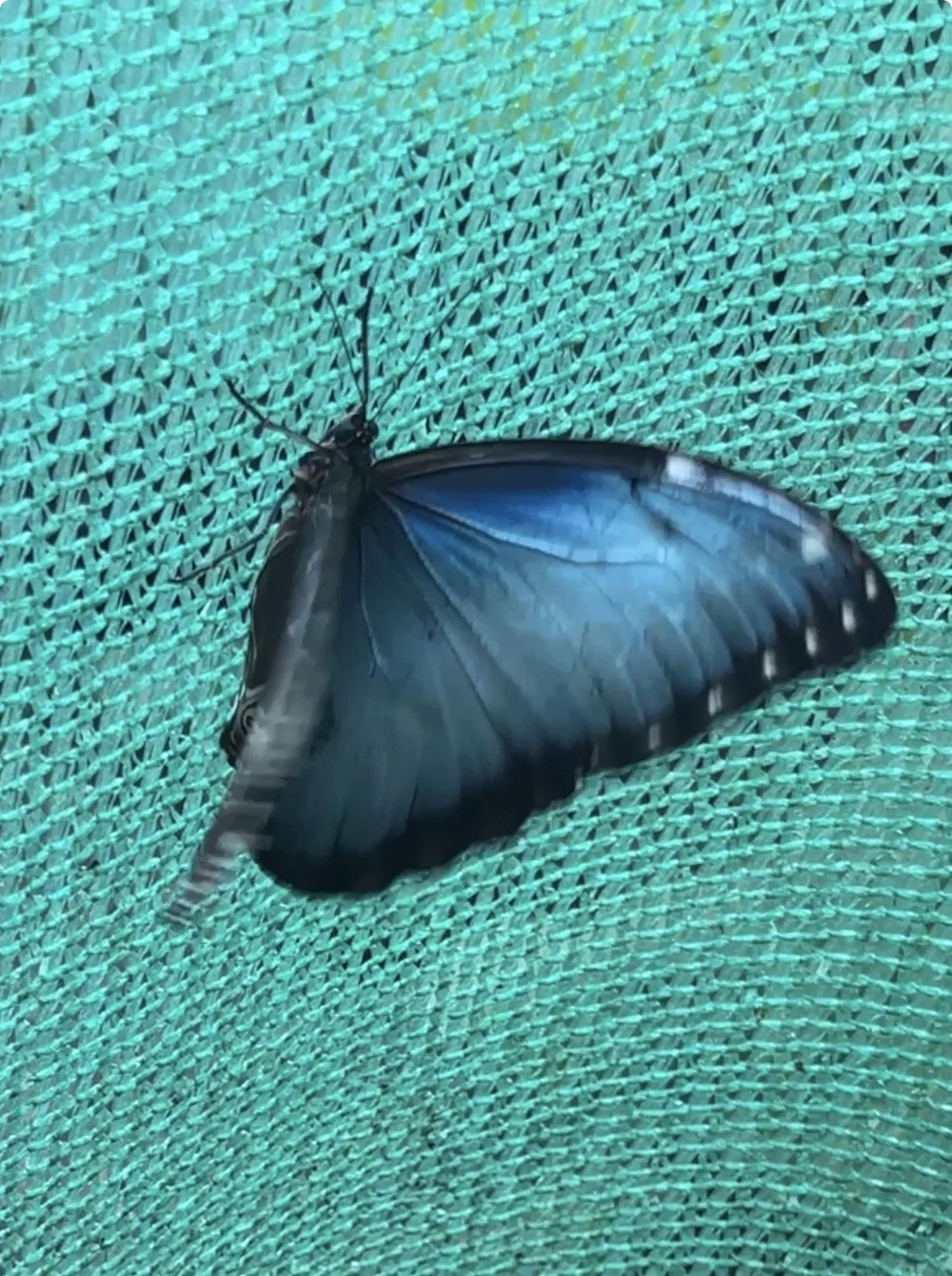
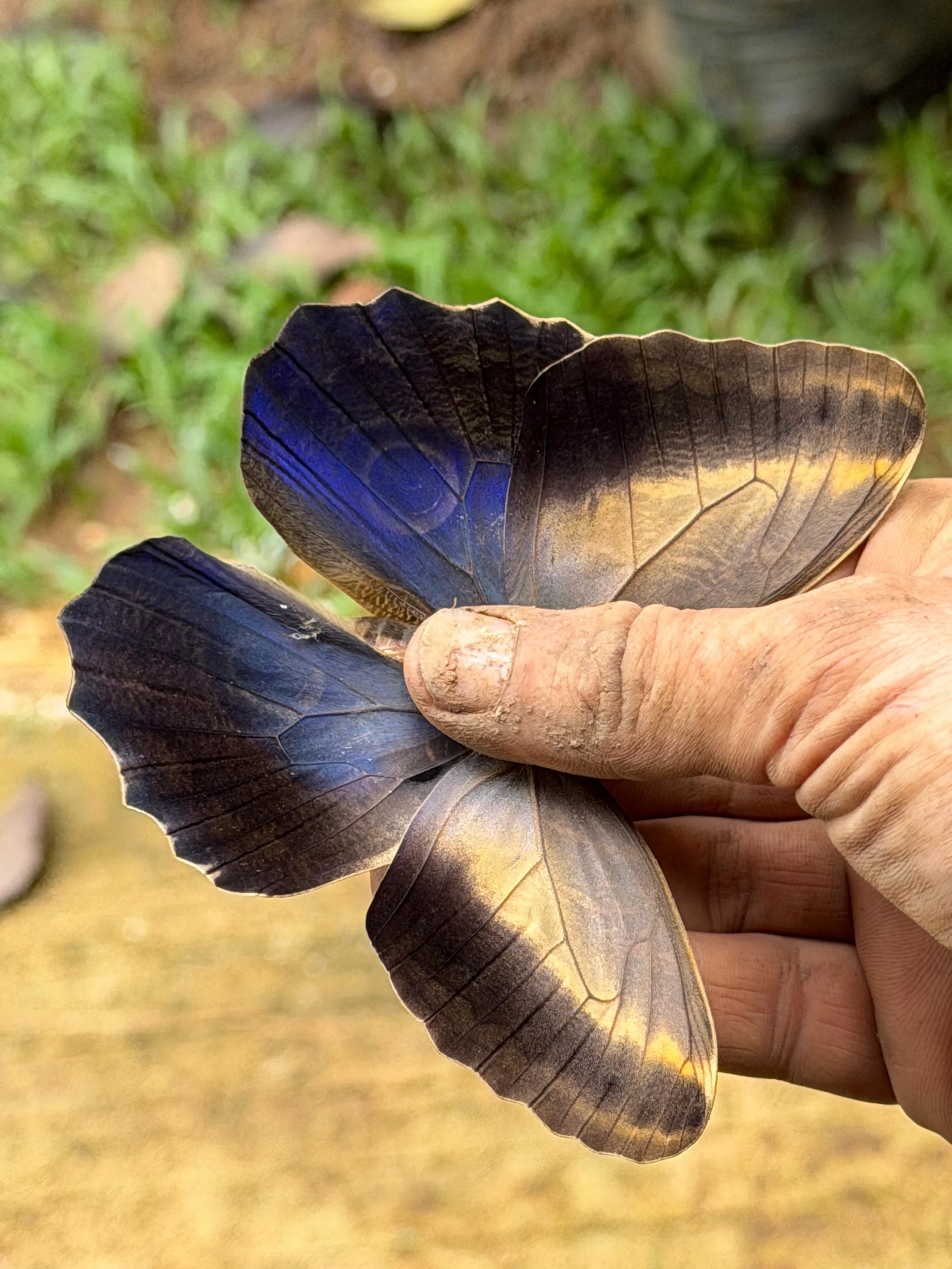
“That one is so beautiful,” I said, pointing to a giant butterfly with vibrant blue on the inside and inky black edged with white, delicate circles on the outside. “That’s a Morpho,” Amelie says. Over the next two weeks, I learned about multiple species—their eggs like tiny secrets, their larvae in constant hunger, their pupae suspended in transformation.
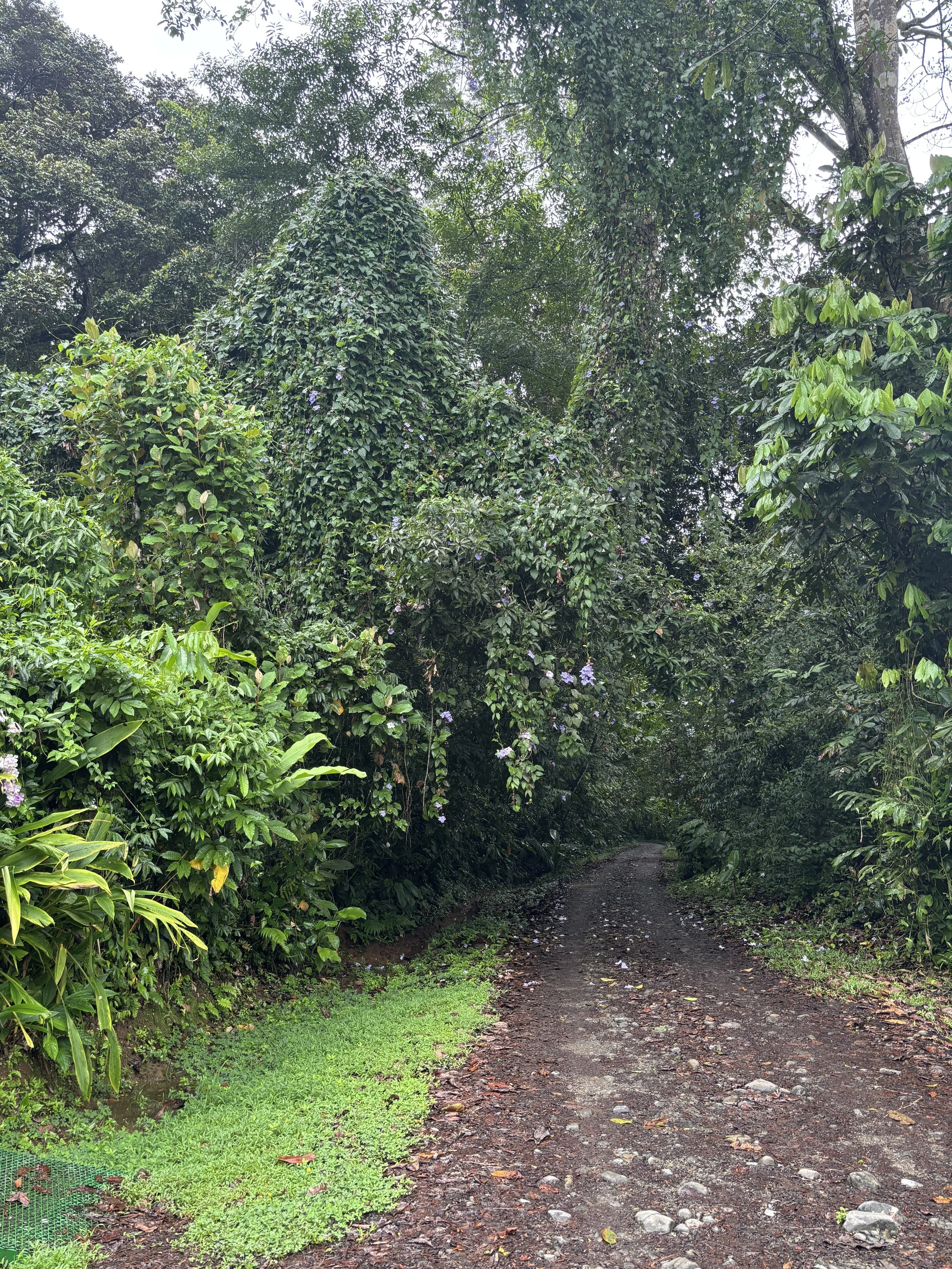
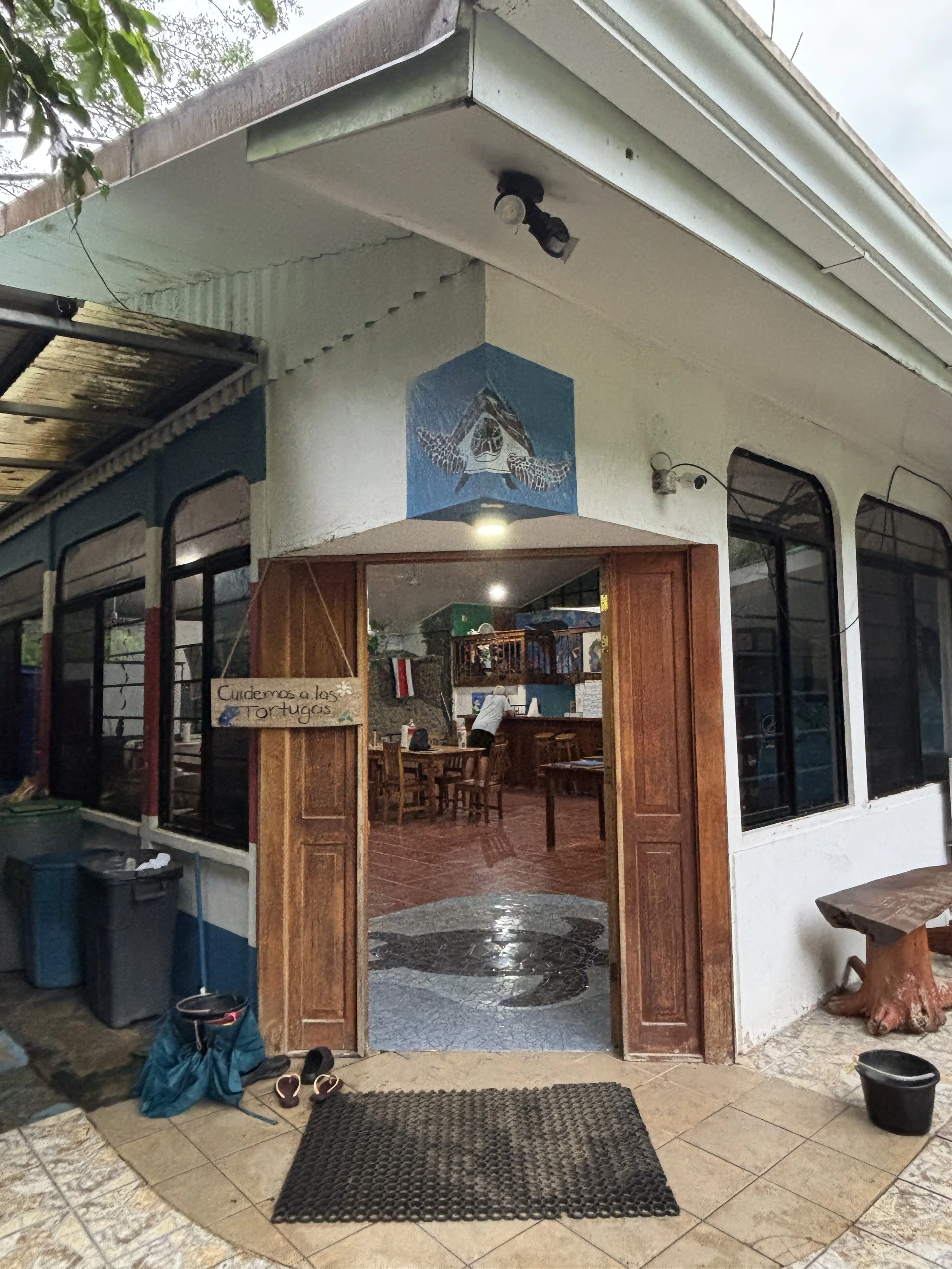
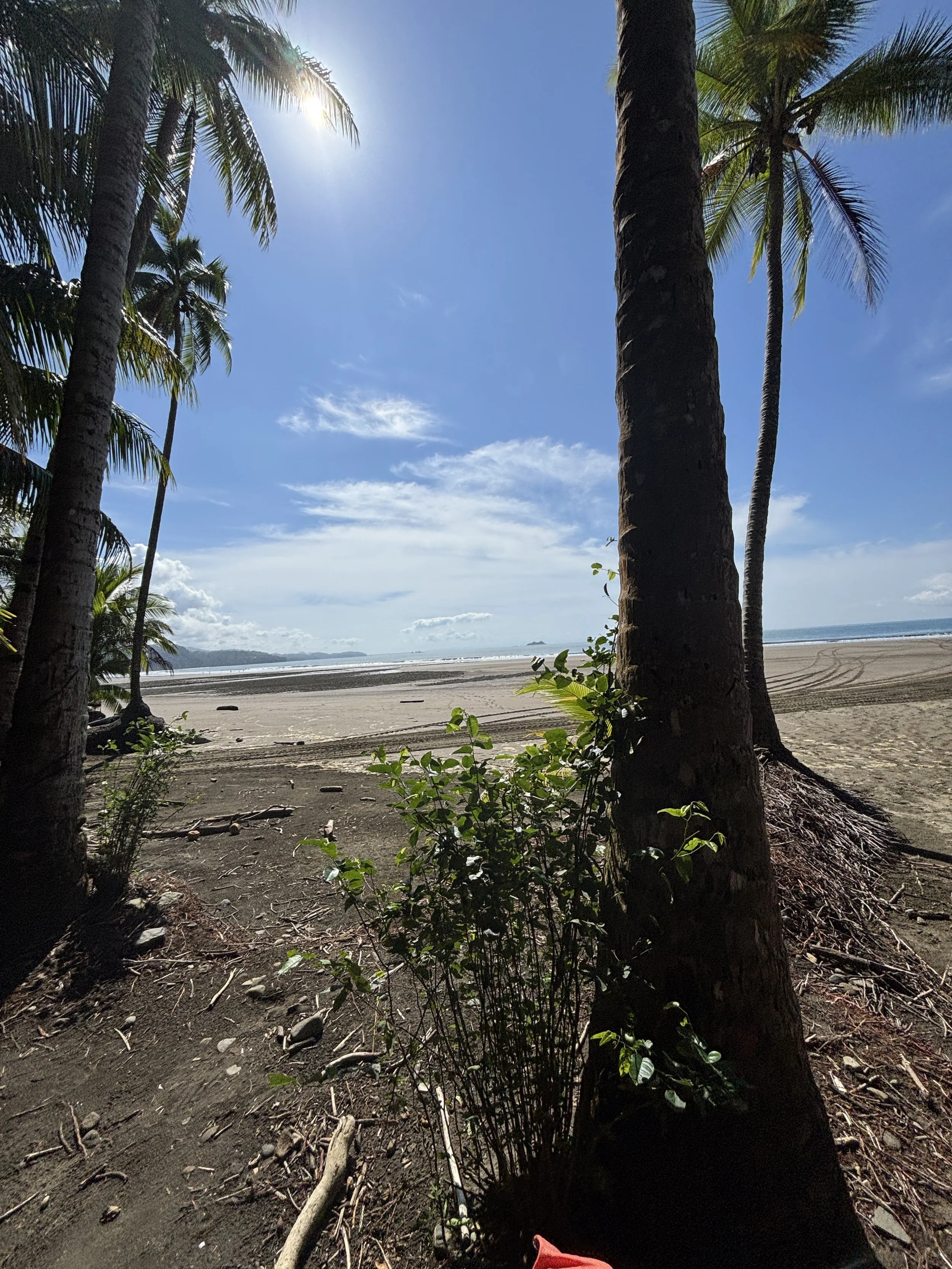
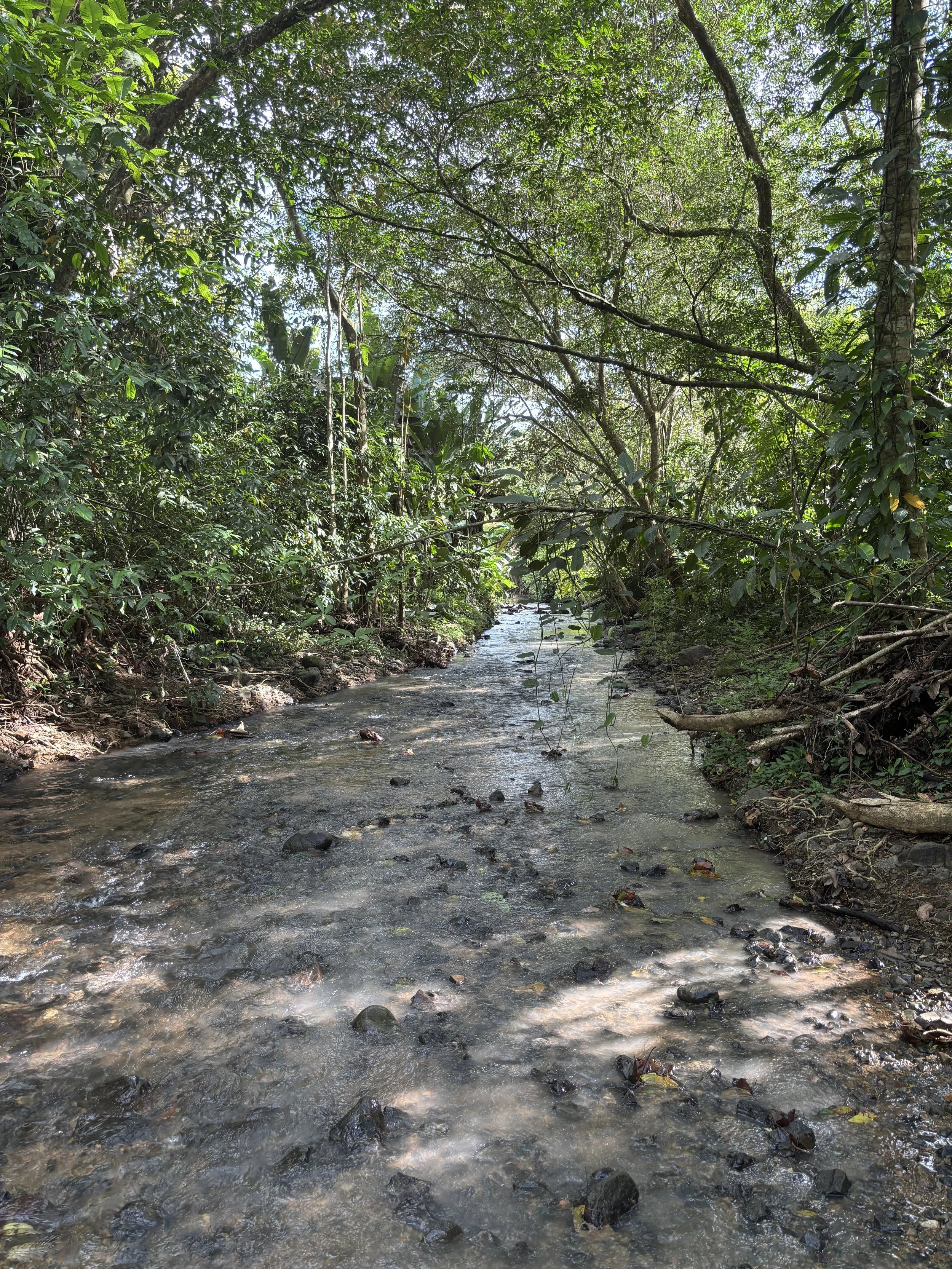
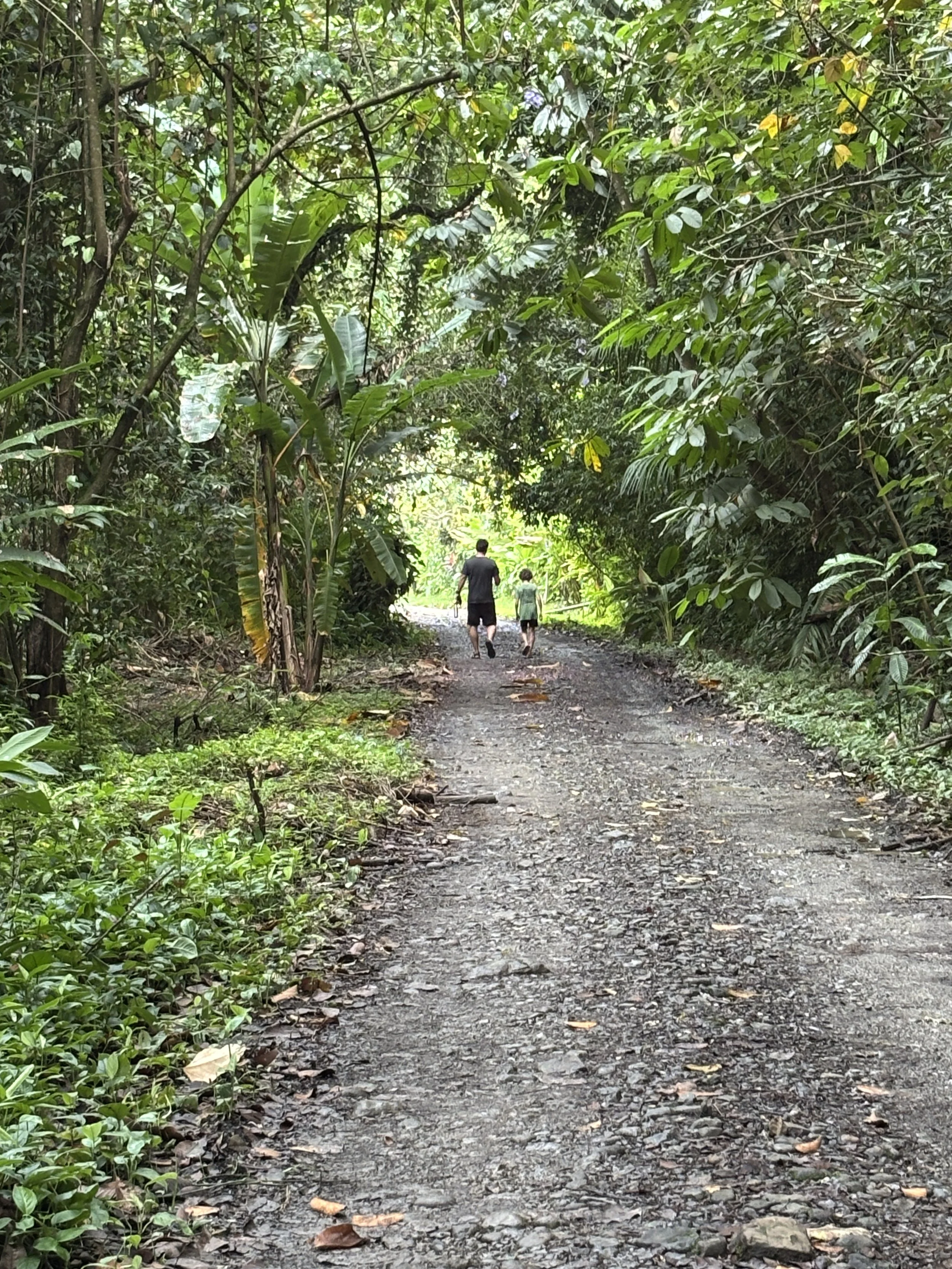
When we finished in the butterfly garden, the biologist, Cycy, needed help. The walk to the turtle hatchery began down a dirt road, nothing like the dirt roads back home that cut through pastures. Here, it was bordered by dense, breathing jungle. The road ended, and we slipped onto a narrow trail, the air thick with salt and earth. Instead of reaching the open beach, we turned into a small clearing marked by a wooden sign: Programa de Conservación de Tortugas Marinas.
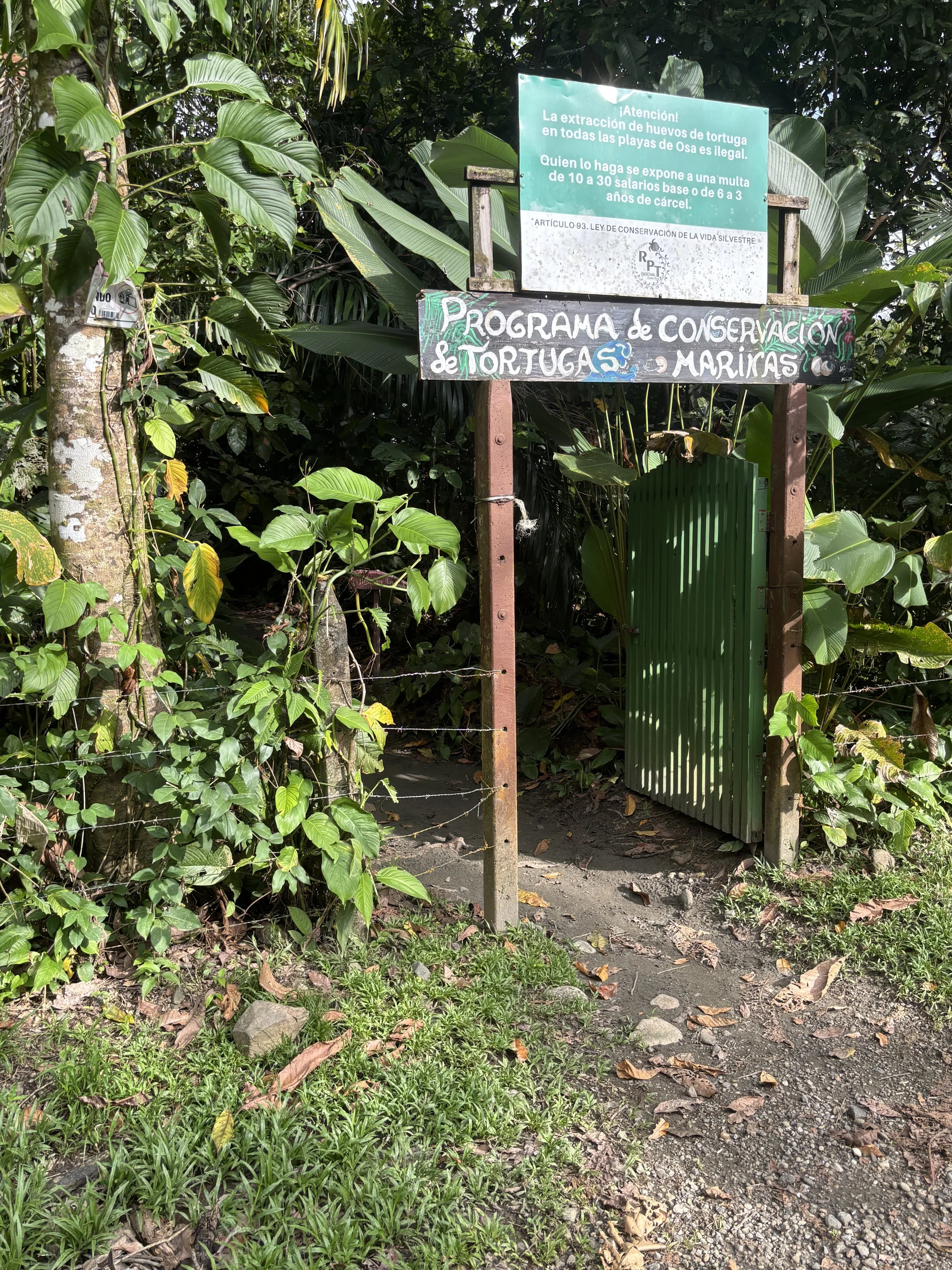
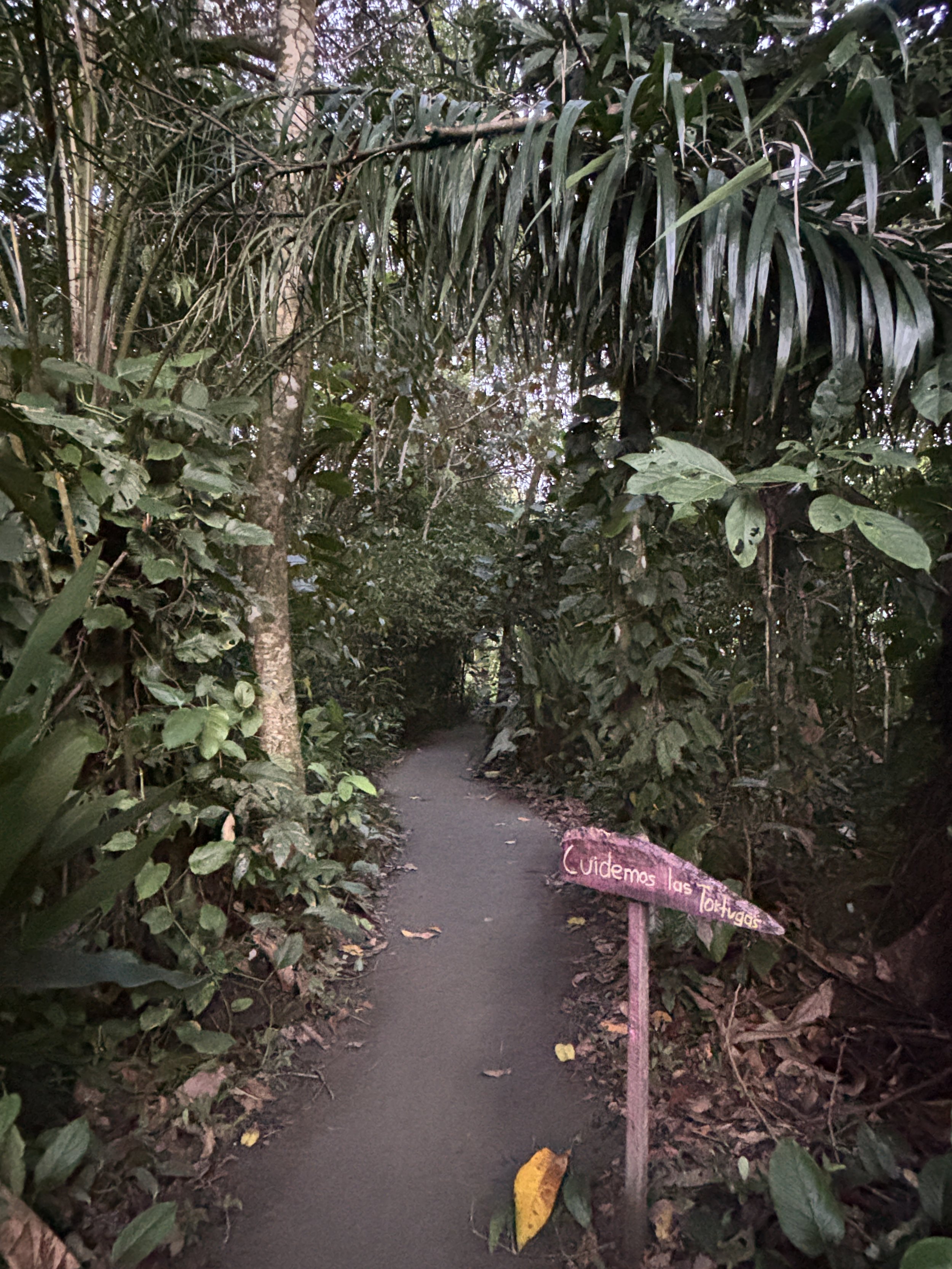
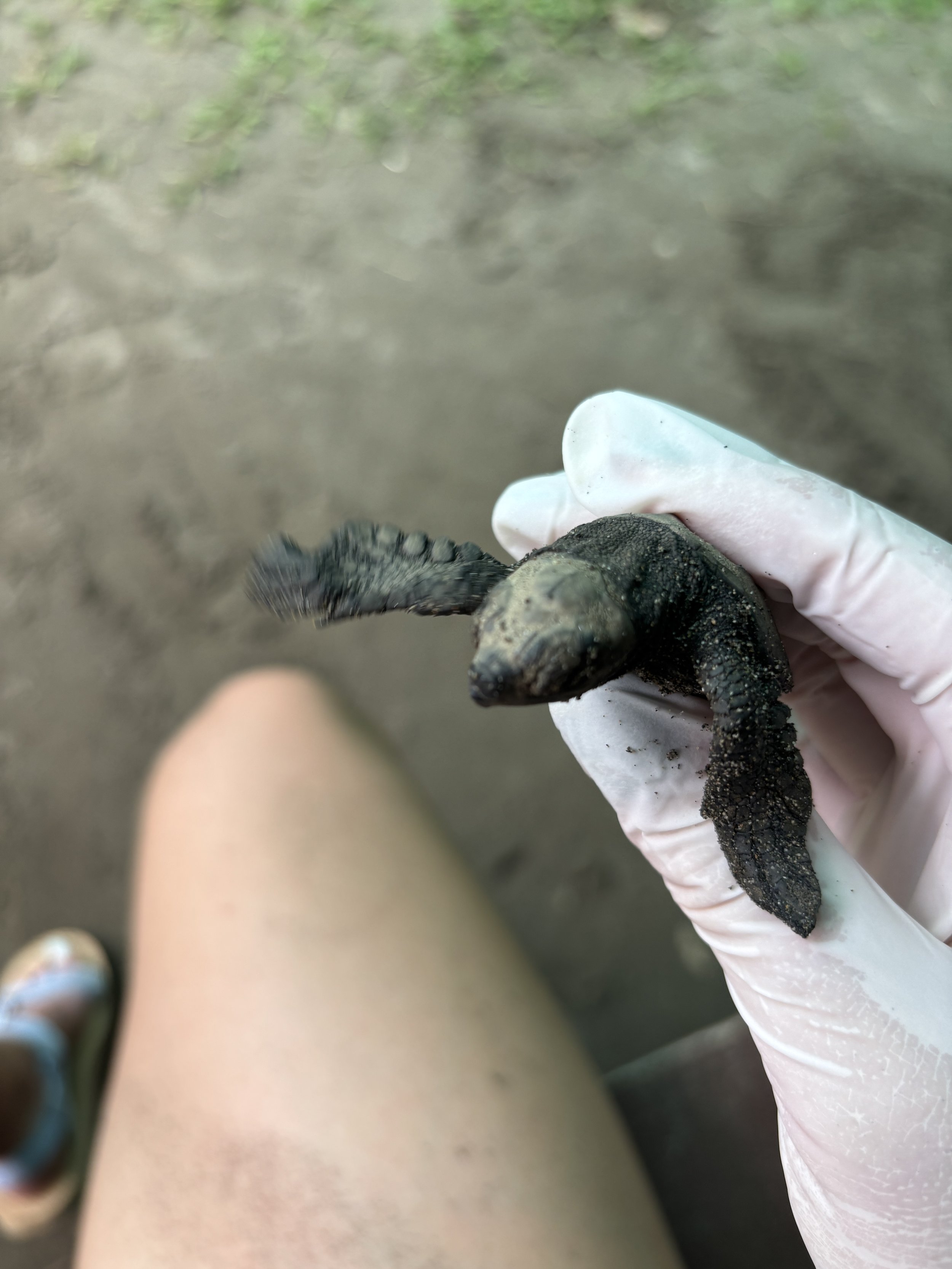
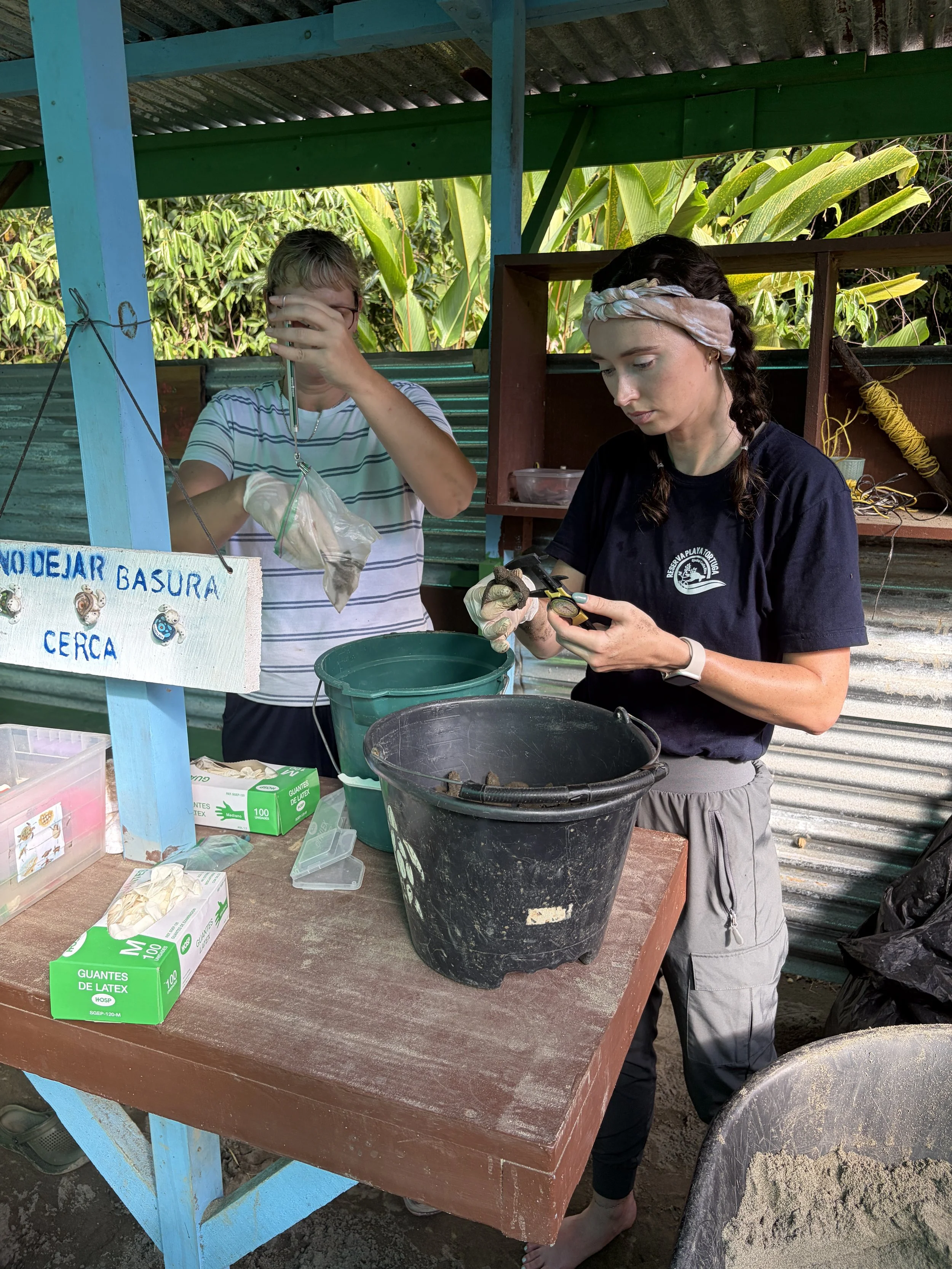
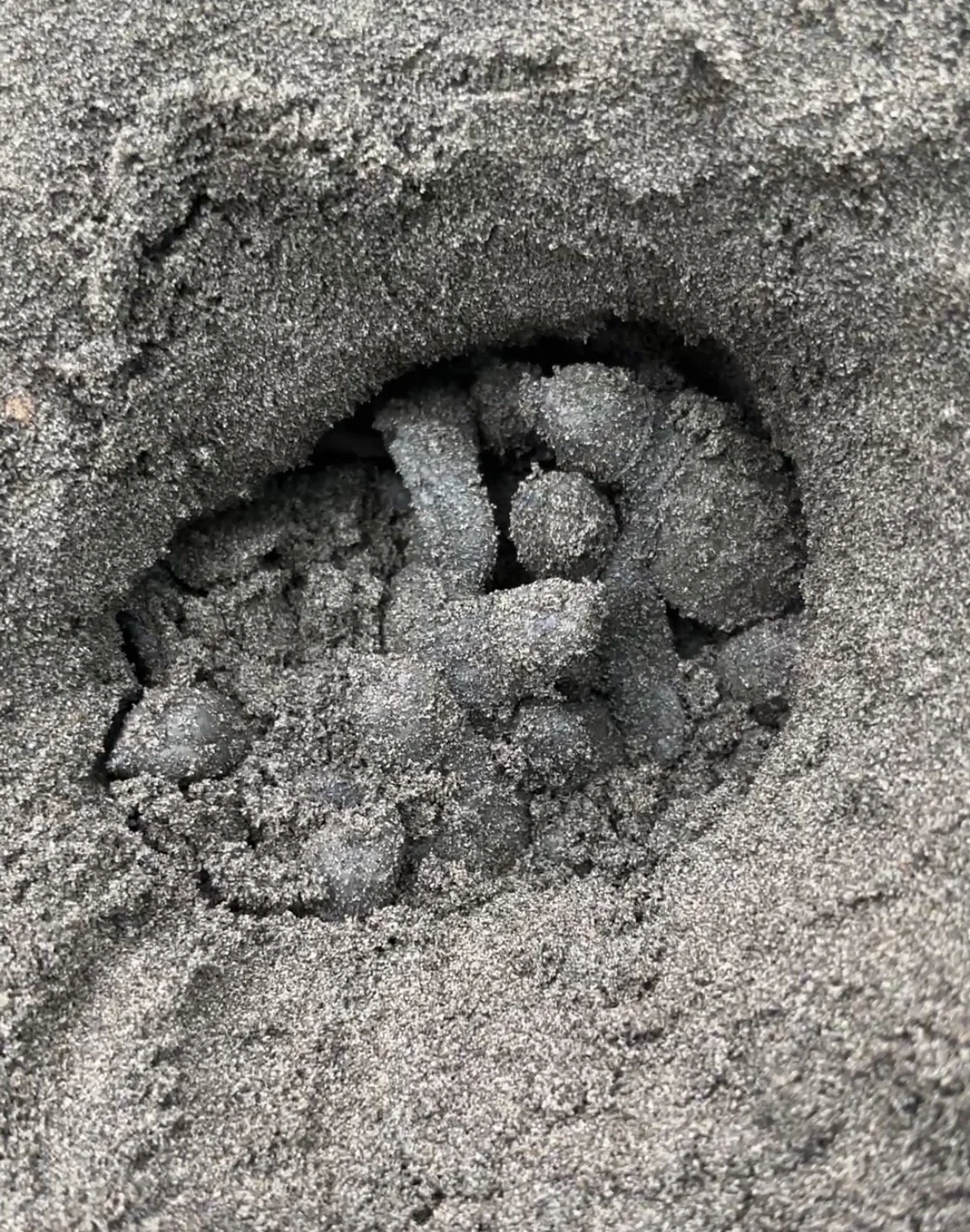
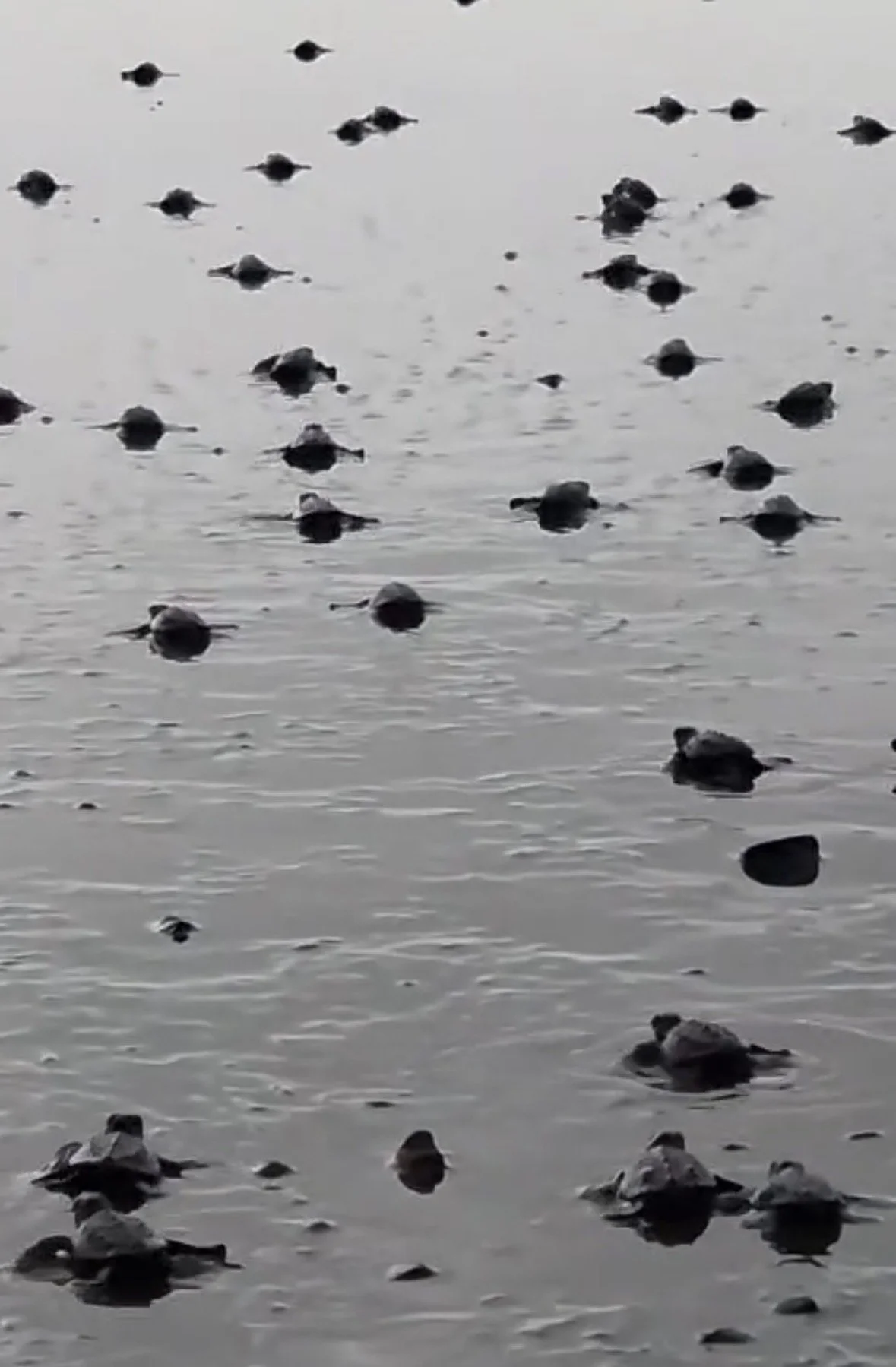
Within minutes, a gated area opened before us. A curved enclosure stood to the right, and to the left—a covered table with gloves, notebooks, and tools arranged with quiet purpose. I heard the ocean in a red bucket sitting upon a bench. Not waves but synchronized paddling of 62 baby turtles searching for the sea. My smile grew so wide it hurt. My friends stood near the entrance speaking in a gentle mix of Spanglish and French, and I felt something in me expand, soften, settle.
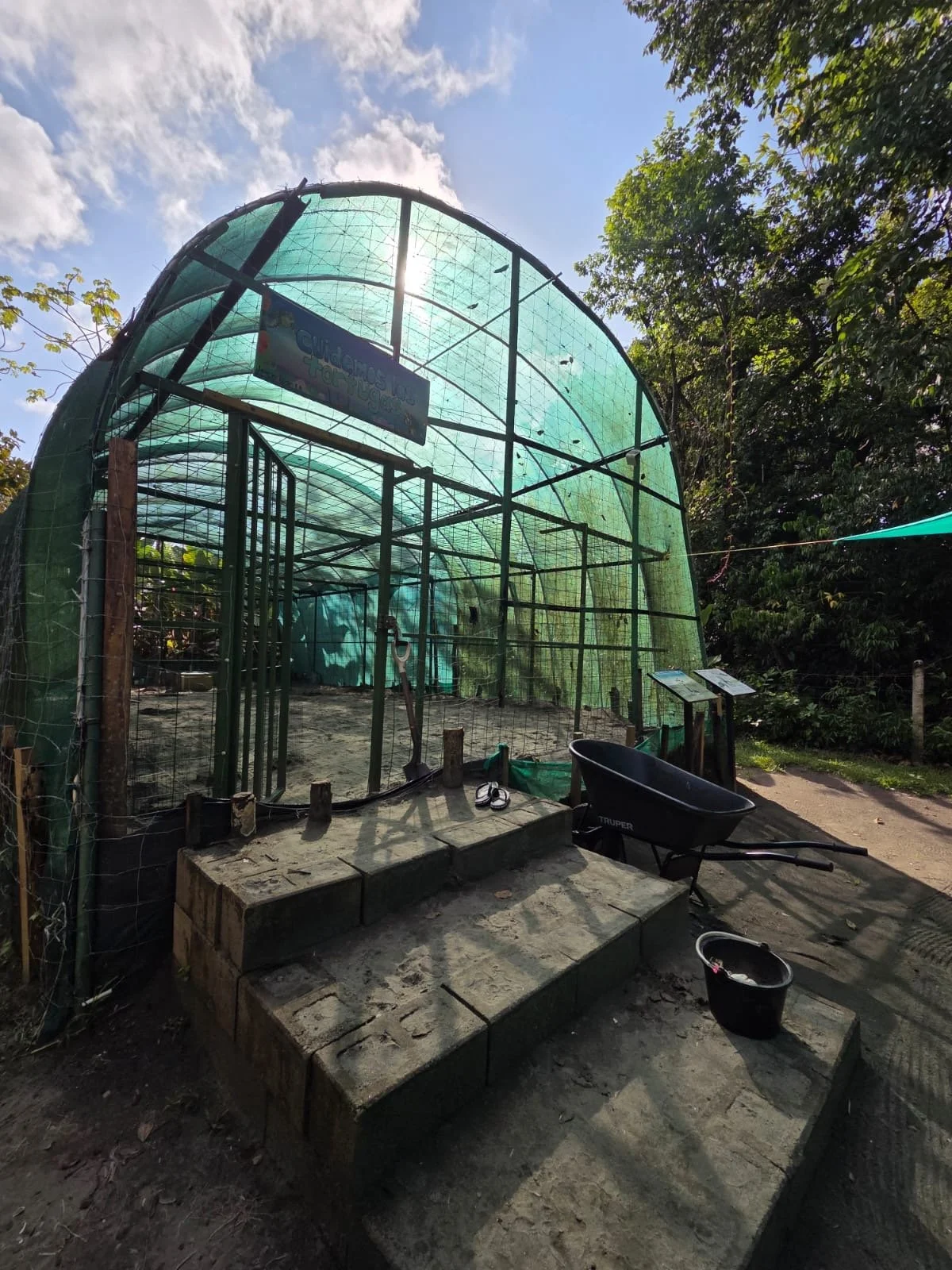
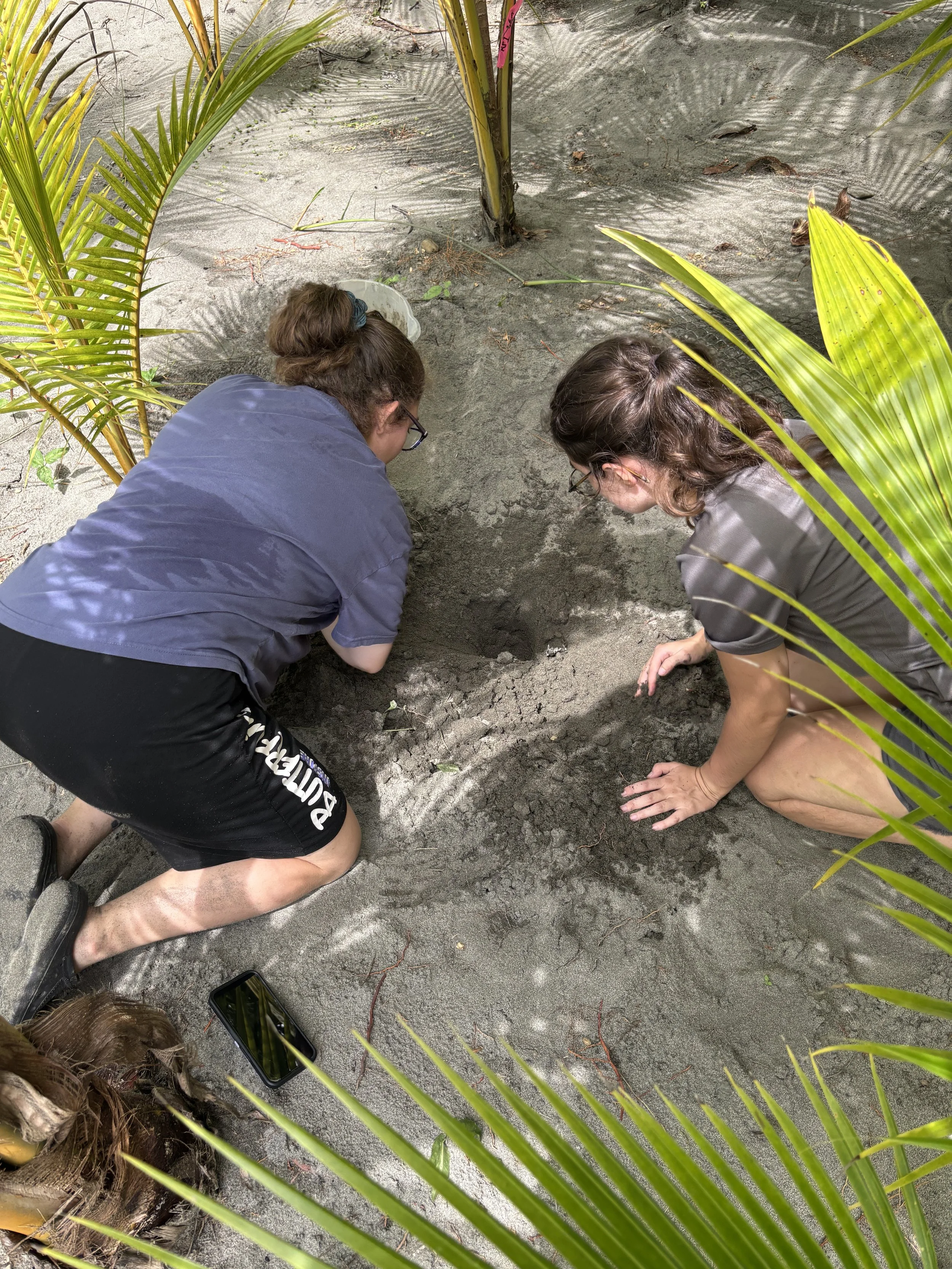
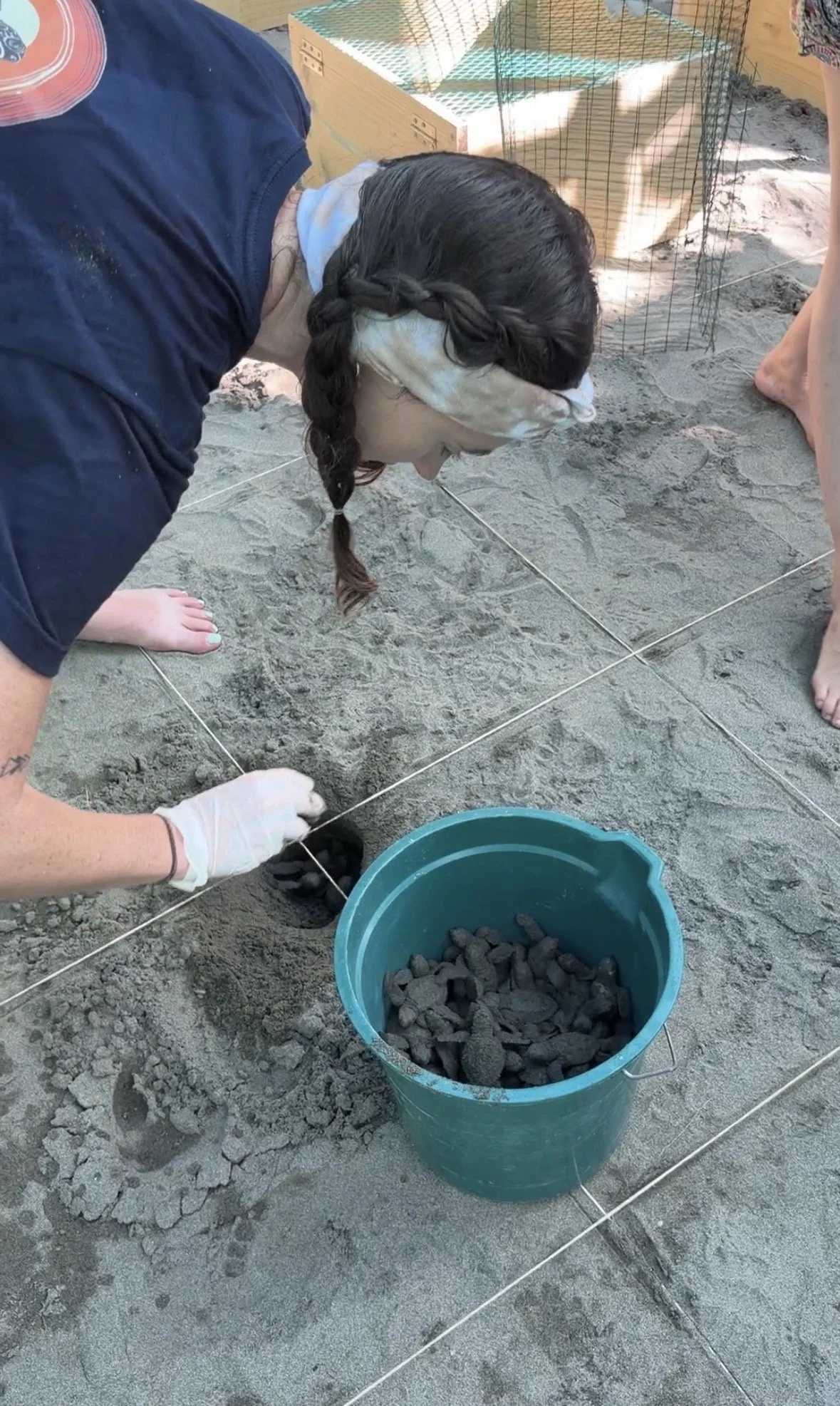
I peeled myself away and joined Cycy as she explained how to move through the hatchery. Nests tucked everywhere beneath the thin white ropes of the grid. The top labeled A–J, the side numbered. Today, we replaced sand. Old sand carries bacteria and fungi that threaten fragile eggs, so once a nest hatches and is exhumed, we dig it out and replenish it with new sand. The work is long, tedious, and physically exhausting, yet deeply necessary.
Afterward, we walked back for lunch. The rest of the day, I felt lifted outside myself, drifting from one new assignment to the next, small classes placed between tasks to give me just enough knowledge to help. That evening, lying on my thin sheet with my fan humming in the corner, I felt alive and humbled before sleep pulled me swiftly under.
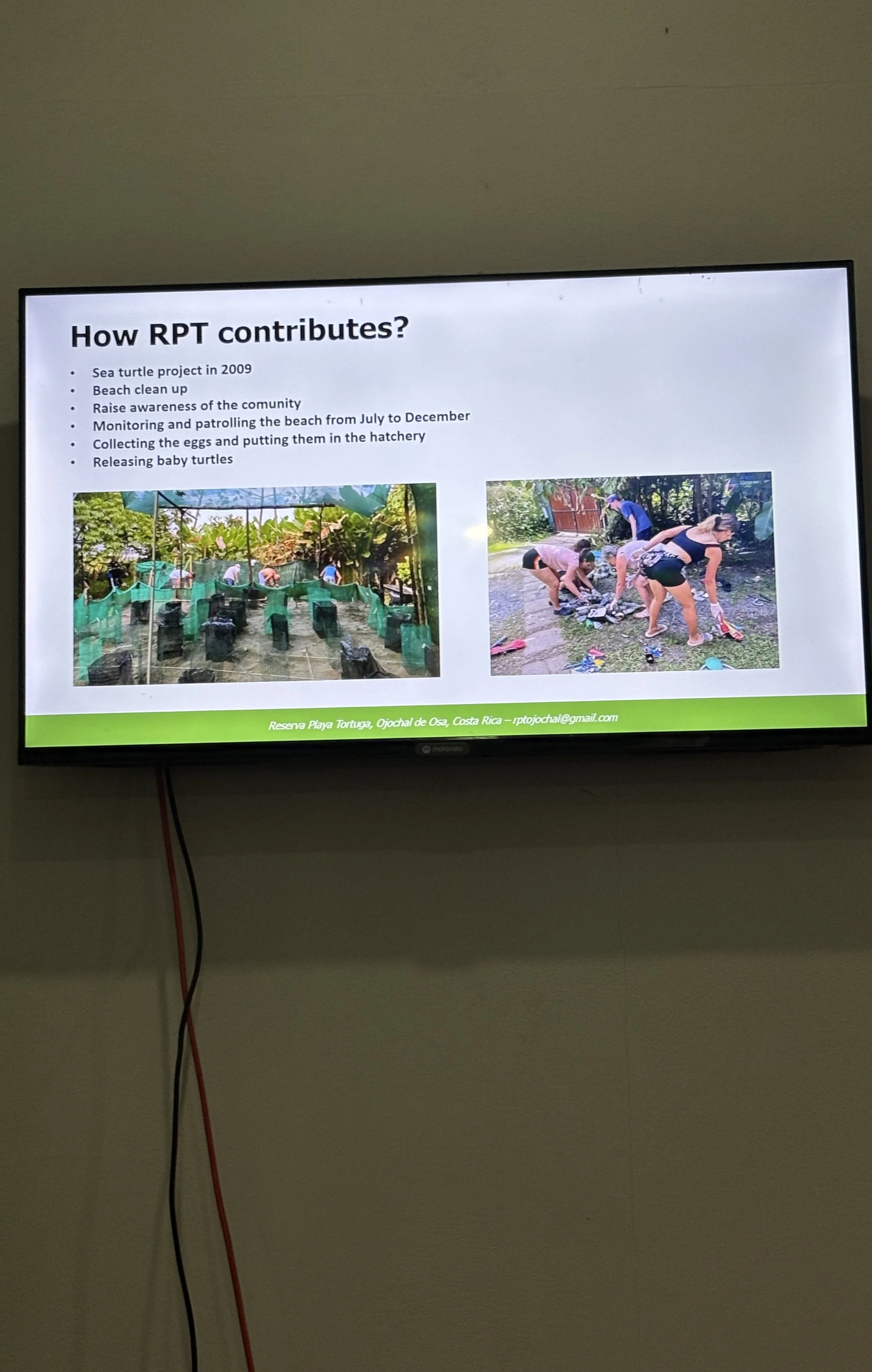
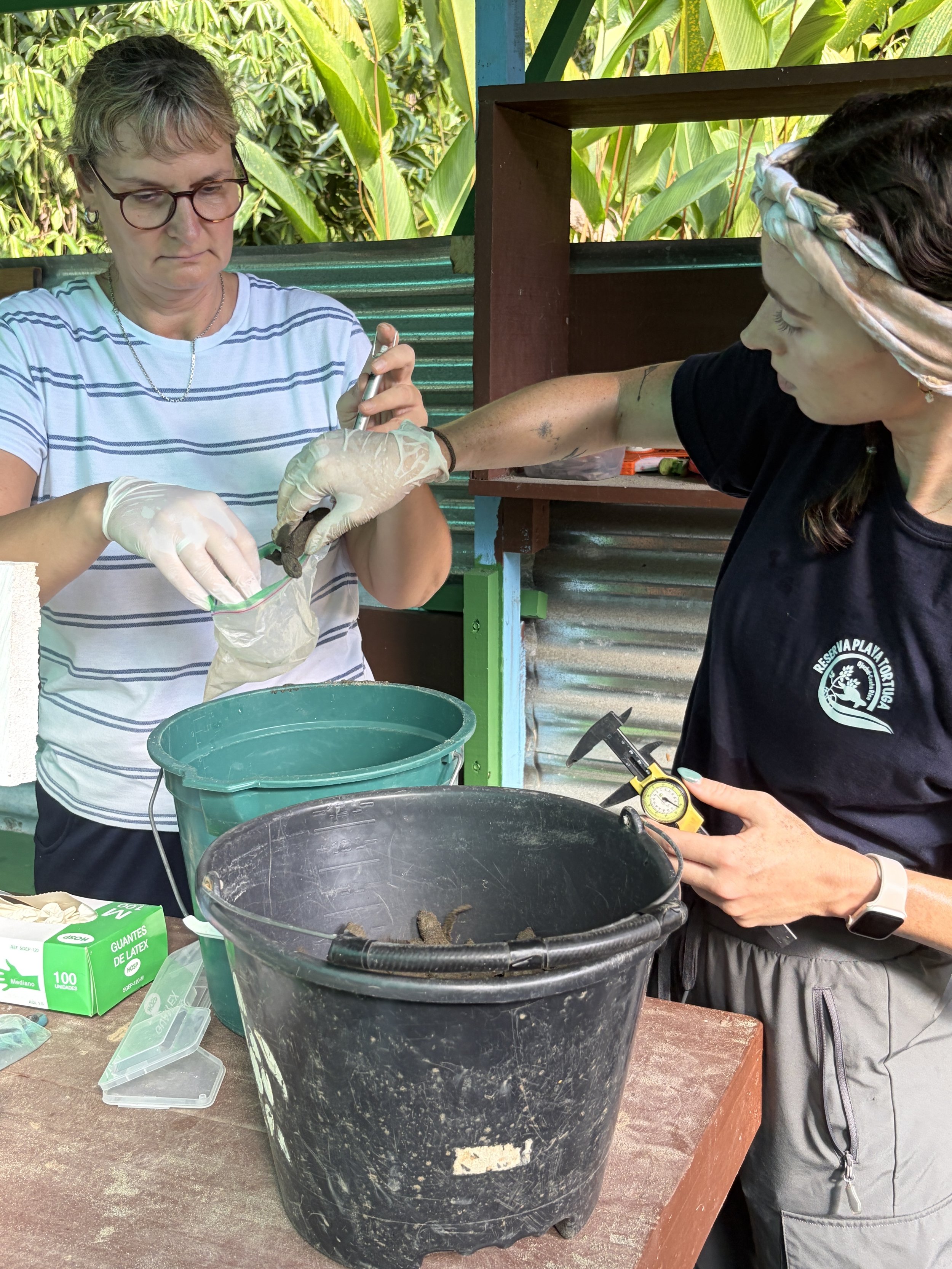
The next few days, I settled into my shifting schedule, adjusting to the changing needs of the Turtle Project. The Reserva studies many species including macaws, caimans, and crocodiles, and as volunteers, we play small but important roles. The Turtle Project is the heart of the work, and most days I found myself changing sand, measuring and weighing hatchlings, helping with exhumations, and walking night patrols under the quilt of stars, searching for new nests.
My favorite night walk was on 11/16—the peak of the Leonids meteor shower. Sara, Sandra, and I began our 1–4 a.m. patrol, and after the first five out of ten kilometers, we took a break. We lay on Sandra’s poncho, our eyes softened to darkness, the ocean roaring like a heartbeat beside us. Lightning flickered on the horizon. The Milky Way stretched overhead dusting the night sky. And for the first time since I was a little girl, I wished on a shooting star. Every single one.

The night Sky during Leonids Meteor Shower on Tortuga Beach
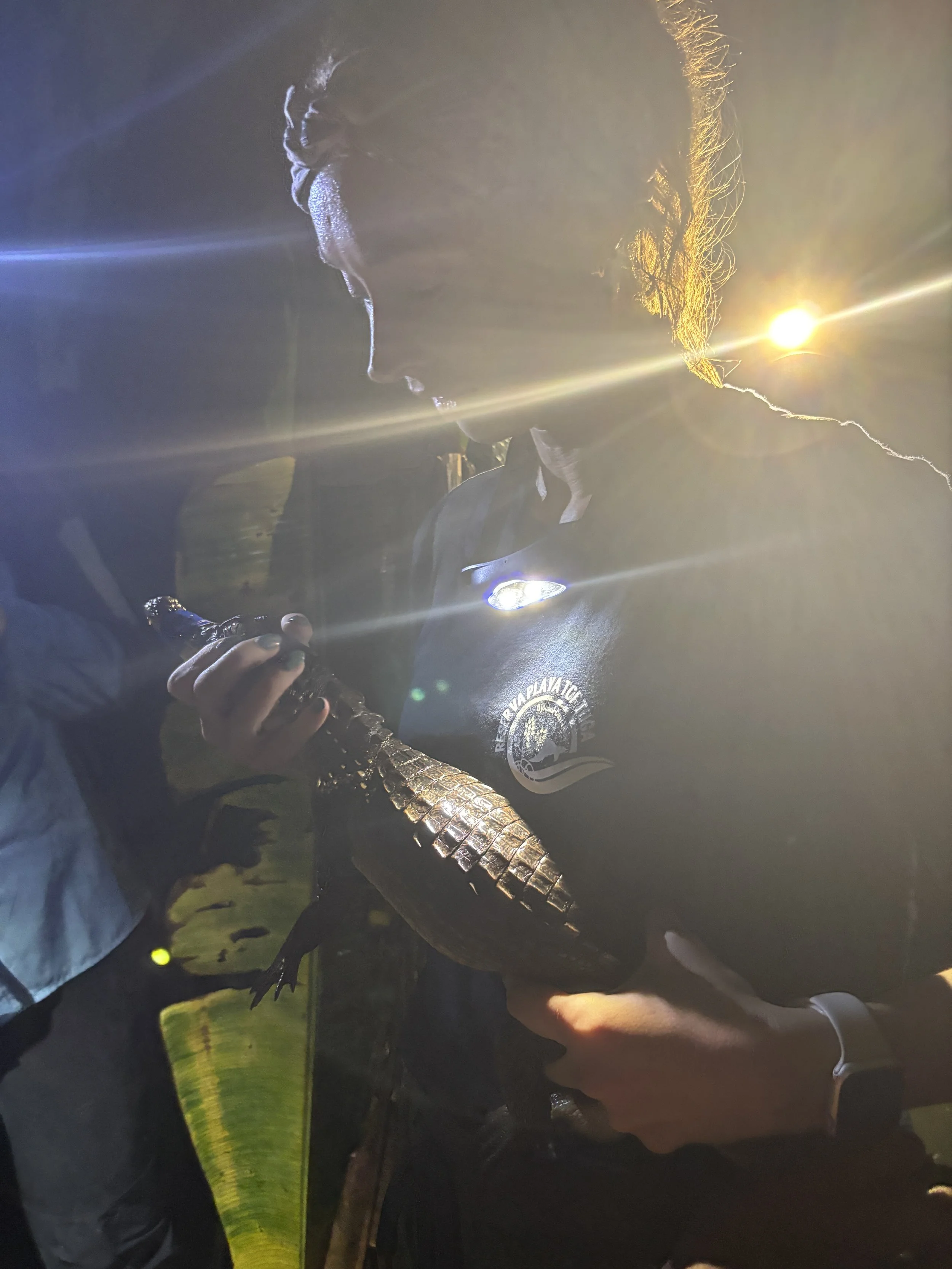
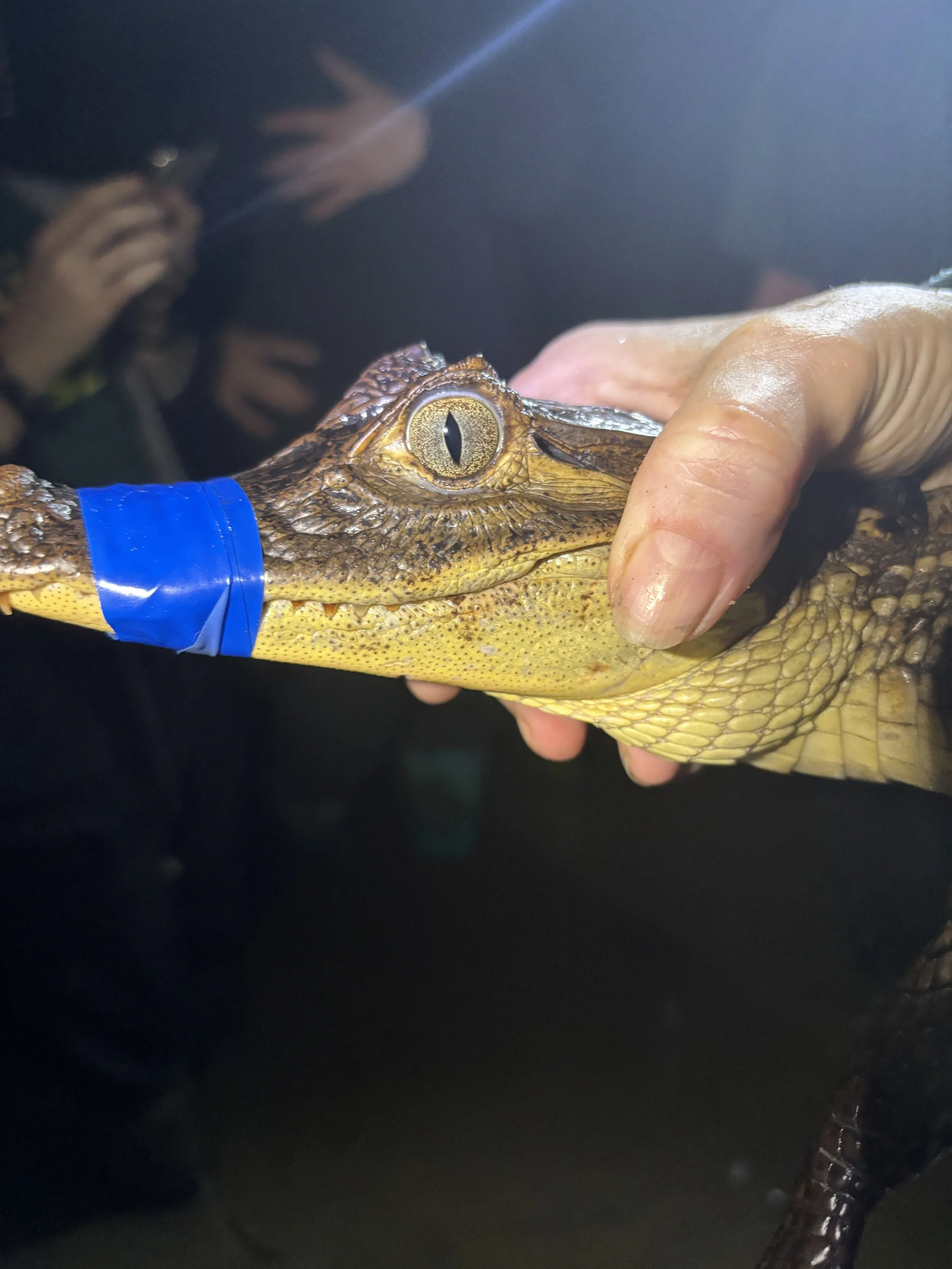
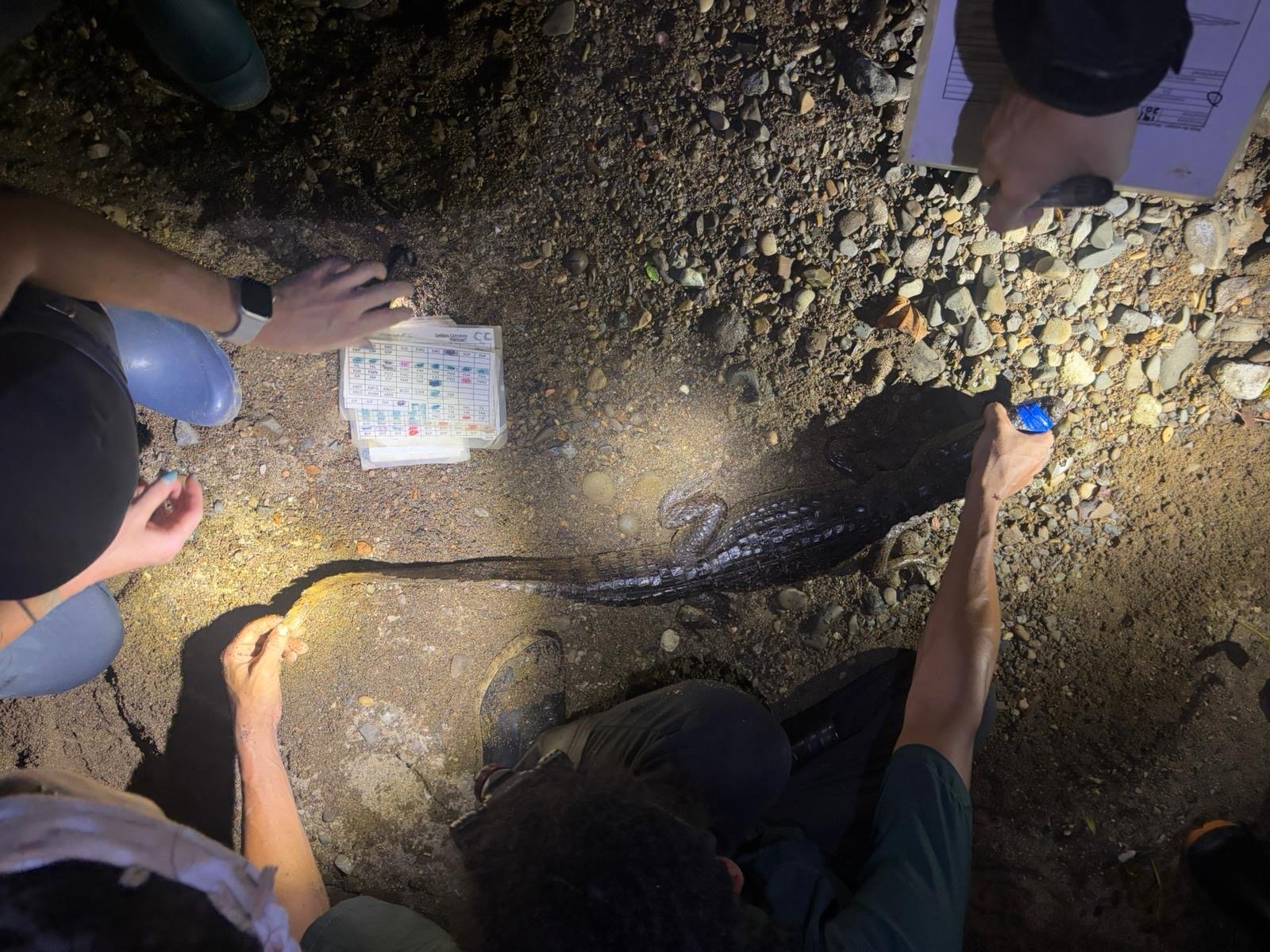
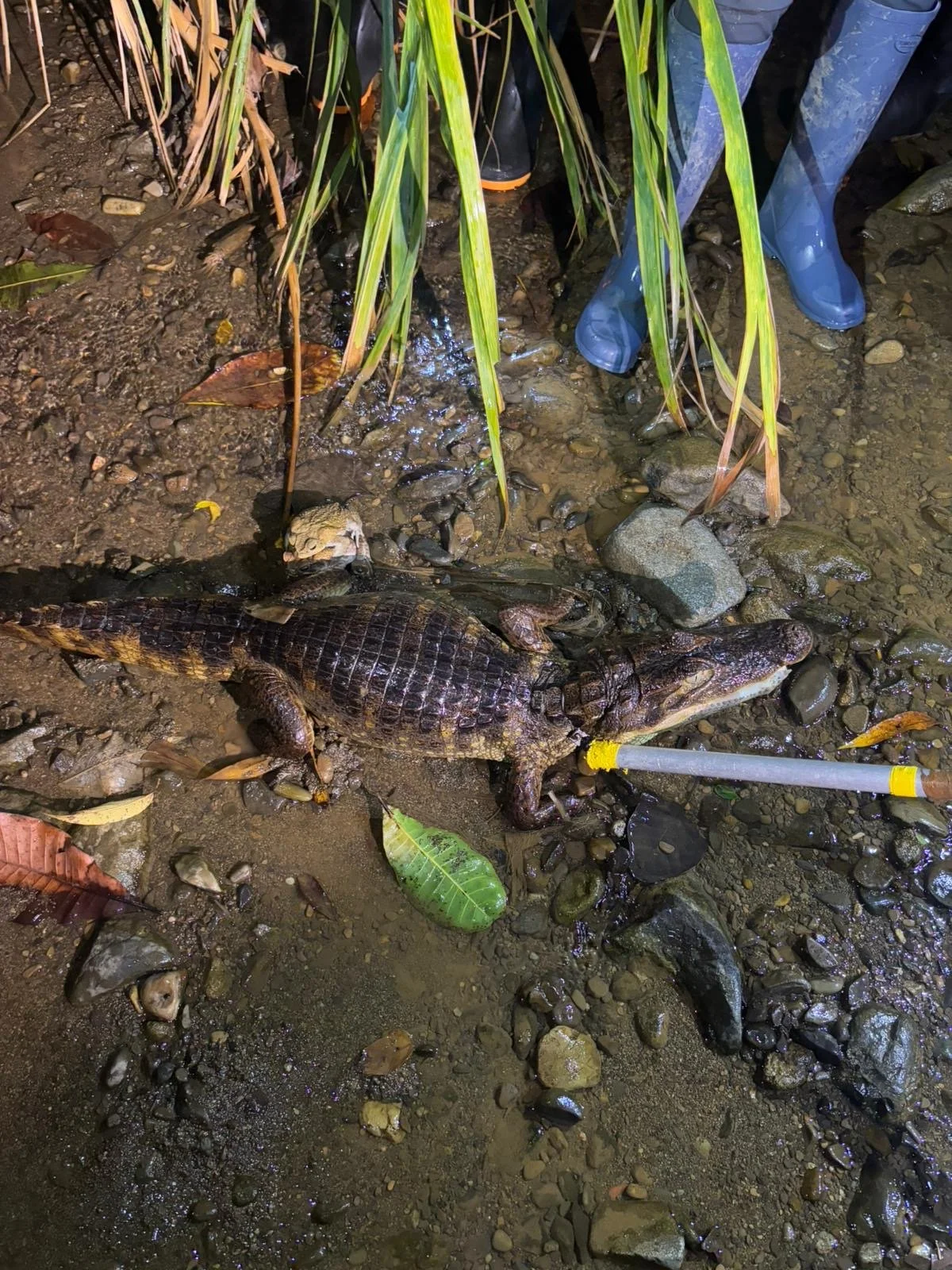
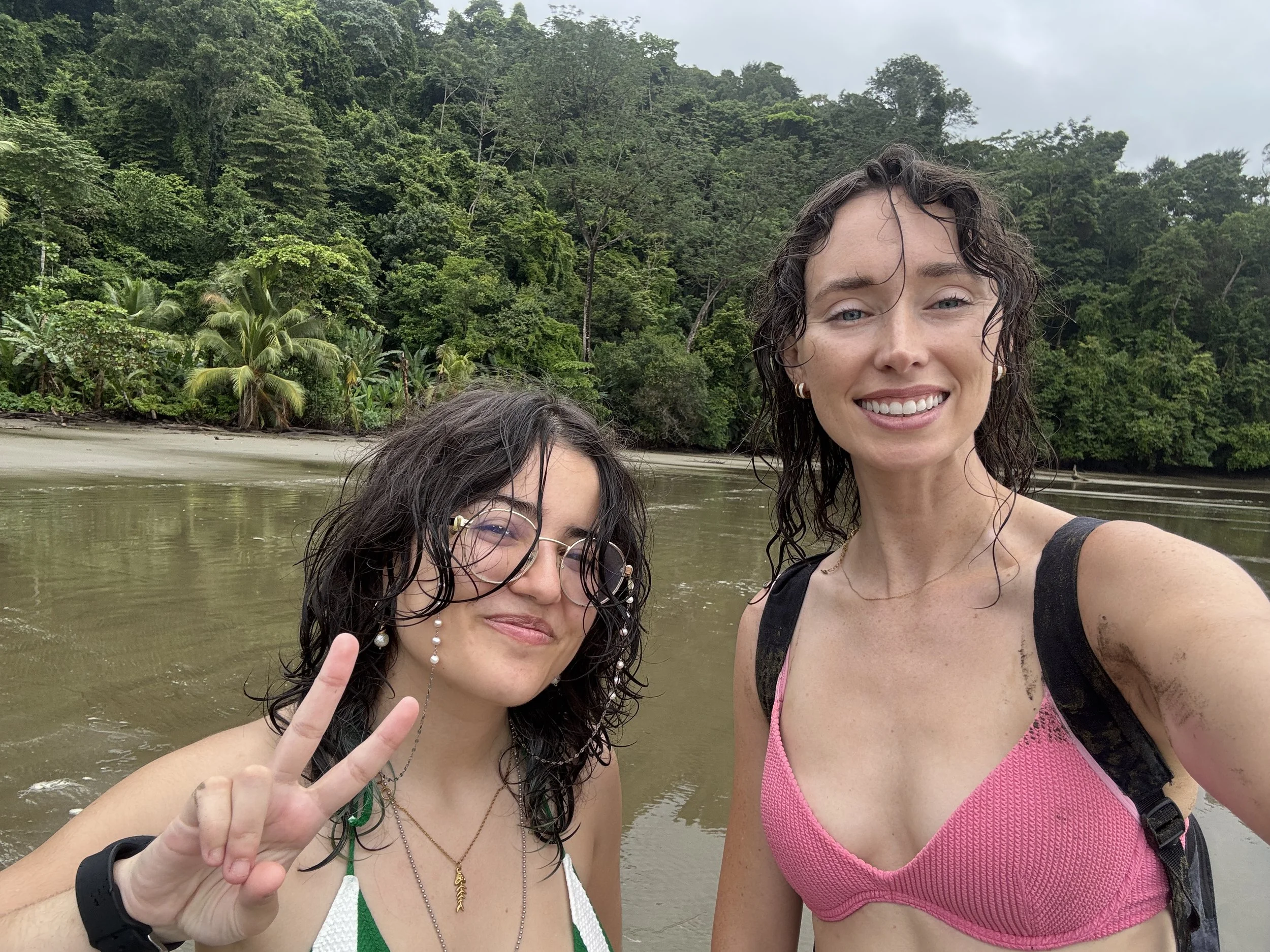
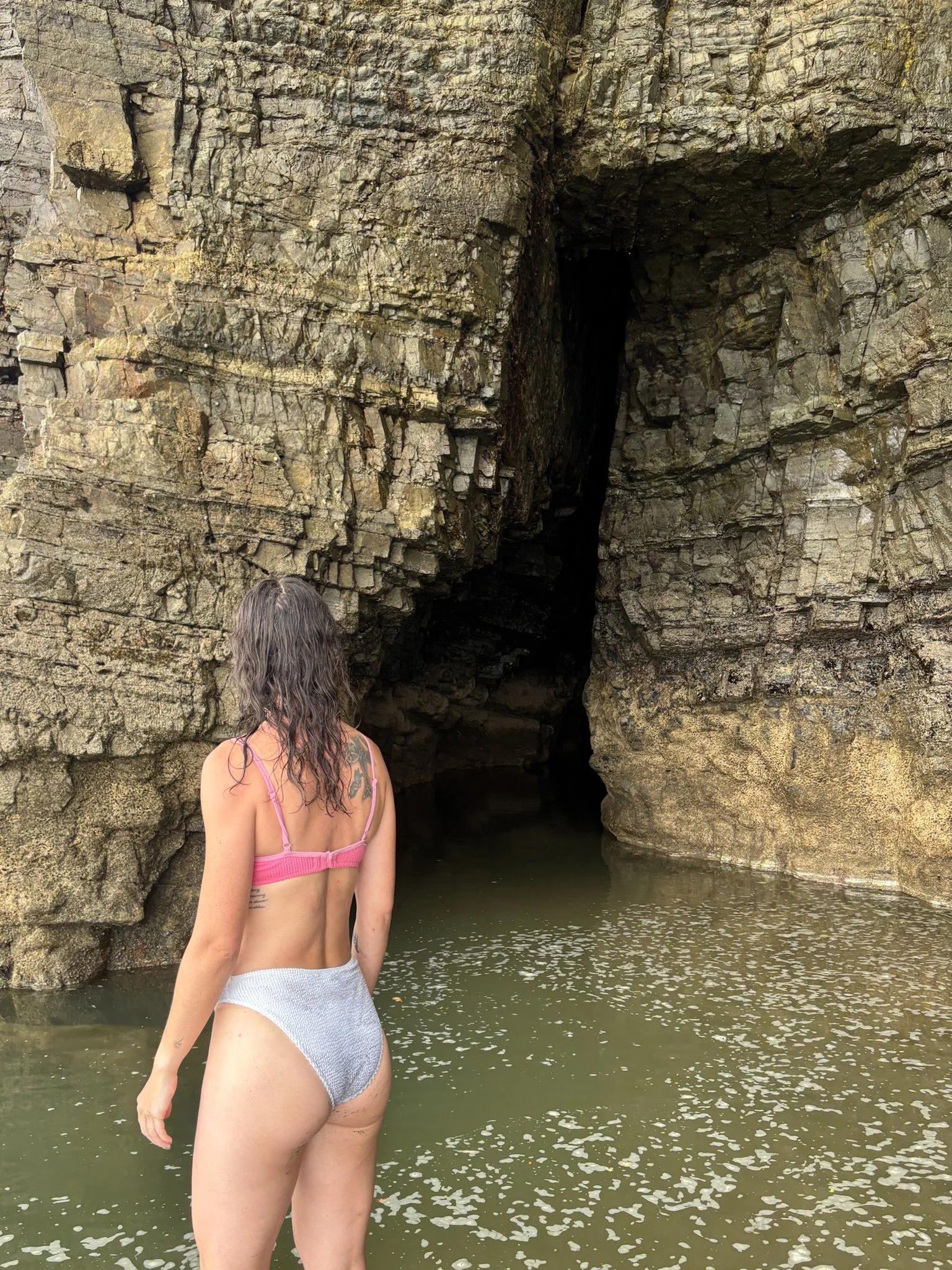
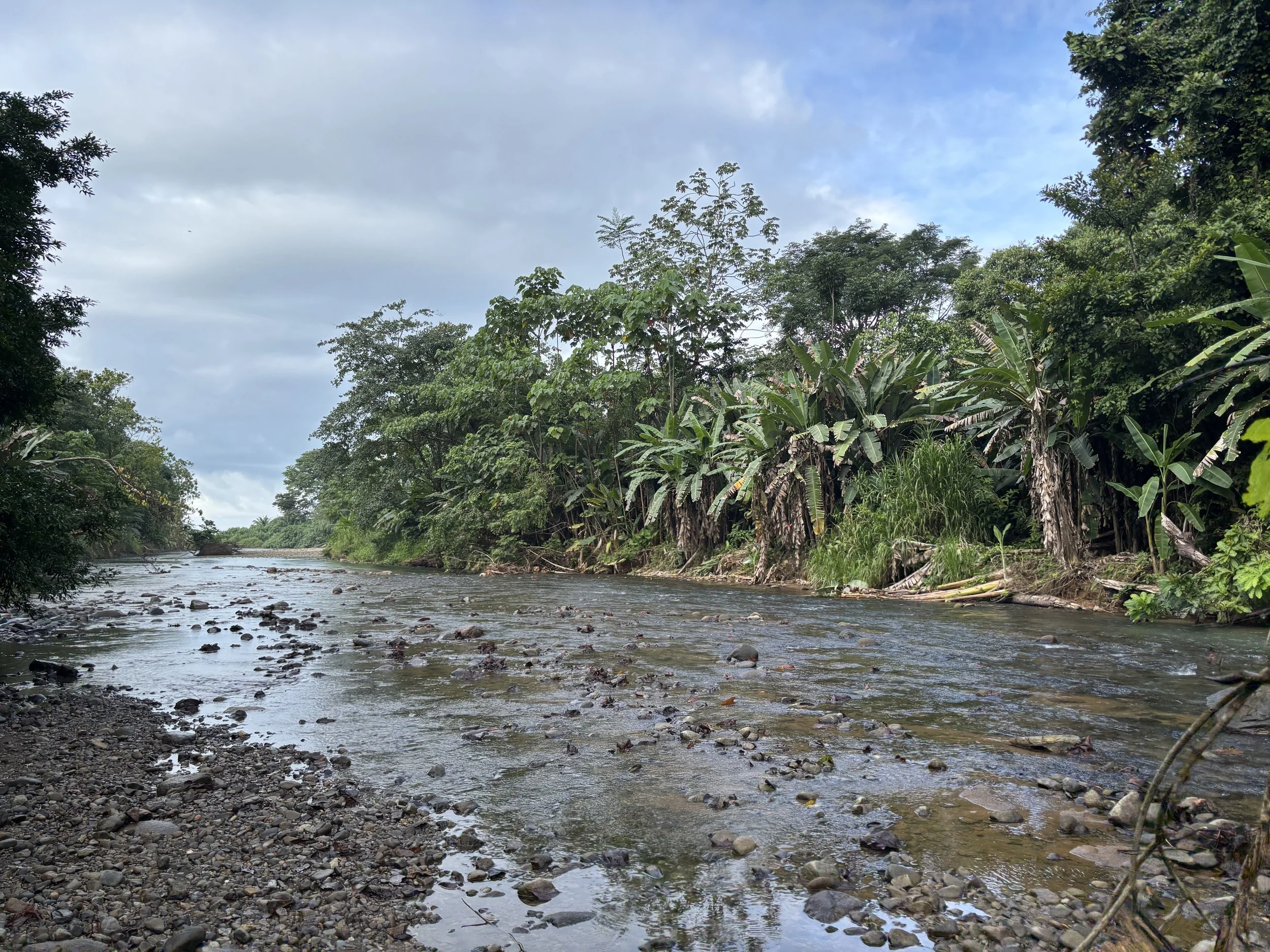
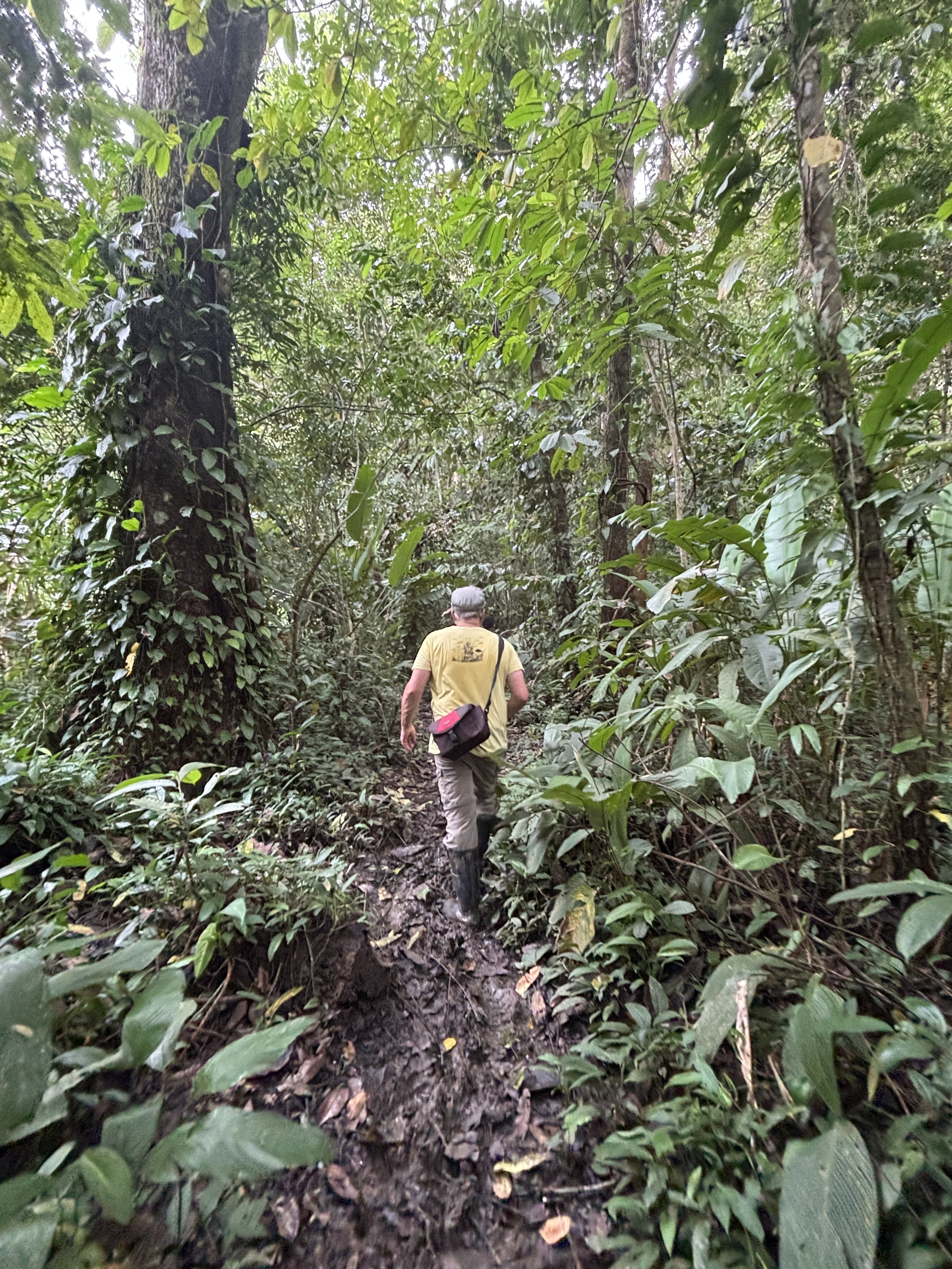
On my first day off, I went to Playa Arco with Sandra from Germany and Quill from Iran. Rain soaked us as we sat in a small restaurant above the beach, laughing about how a little downpour was nothing compared to wading through waist-deep rivers with Javi in search of crocodiles and caimans. We agreed those crocodile walks were among our favorite assignments—tagging, measuring, observing these ancient creatures.
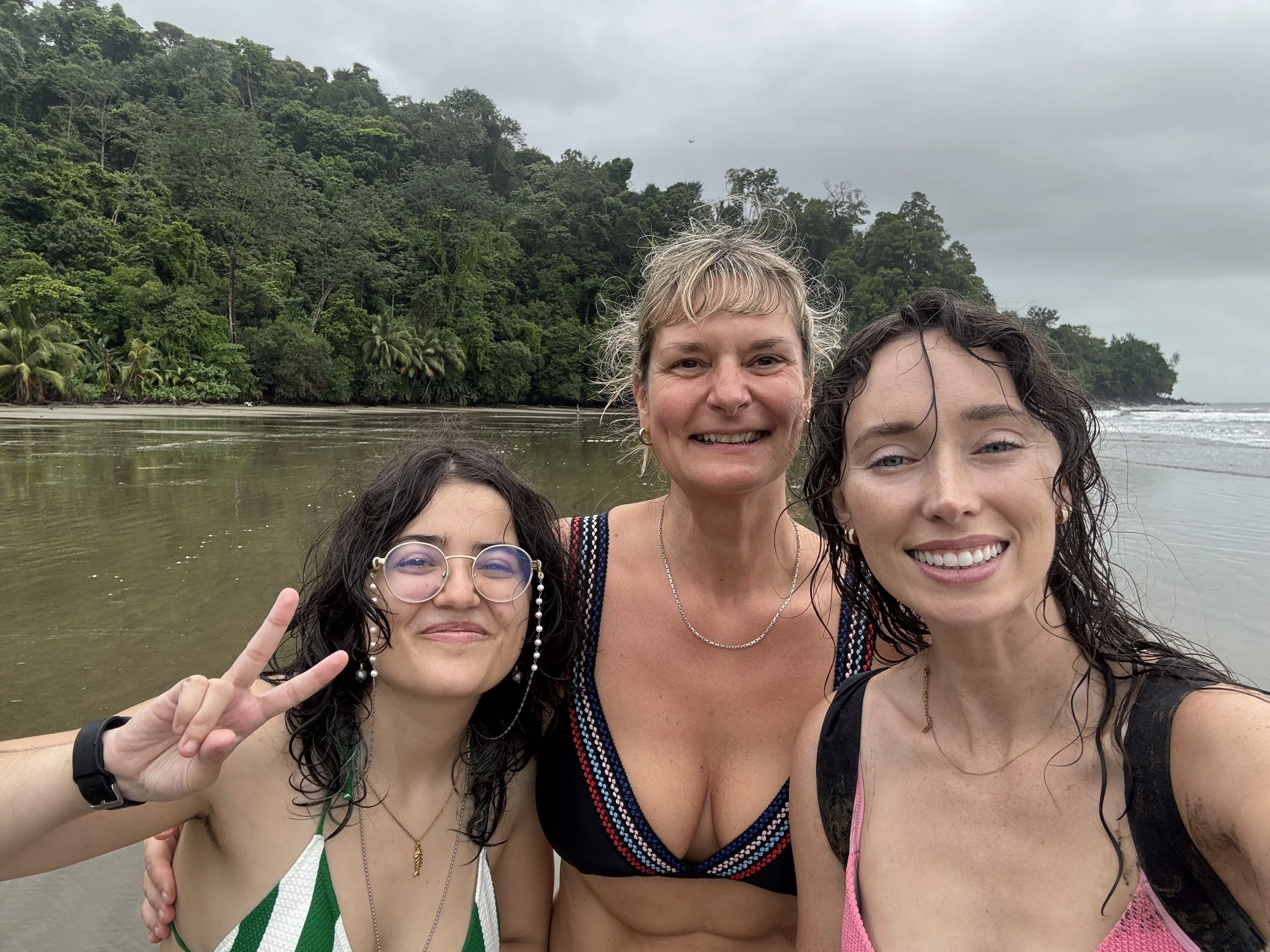
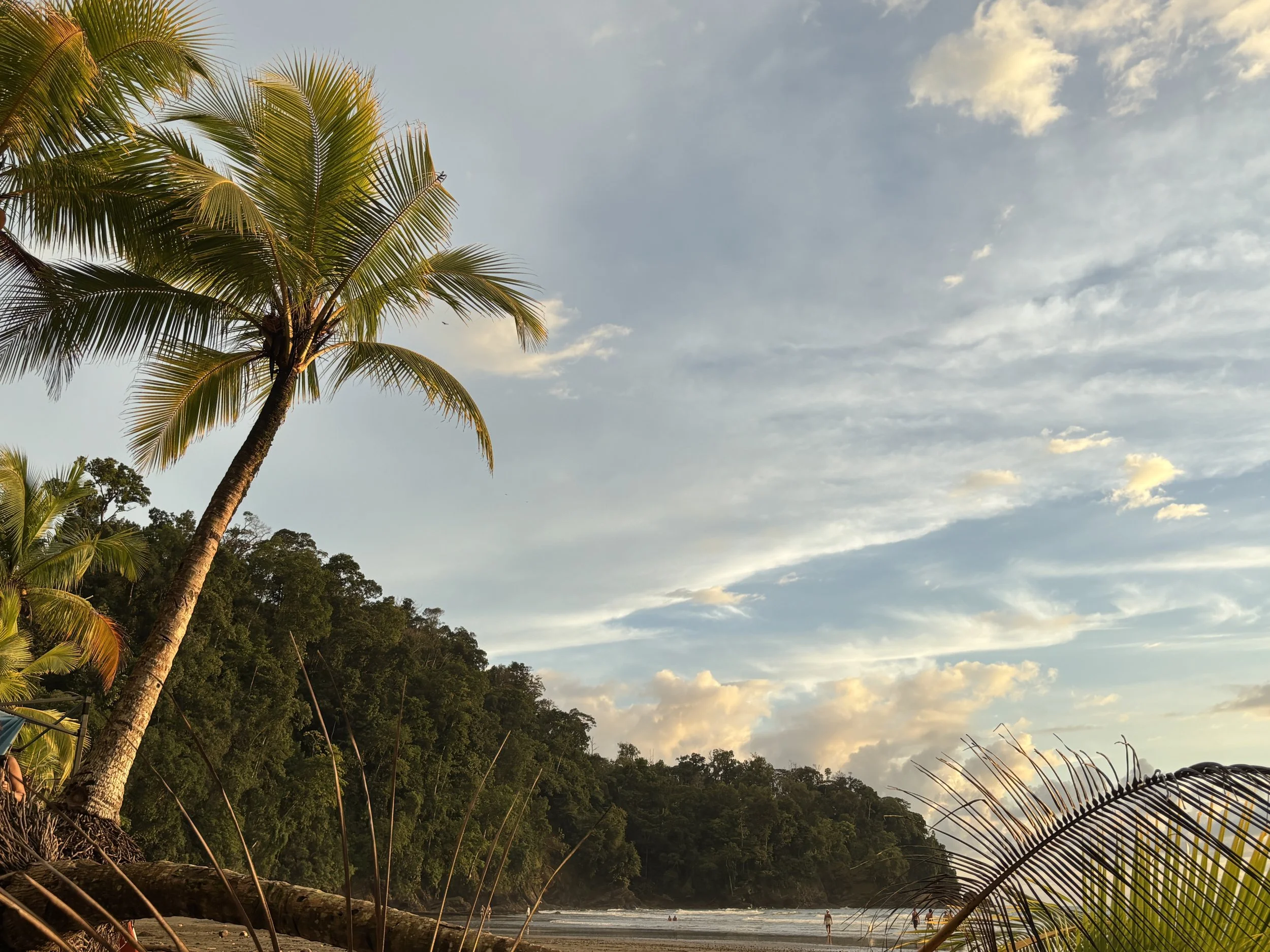
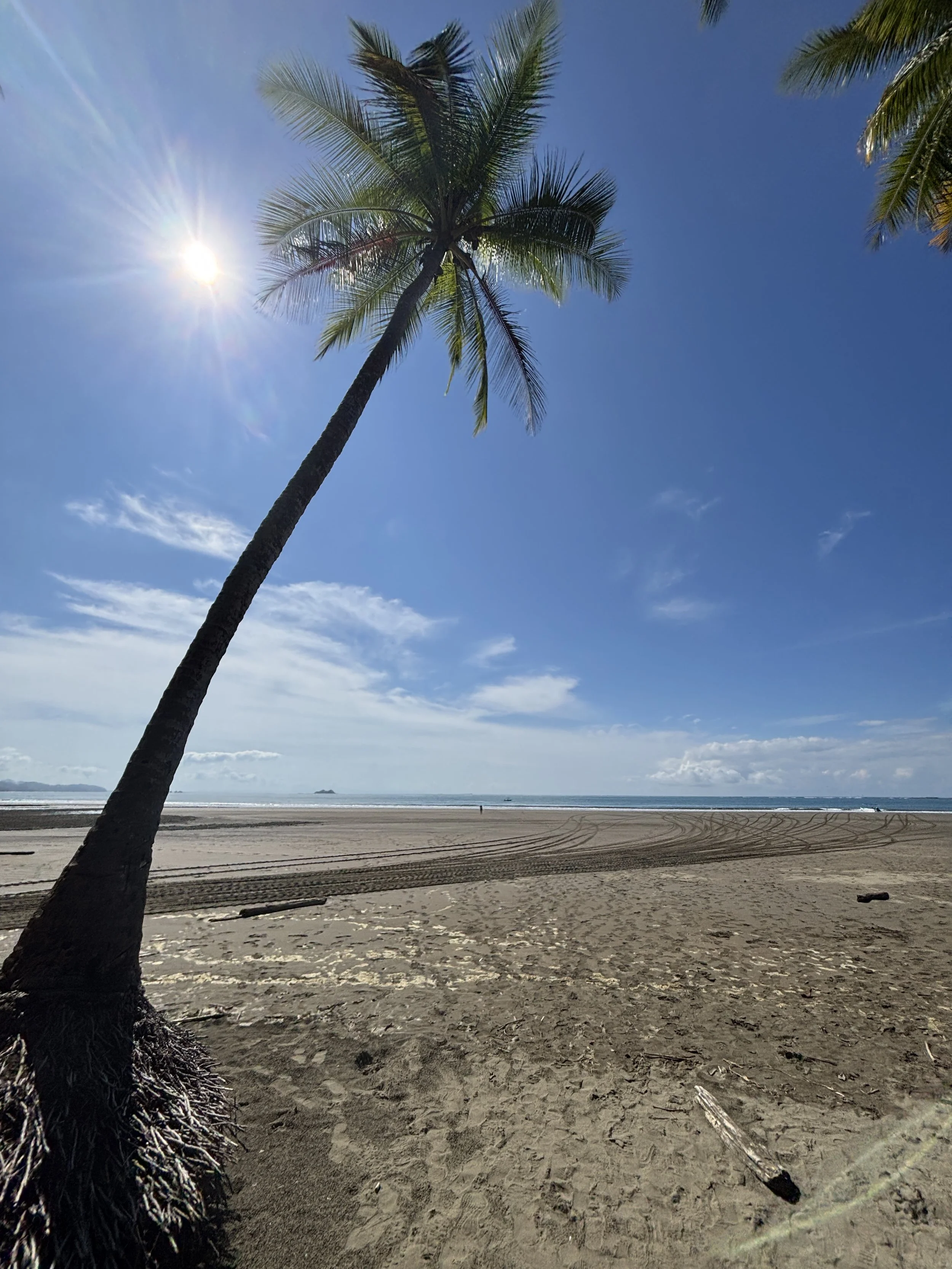
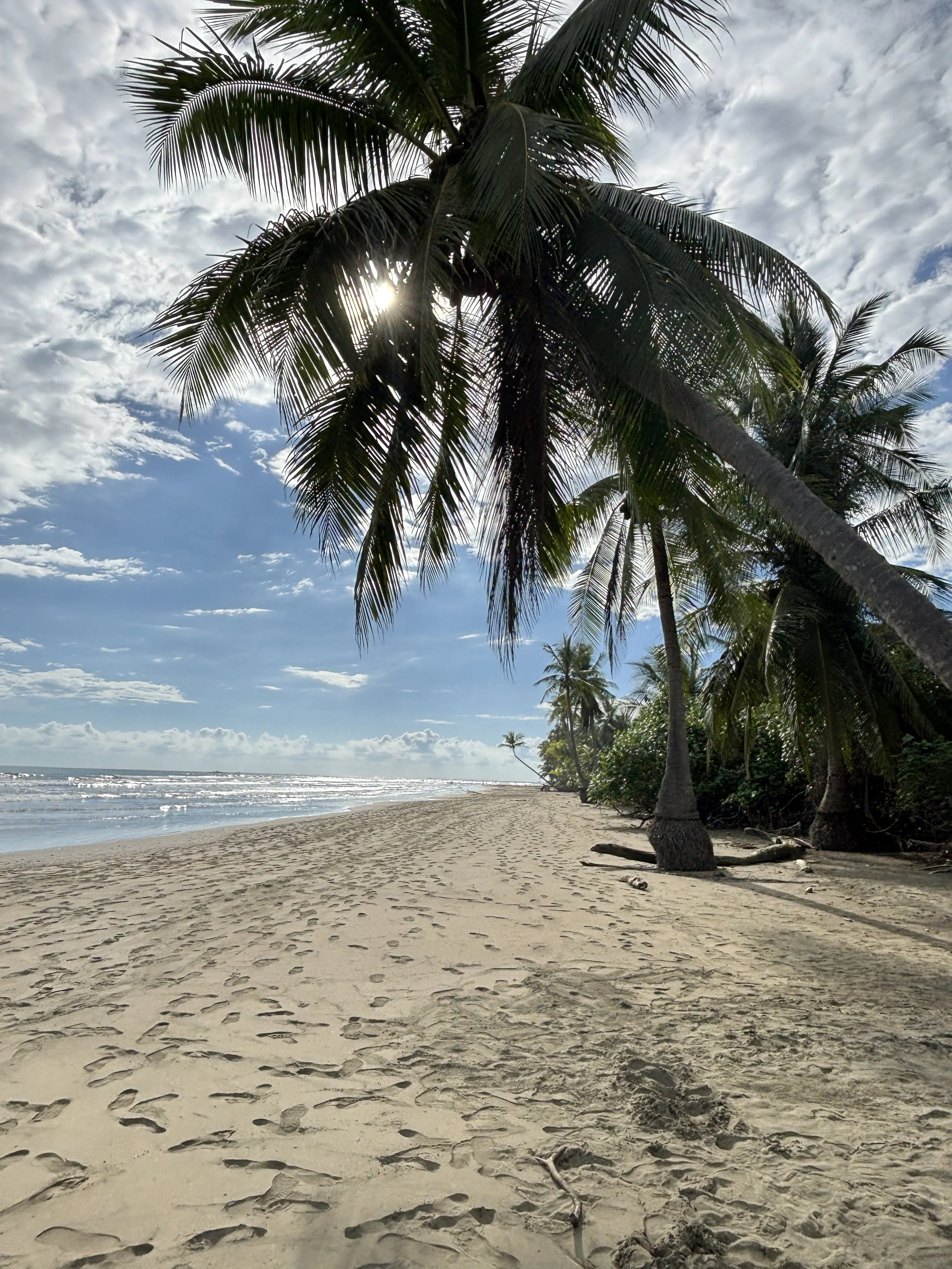
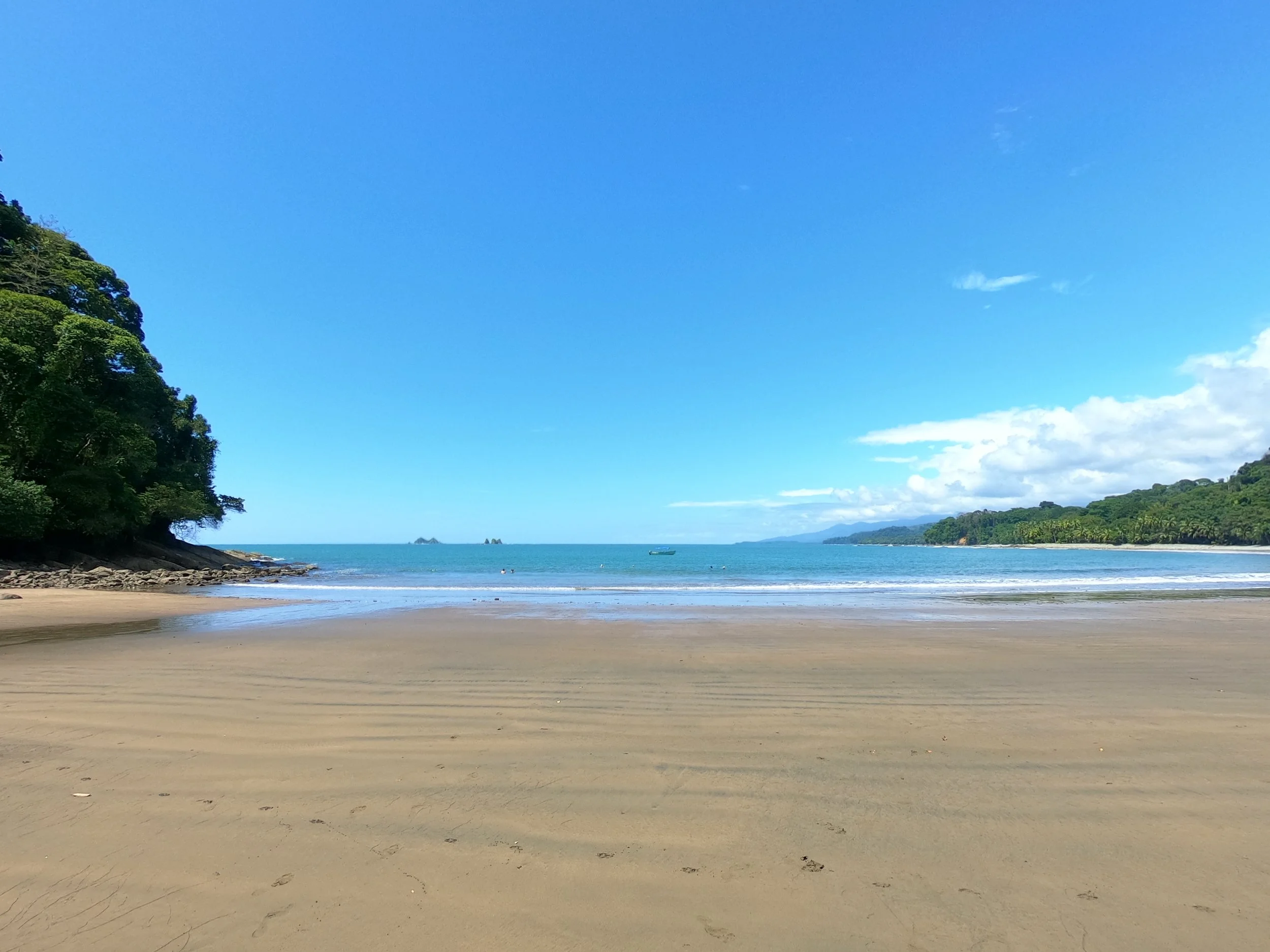
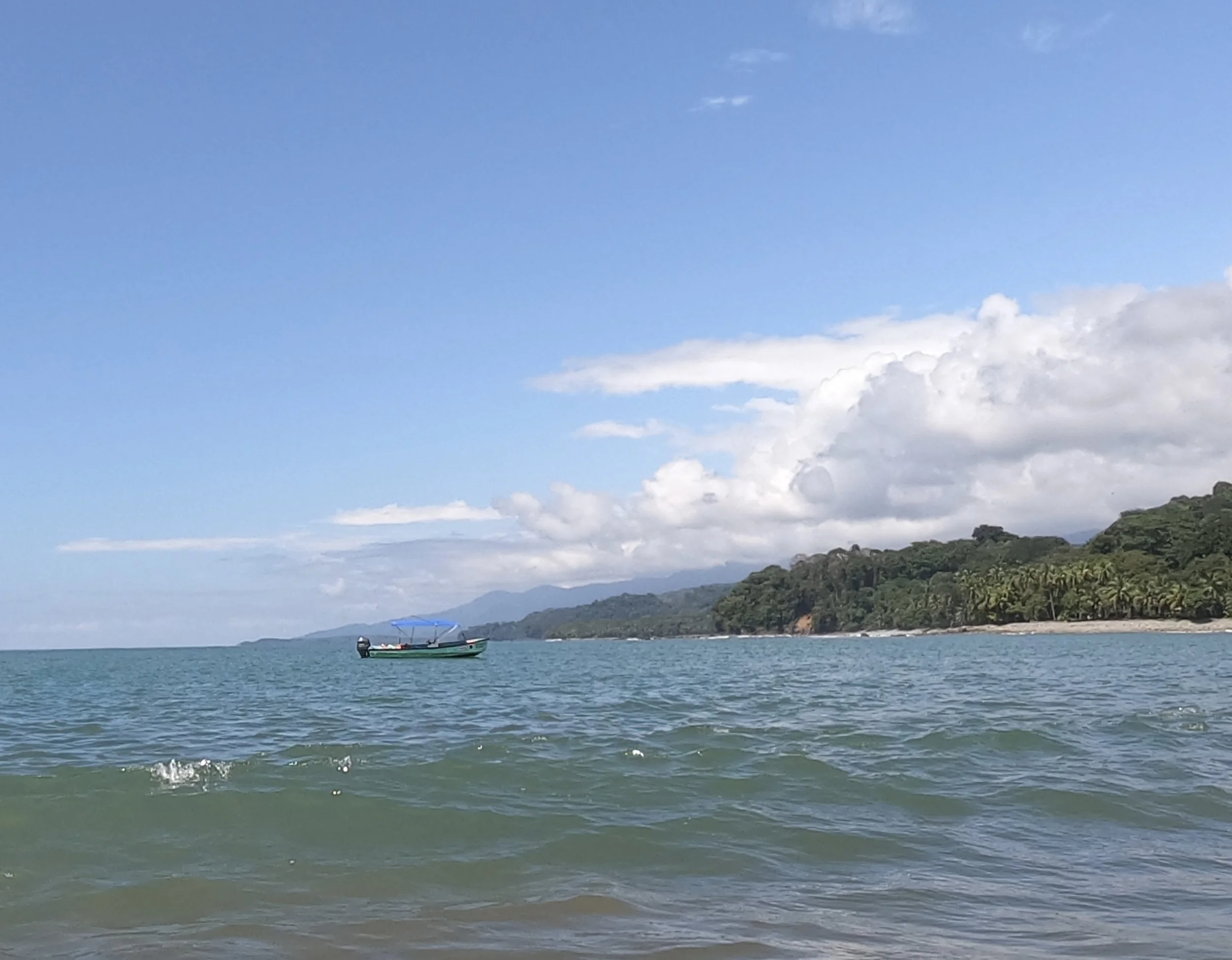
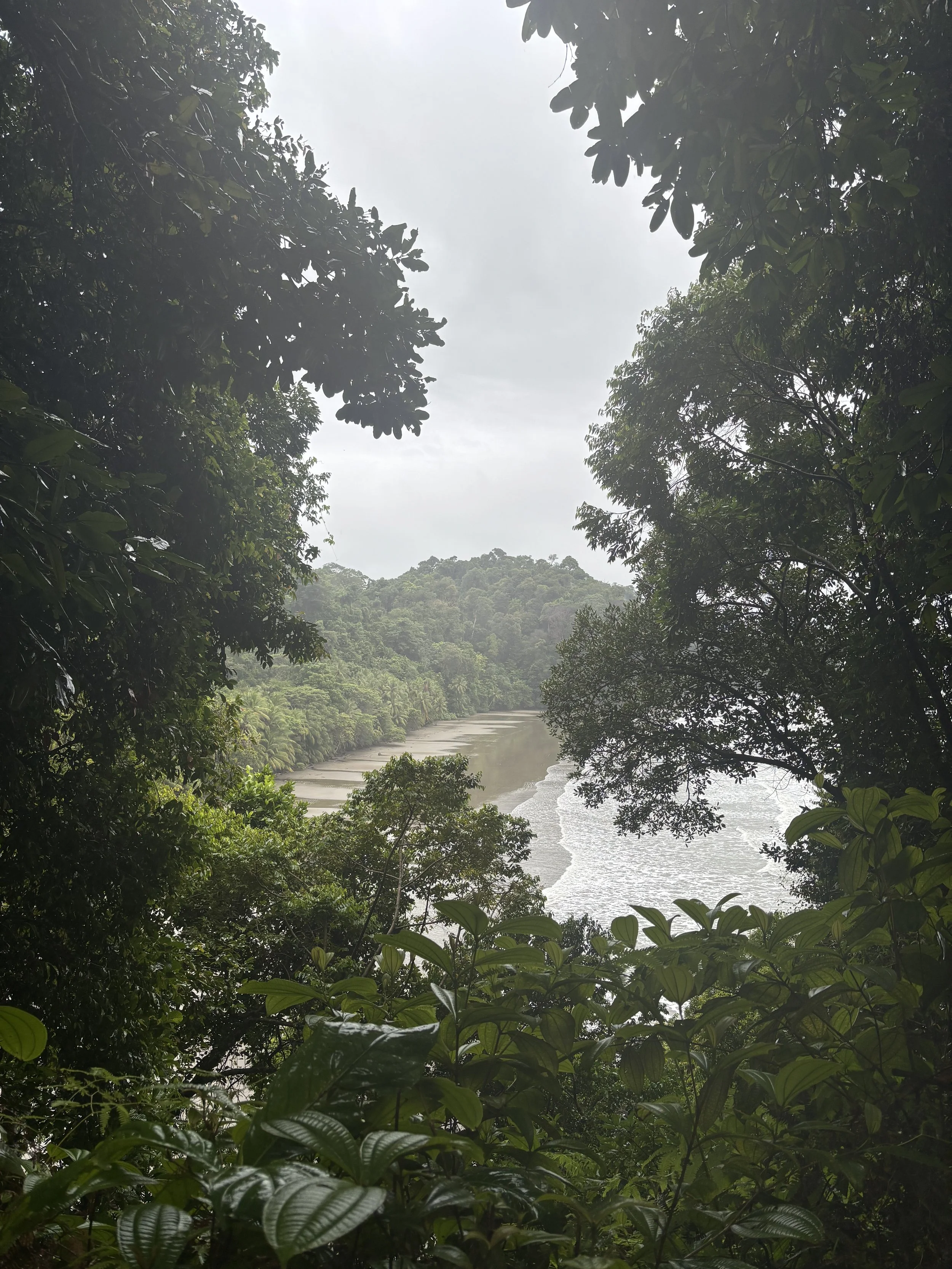
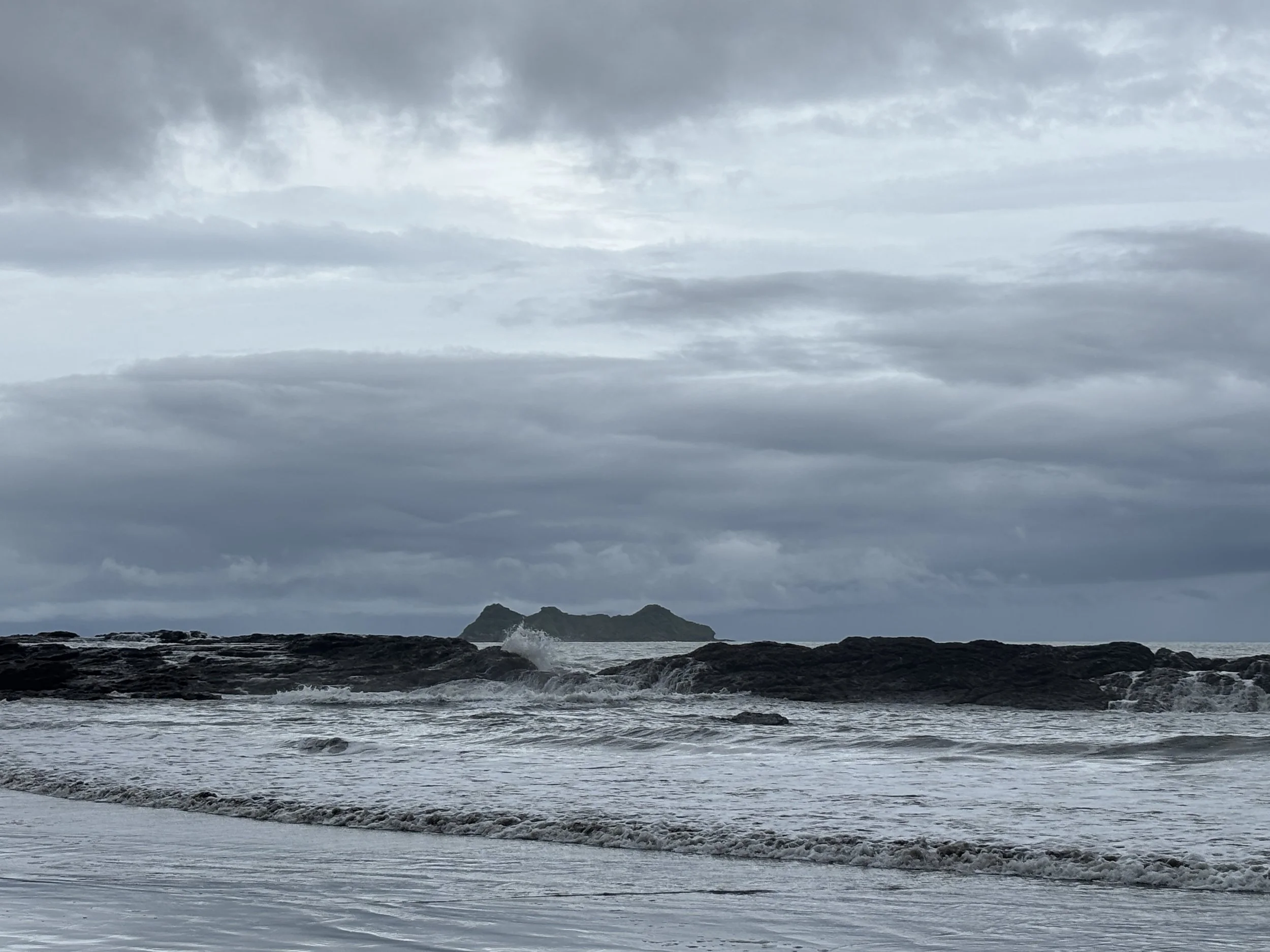
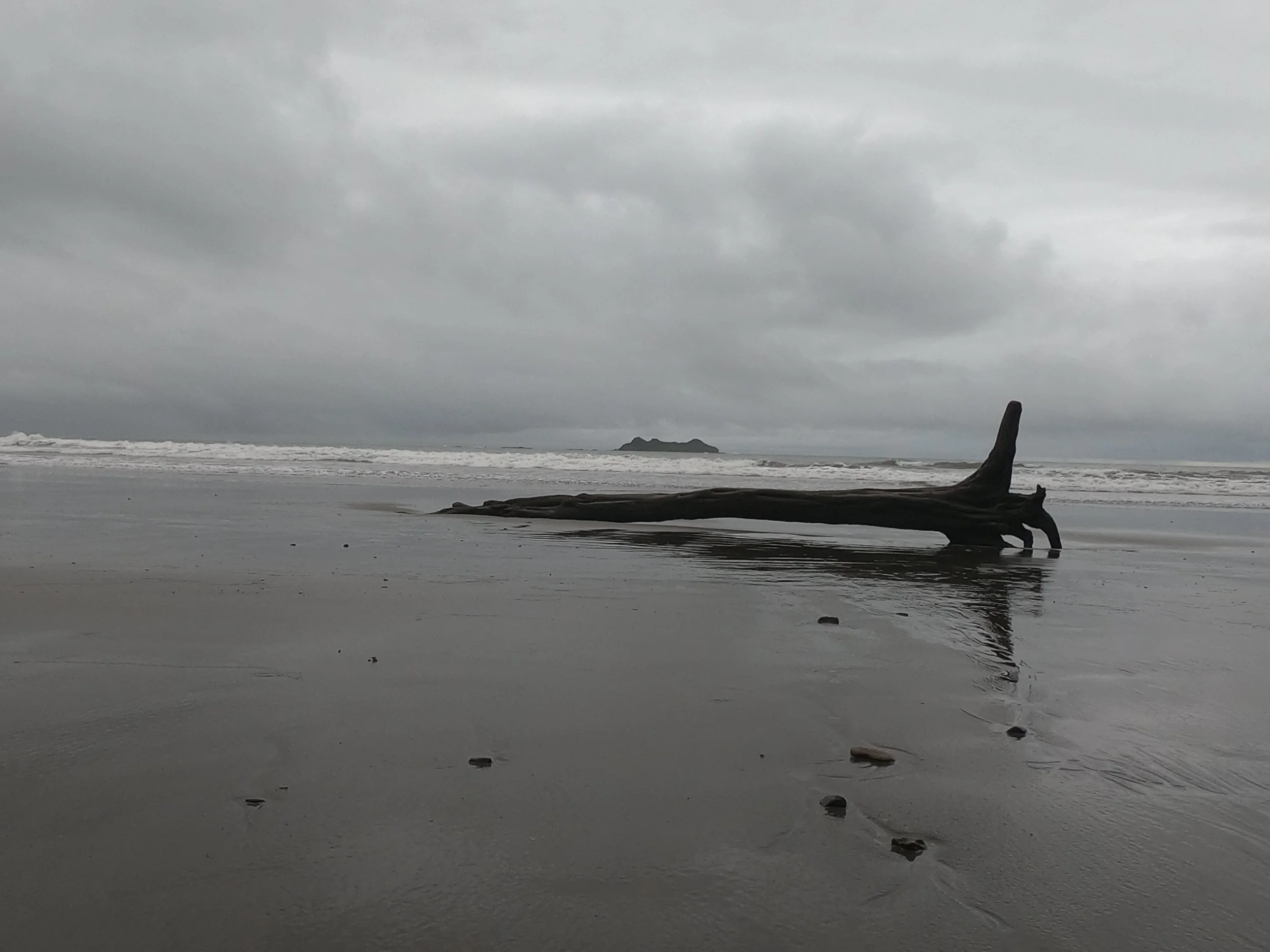
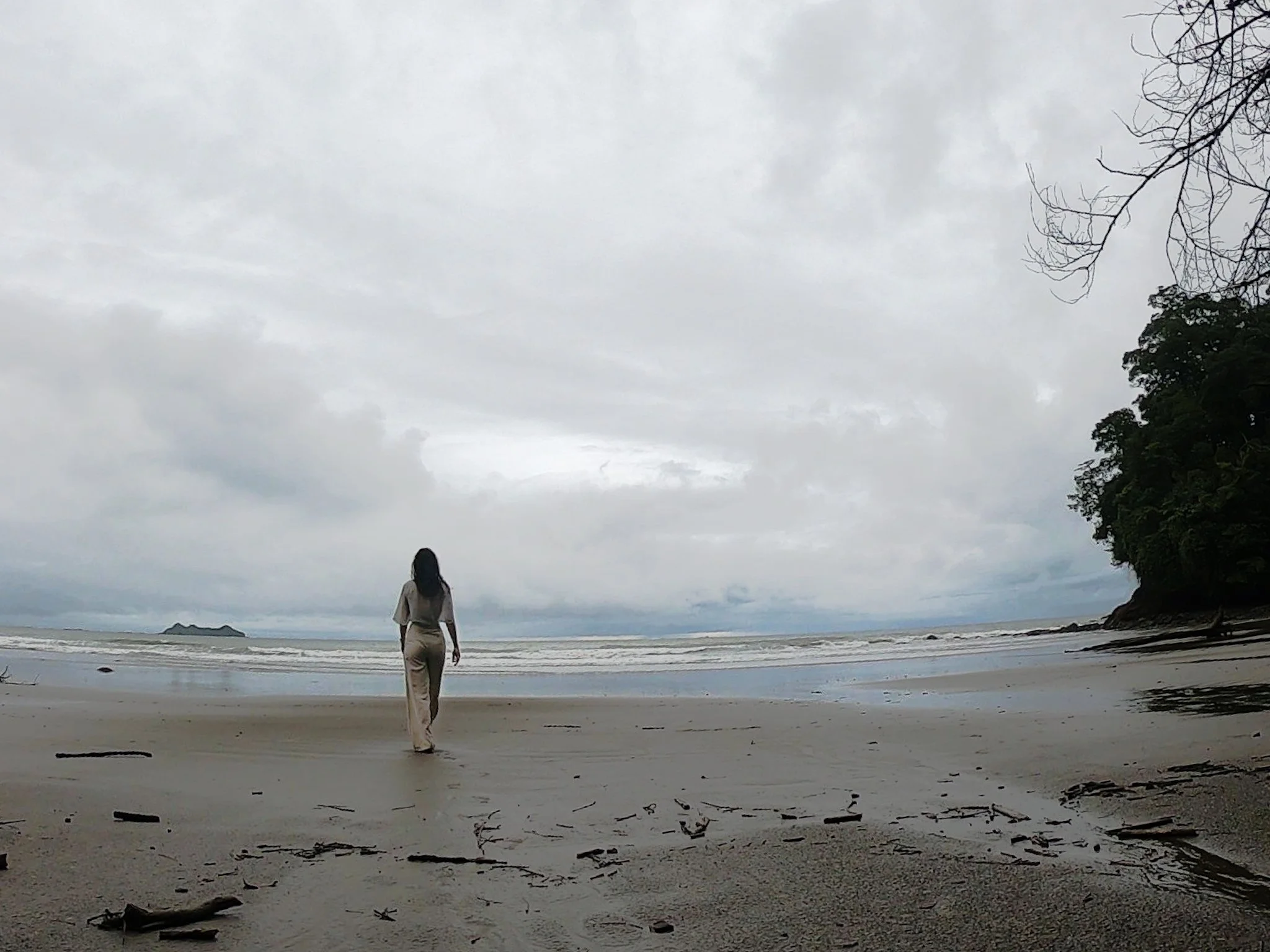
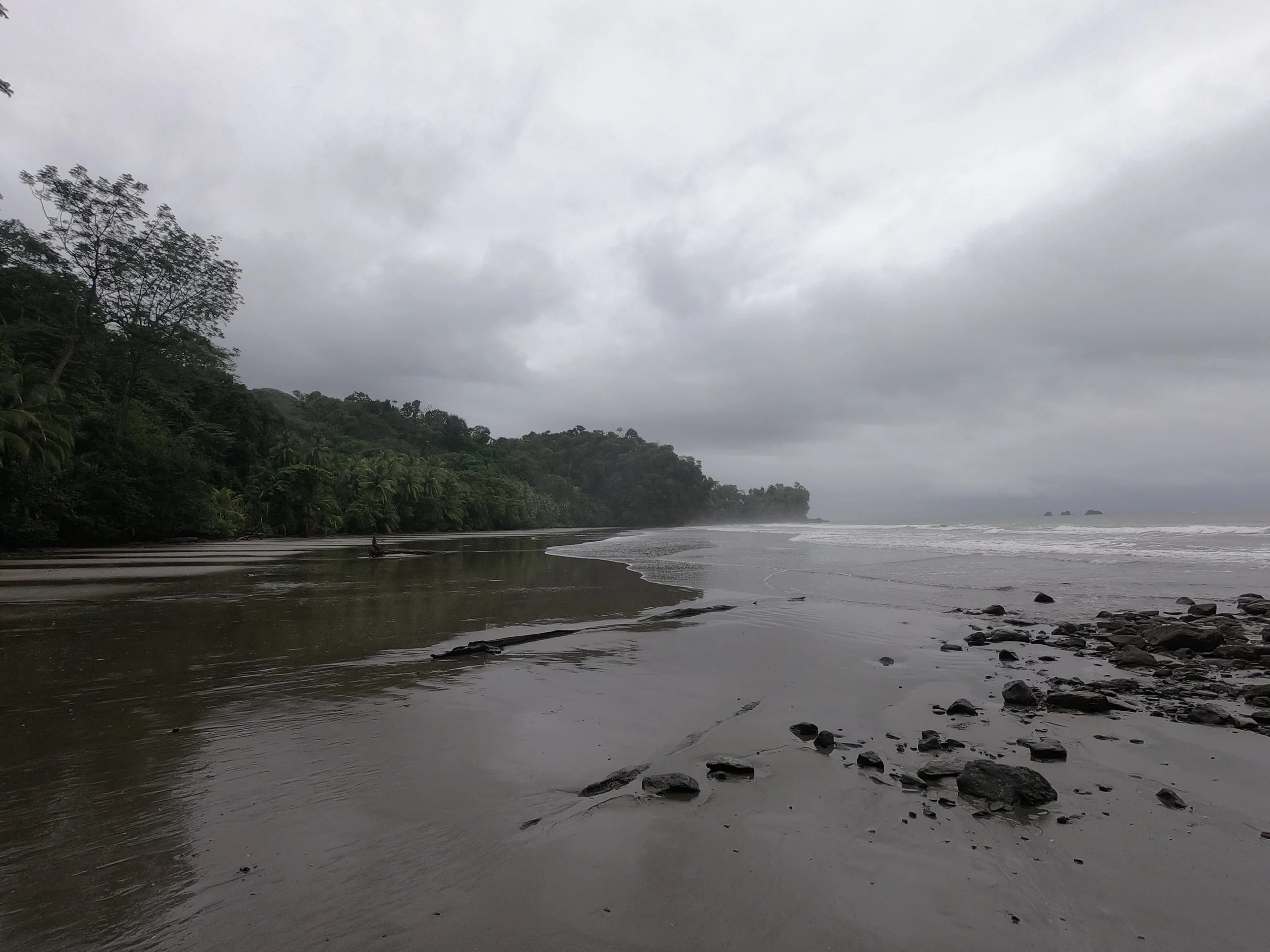
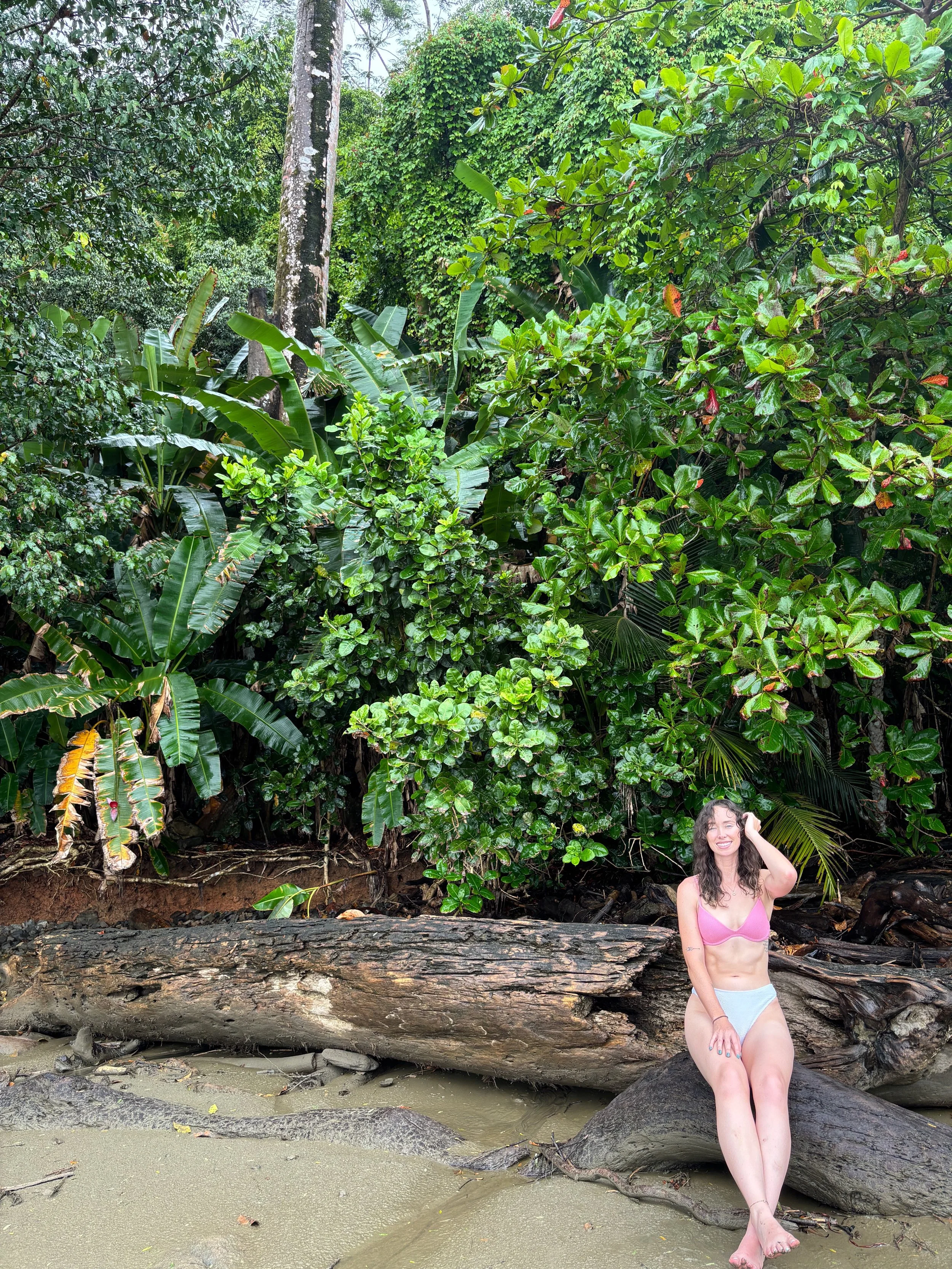
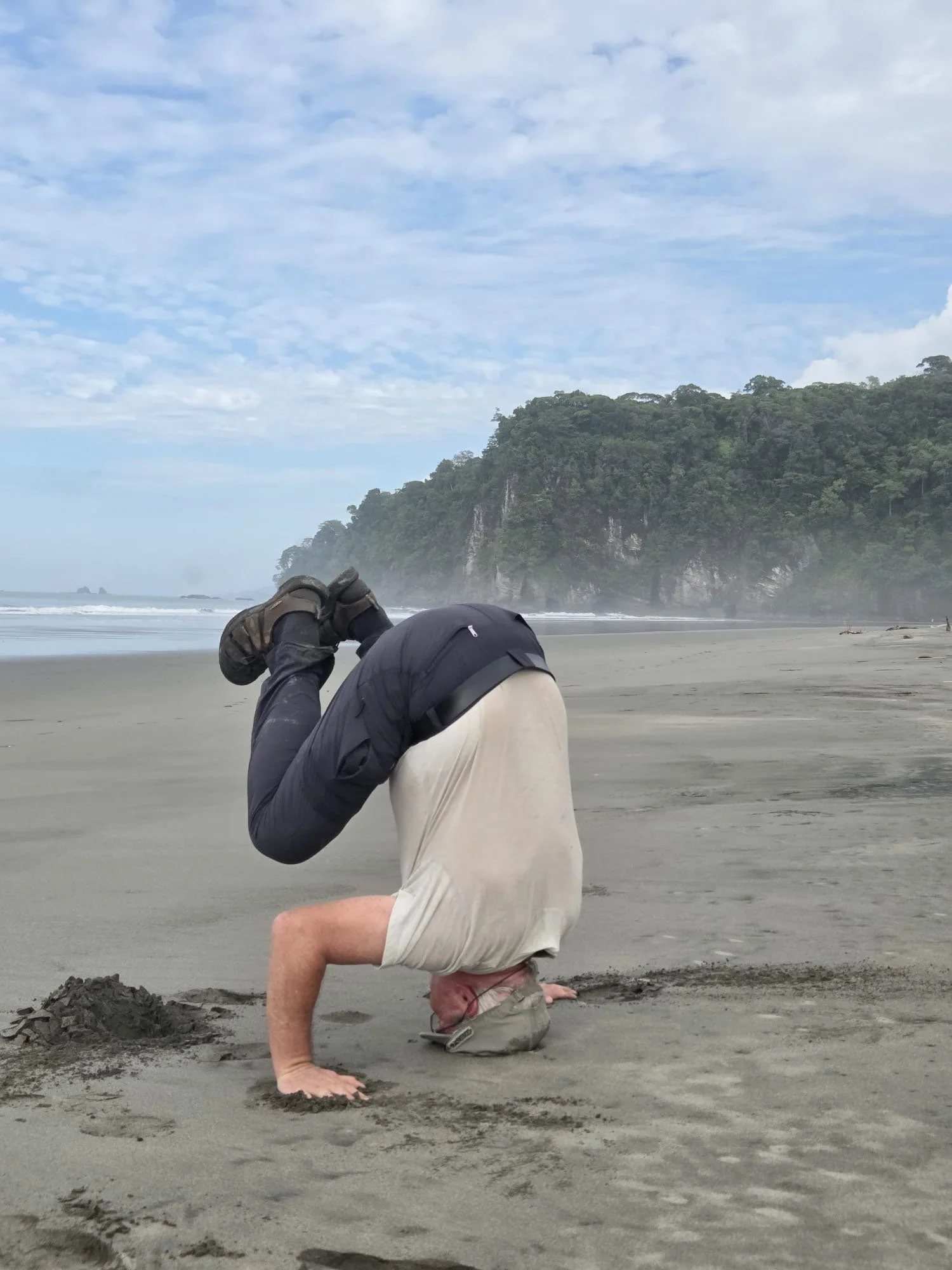
Later, we trekked down to the beach. Hiking in sandals along a steep jungle incline wasn’t glamorous, but when the trees parted and the private beach revealed itself, it felt like discovering a secret. Instead of laying our towels out, we ran straight into the water, admiring the white sands against the cloudy backdrop. We took pictures of the jutting rock formations, and the ocean kissing the jungle on both sides. Not a minute was spent sunbathing, but every minute living.
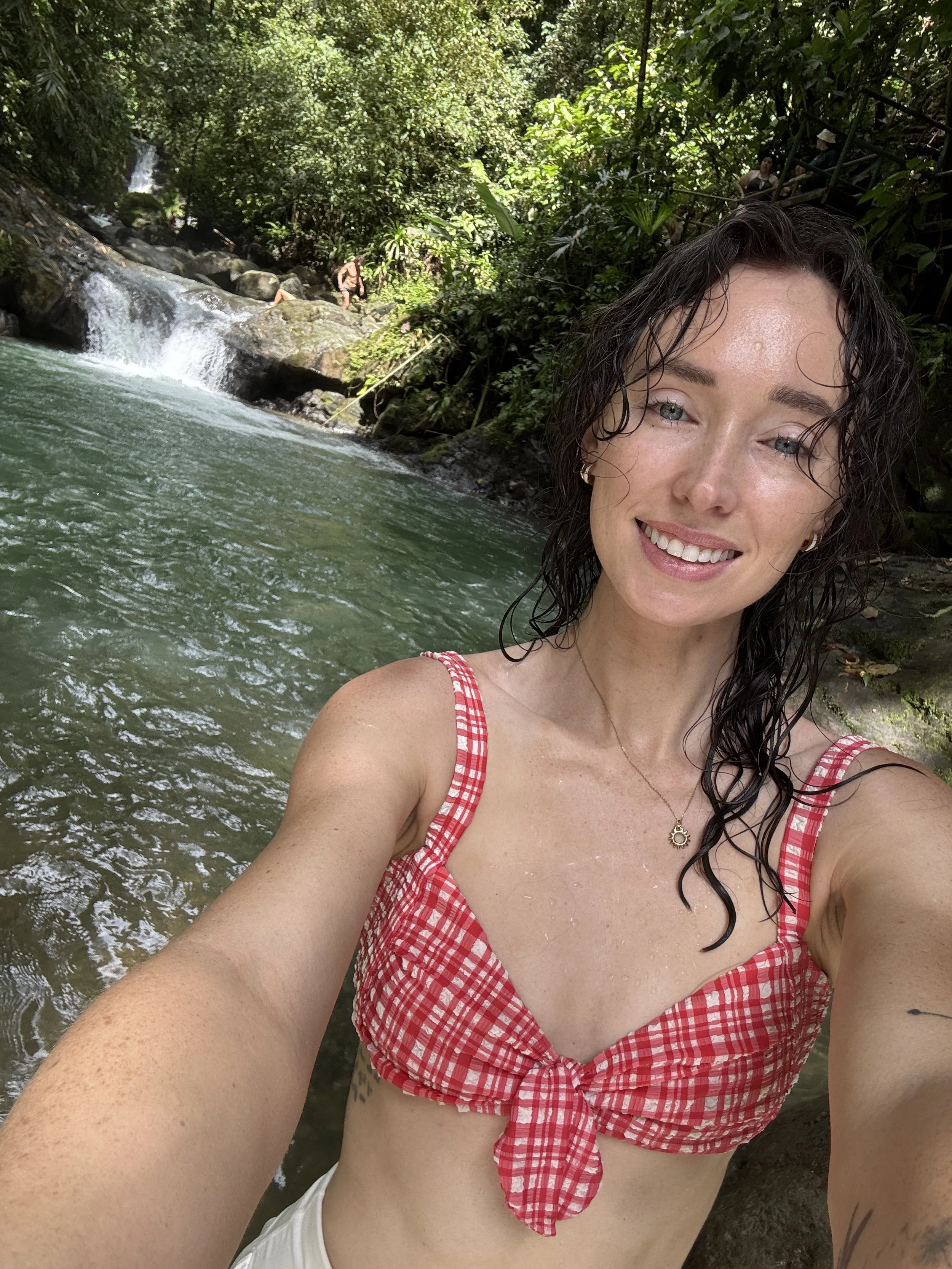
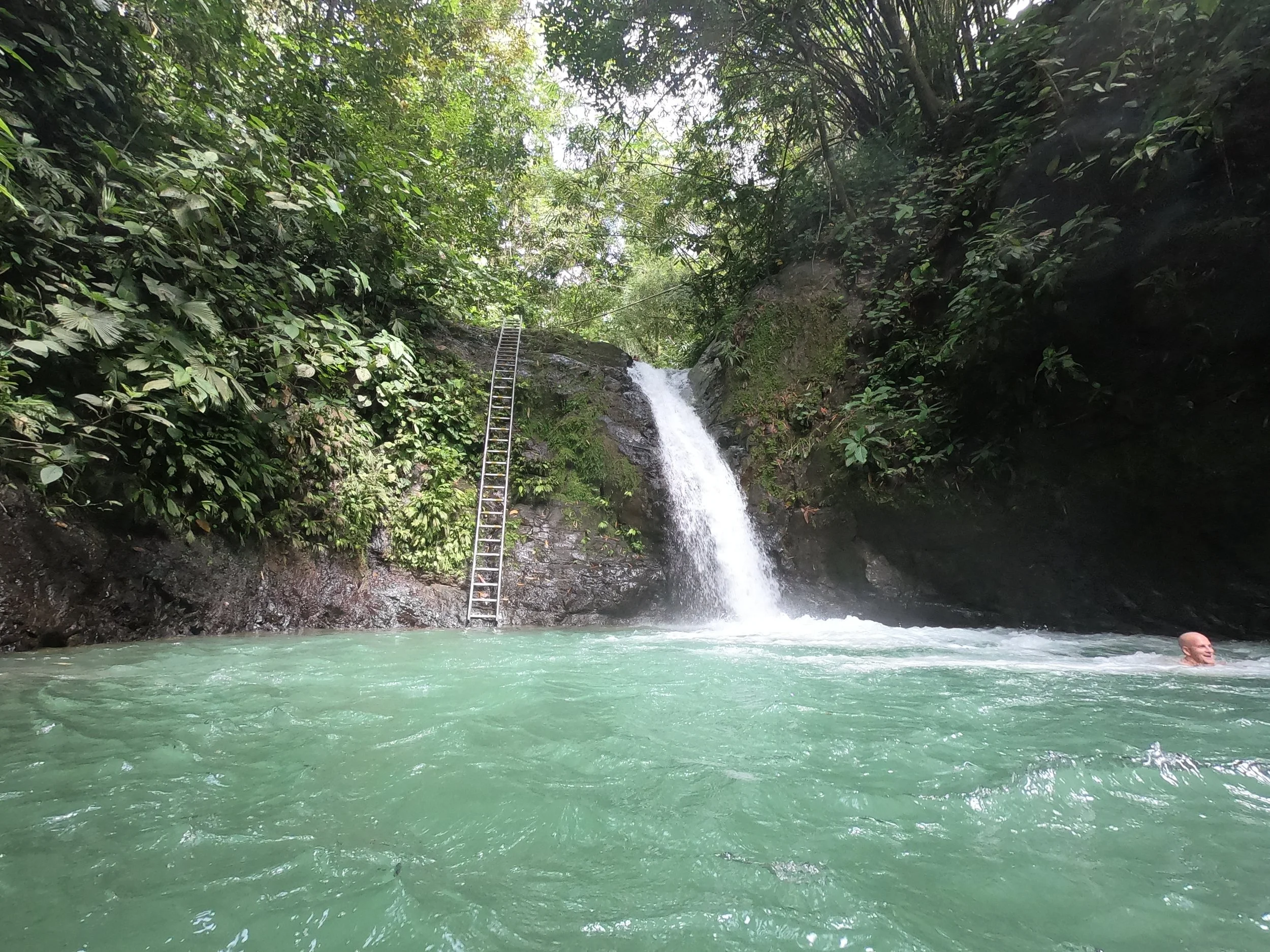
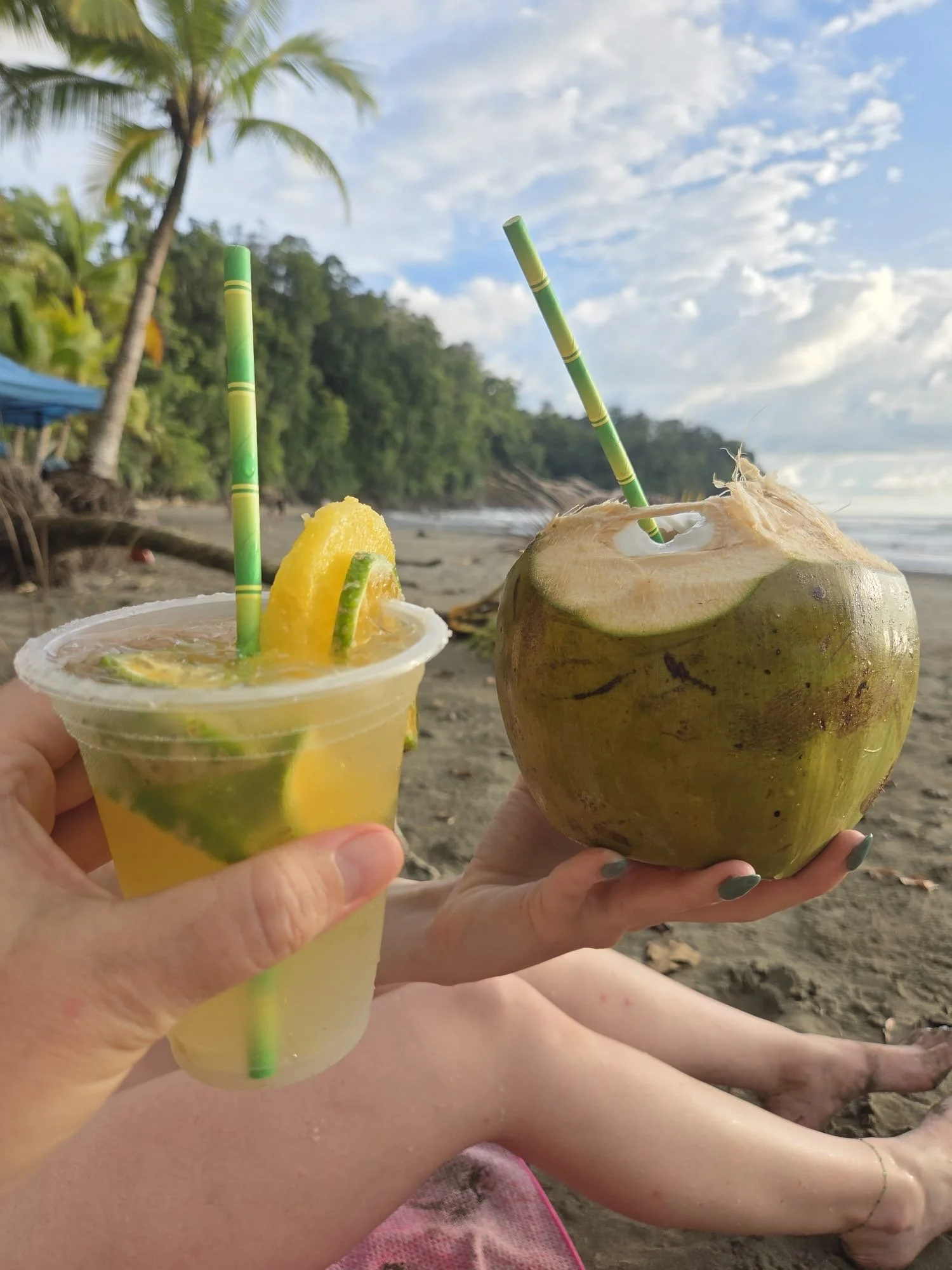
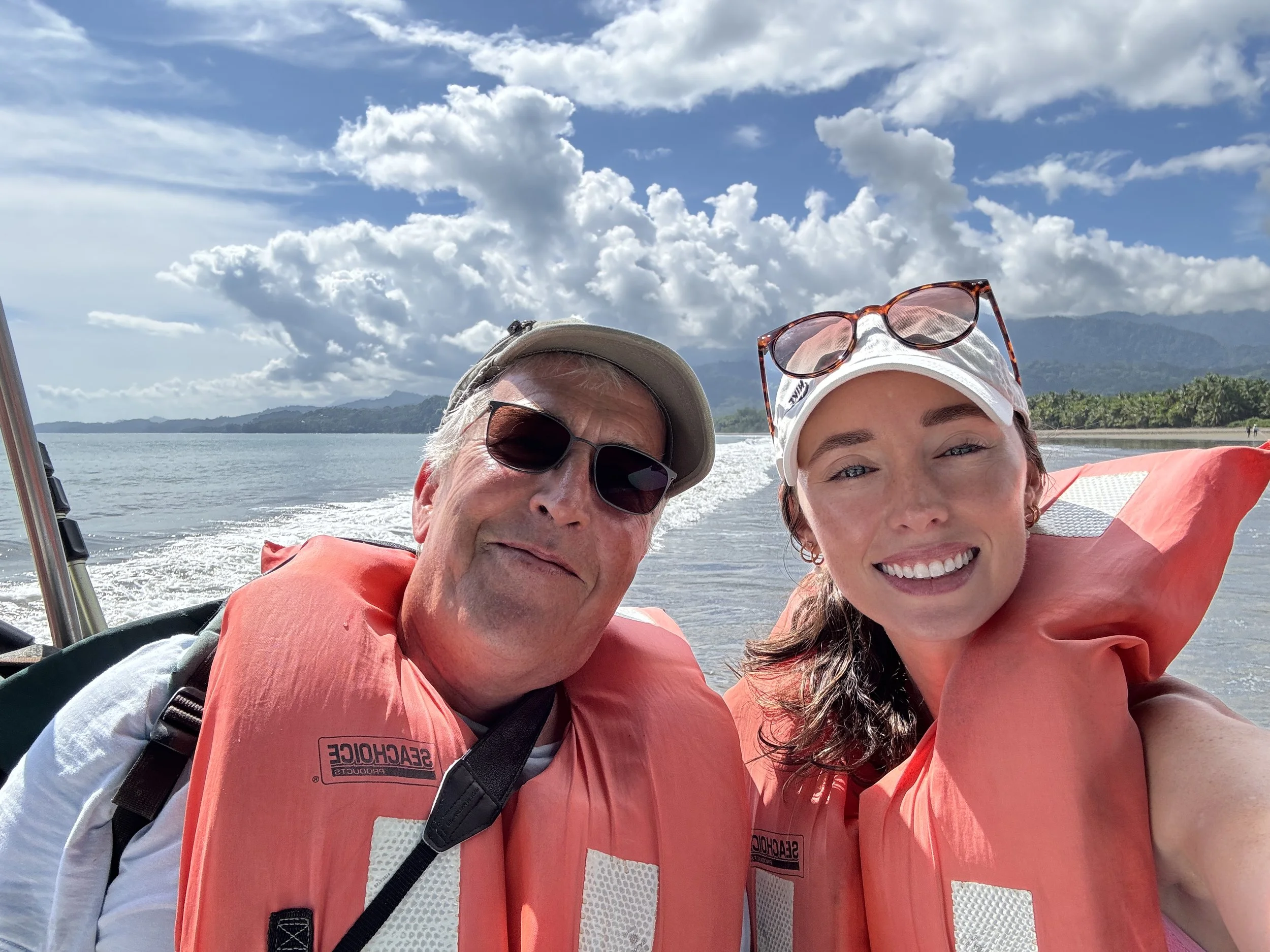
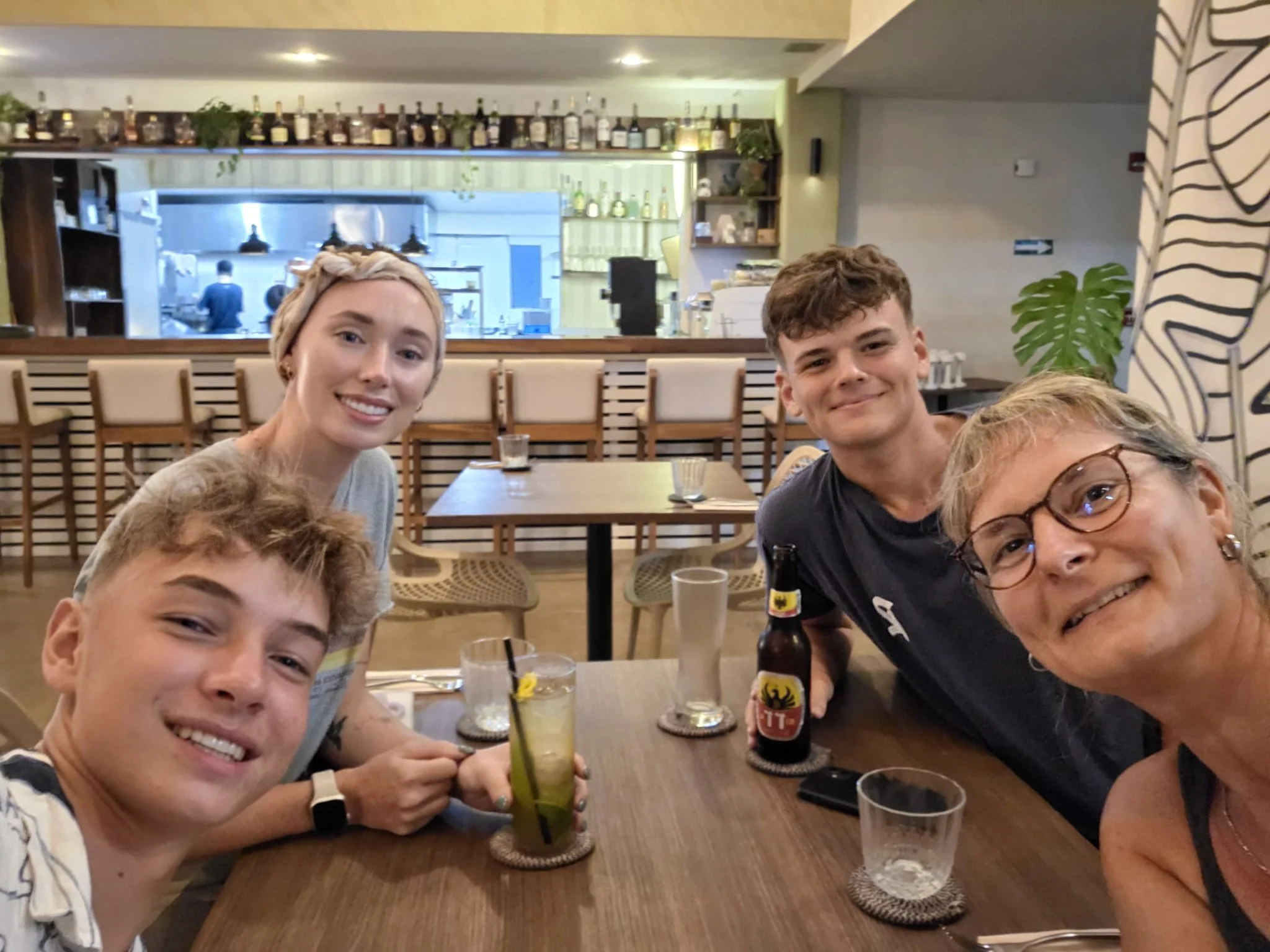
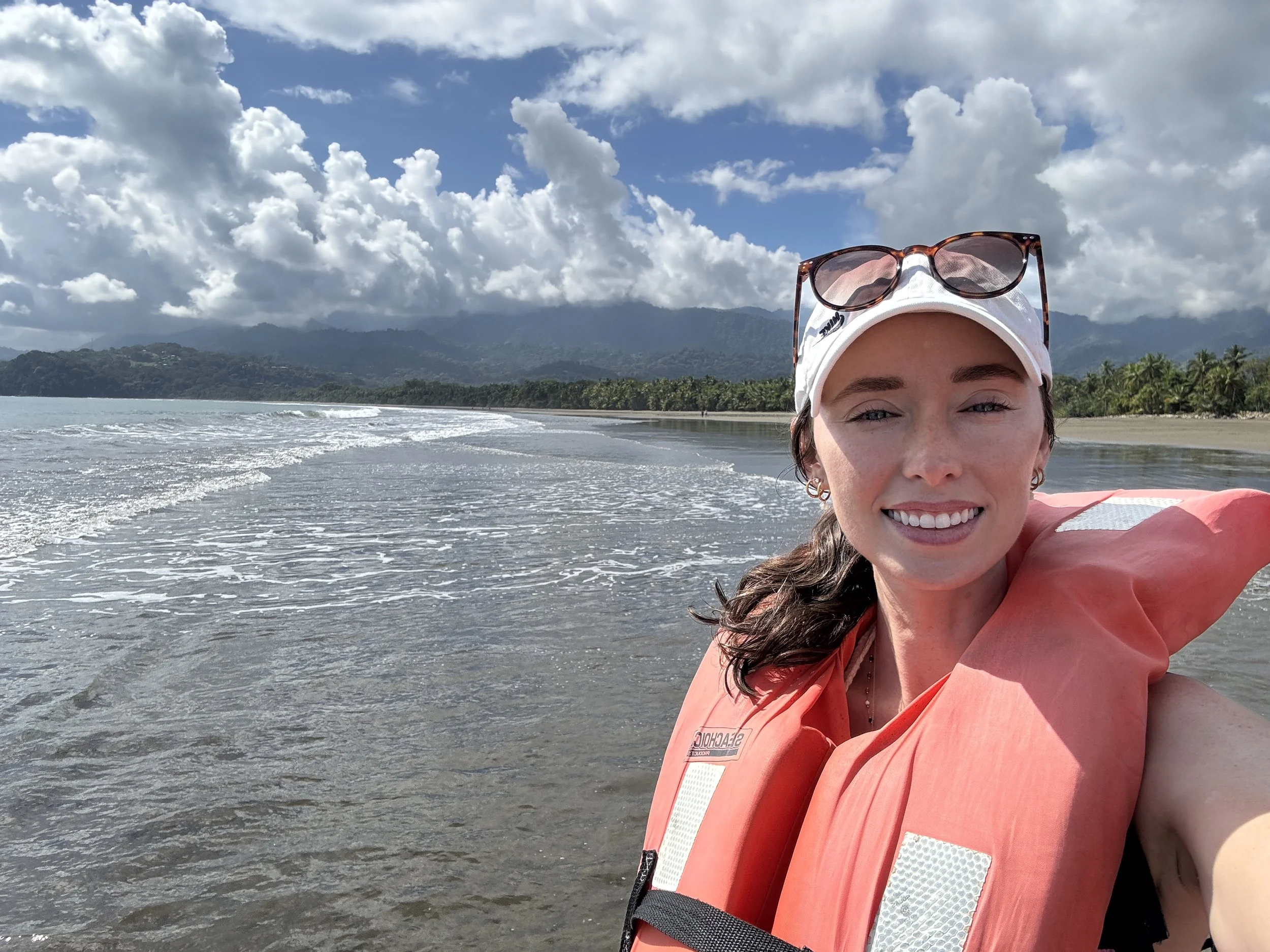
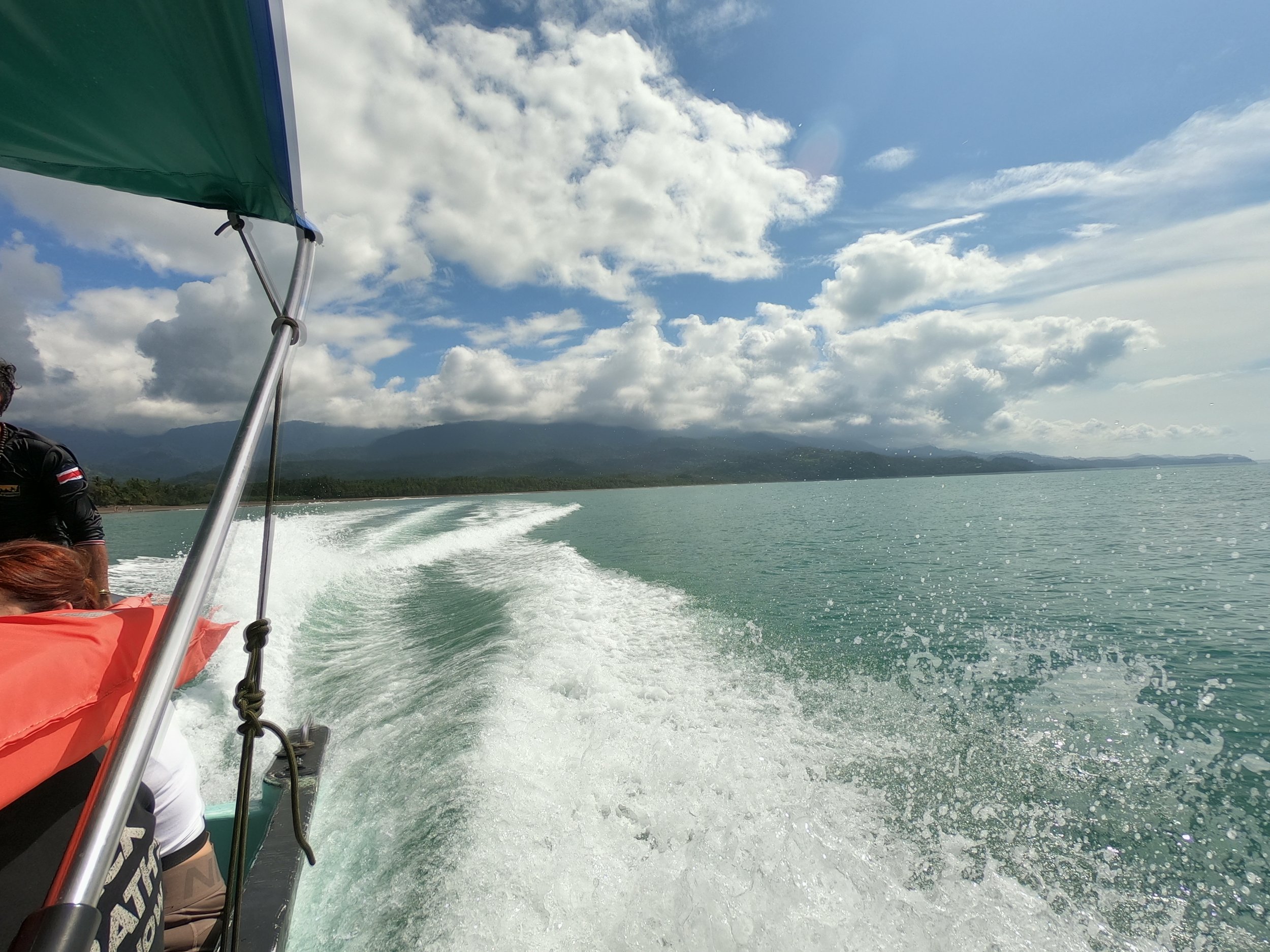
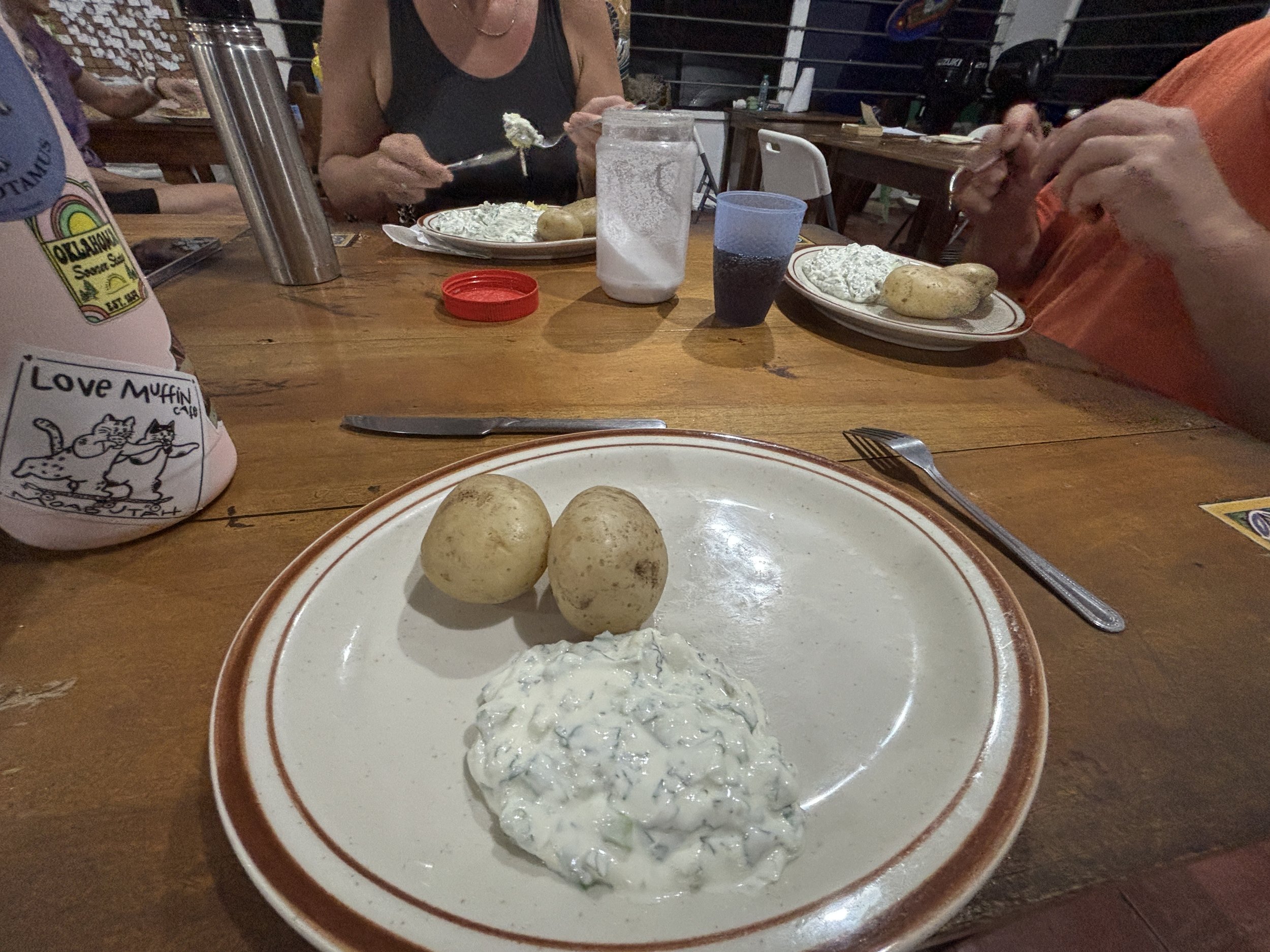
In my last week, I took every chance to try something new, both as a volunteer and a traveler. I kept learning about the Reserva, building beach-day cleanup flyers, helping with interviews for social media, and doing hard work even when exhaustion settled deep into my bones. In the slices of free time, I hiked, slid down a waterfall for the first time, ate foods recommended to me, explored the small shops in Uvita and Ojochal, and went whale watching and wandering through the mangroves of Marino Ballena National Park with my friend Peter. My last night was spent with Sandra, Ben, and Lauritz sharing dinner, laughter, and stories swapped under the low hum of the moon.
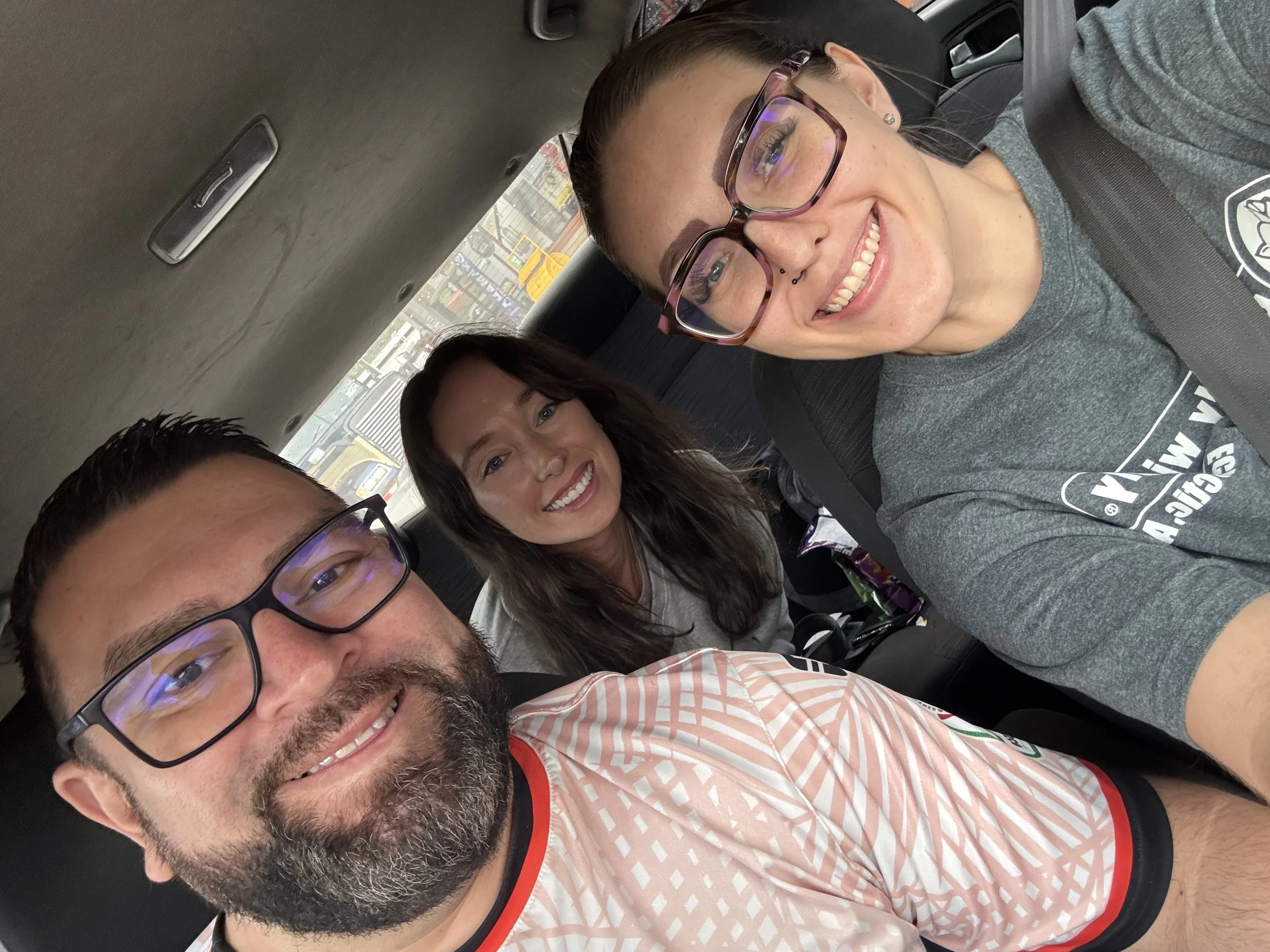
The next morning didn’t seem real as I folded my clothes, zipped up my bags, and stepped out into the warm air one last time. Each goodbye felt like a small unraveling. Faces I had known only briefly but that had imprinted something lasting on me. As the taxi pulled away, Cycy drove past us, honking and waving with her bright smile. Tears pricked my eyes as my driver looked back and said, “You must know everyone.”
The tears came fast, catching me off guard. He apologized and handed me wet wipes, but I shook my head and managed a small laugh. “It’s okay,” I said. “I didn’t think I’d cry so hard, but the people I’ve met are incredible.”
He paused. “But you’ll be back?”
“Definitely,” I responded.
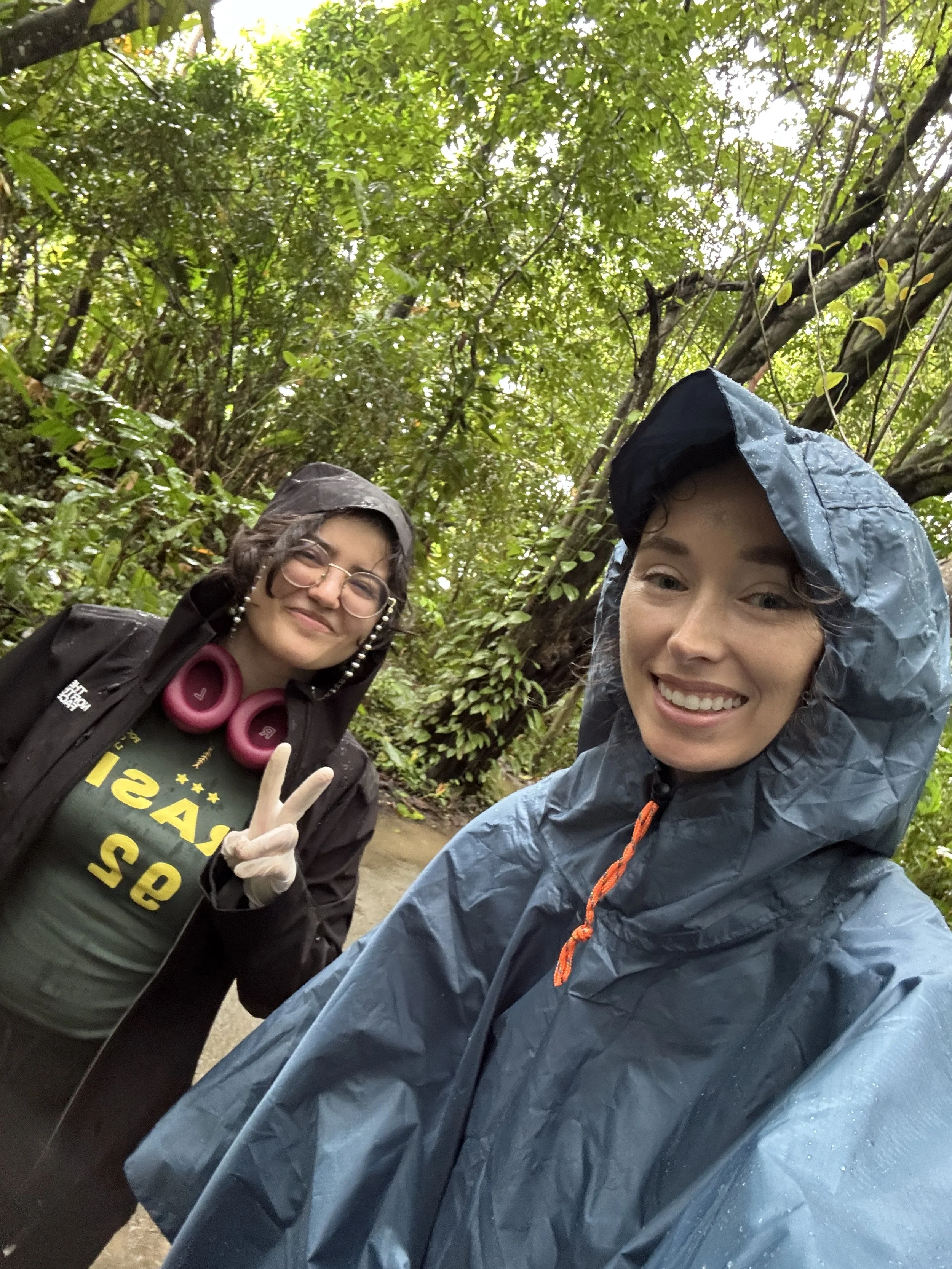
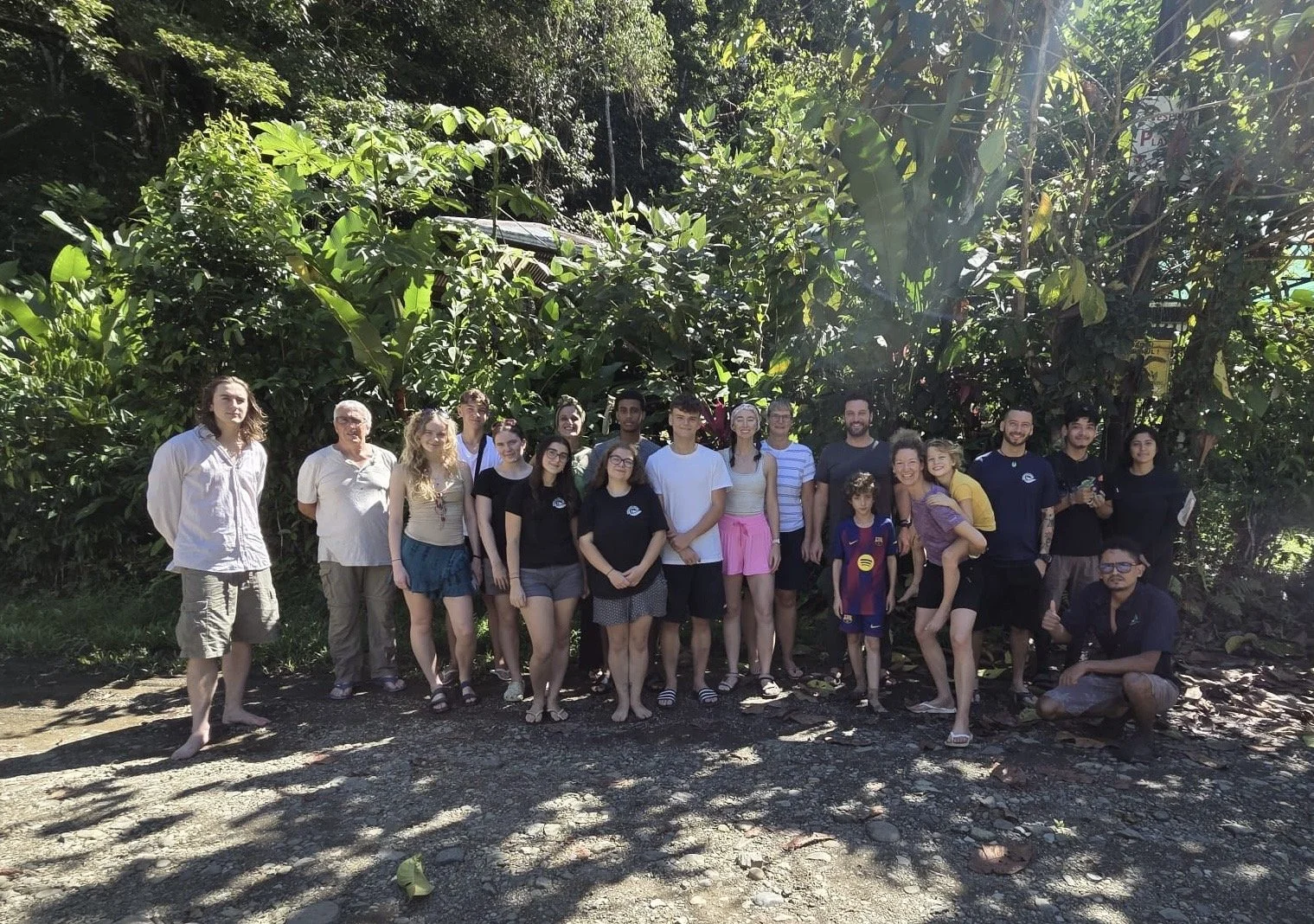
Amazing People! Amazing Opportunity